Sign In
 Free Newsletter

Tensions rise over government health insurance increases
Matthew Fazelpoor//October 31, 2022//


During a conference call earlier this month, local and county officials fumed about a September vote by the State Health Benefits Commission approving increases of more than 20% in health insurance premiums for government workers. The tension was exacerbated when the Murphy Administration reached a deal with five unions on the state level that would reduce that burden, leaving local and county workers and governments scrambling to figure out how to make ends meet.
Included in that deal were The American Federation of State, County and Municipal Employees Council 63, the Communications Workers of America, International Federation of Professional and Technical Engineers Local 195, the New Jersey Council of State College Locals, the American Federation of Teachers, and International Brotherhood of Electrical Workers Local 33, who put out a joint statement following the deal.
“By engaging in the collective negotiations process, the unions and the state have successfully reduced the increases in employee health care contributions from 18% to 3% this year, coupled with certain modest changes in the design of the state’s health care plans, resulting in a more affordable option,” the joint statement read. “The unions, together with the governor, whose engagement on this issue was vital to the successful conclusion of negotiations, have forged an agreement on health care that benefits union members and their families by avoiding unaffordable cost increases.”
Senate President Nicholas Scutari, D-22nd District, and Assembly Speaker Craig Coughlin, D-19th District, issued their own joint statement applauding the agreement as fiscally responsible, but expressing concerns about the process that resulted in the rate hikes and the impact they would have at the local and county level.
“[W]e are extremely disappointed that no meaningful action has been taken by the Plan Design Committees or the Health Benefits Commissions to prevent what are unaffordable rate hikes for counties and municipalities,” the pair said. “Ignoring municipalities will inevitably result in higher costs for taxpayers and workers.”
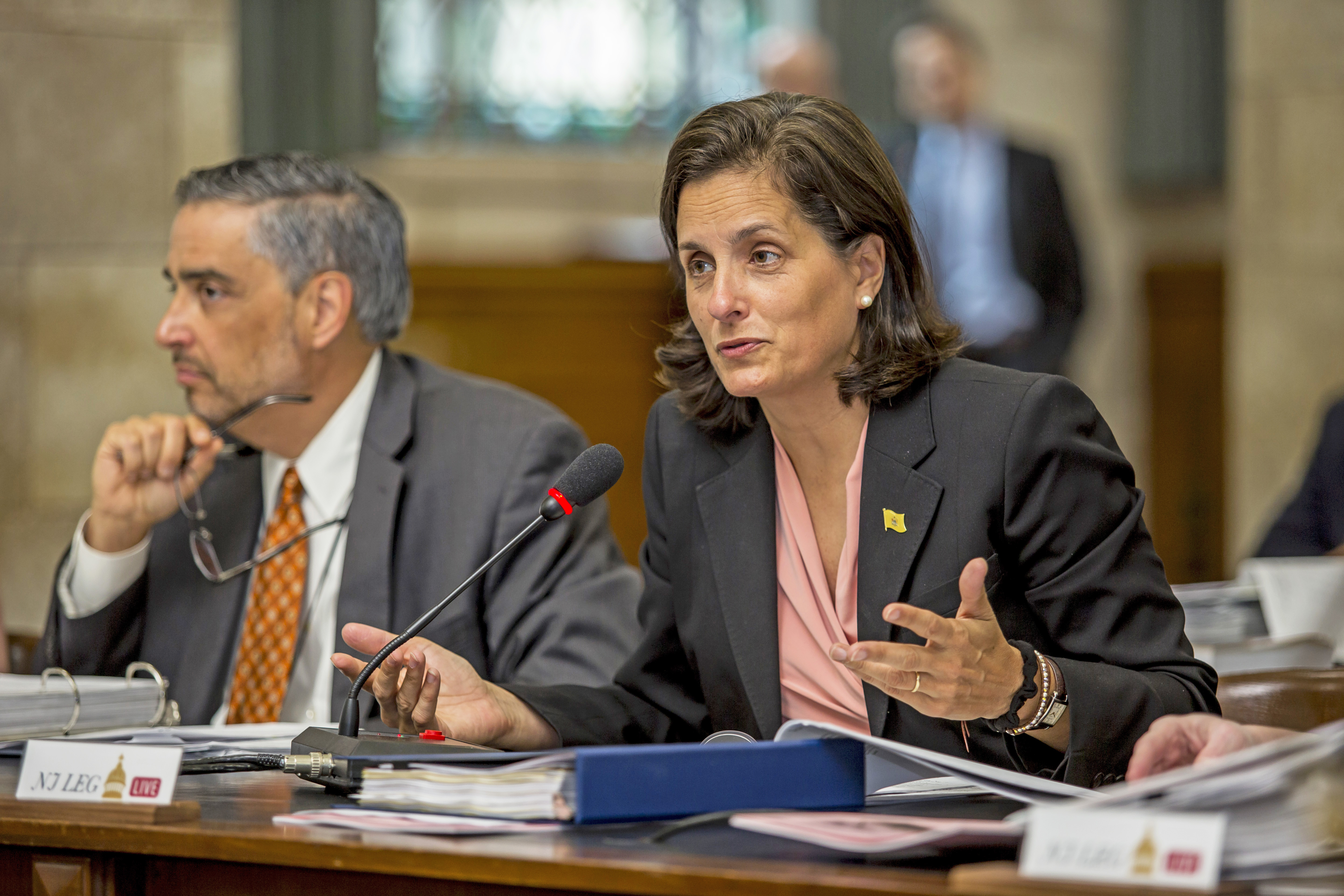
That was precisely the message from officials of the New Jersey State League of Municipalities, the New Jersey Conference of Mayors, the New Jersey Association of Counties, and the New Jersey Urban Mayors Association, along with state lawmakers. The group held a Zoom news conference to outline their objections.
“That was really an explosive decision,” said Janice Mironov, East Windsor mayor and president of the Conference of Mayors. “It was certainly one that none of us had any expectation that was coming. And the financial impact on municipal and county governments and our taxpayers and public employees would be enormous.”
The combination of a lack of transparency and communication, along with the deal only being reached for state workers, was at the center of rare criticism from a wide range of Democratic officials aimed at the Murphy administration.
“[T]hat deal left out all of the municipal and county governments and our workers and lots of other related agencies throughout the state,” said Mironov, describing the magnitude of the increase as radical.
Mironov stressed that it will have a multiplying effect for towns in the state health benefits program. “It will obviously have an exorbitant impact on their budgets and their employees,” she said.
John Donnadio, executive director of the New Jersey Association of Counties, estimated that the increase will cost local governments between $350 million and $400 million. He said an early warning would have given officials more time to come up with a solution or workaround to mitigate the increased costs. “And that was not the case,” he said. “This decision appears to have been made in a vacuum without regard, again, for local government employers and local government employees.”
Many participants on the conference call accused the administration of knowing the increase was coming in February and not alerting stakeholders until the 11th hour. Donnadio called on the administration to provide immediate relief and develop long-term solutions to avoid such situations in the future.
“And the immediate relief is that there has to be some type of funding provided for the local governments as employers and local government employees,” Donnadio said. “The same relief that was provided to the state employees. And I believe that can be done responsibly.”
He also seeks an extension in the open enrollment period to provide employers with additional opportunity to explore options beyond the state health benefits program.
“We’re all really in this together to come up with some more viable solutions instead of now everyone scrambling to look for funding, and everyone’s ticked off,” said Donnadio. “I think there has been a number of really good long-term solutions proposed by both the elected officials and the public sector labor unions.”
Essex County Executive Joseph DiVincenzo Jr. estimated the rate hikes will cost the county about $21 million and force tough decisions about how to pay the higher costs. “We need help immediately,” he said. “You just can’t do it for state employees and then forget about county employees and municipal workers.”
DiVincenzo added that there are only so many options about how to make that kind of a number up, especially this late in the game. He said that while an increase was expected, this one is excessive. “How do you expect us to put a budget together?” he asked. “It’s impossible. The only thing I could do is raise taxes, lay off employees and find other ways to cut within the budget. And it’s going to be very difficult to do.”
Newark Mayor Ras Baraka estimated the increase would cost the city about $24 million, on top of increased costs elsewhere. “I think it’s draconian, at any time, to raise it 20% period,” Baraka said. “To do it now, right in the middle of trying to recover from COVID is, at best, insensitive.”
He stressed that everyone is already taking a hit in a number of ways. “I think it is inhumane to cause us or ask us to pay this much money in the middle of what we’re dealing with now,” said Baraka. “In the middle of what’s going on in terms of cost-of-living increases, in terms of inflation, all these things. It’s too much for New Jersey families to bear right now. And I think we should be more sensitive about how we approach this.”
Baraka said municipalities and counties joined the state health benefits plan as a form of security, noting that this sort of rate hike throws a curve into everything he and other leaders thought. “Many people are pissed off,” said Baraka. “These cities across the State of New Jersey are in agreement that this amount is too much.”
Those sentiments were echoed by William Pikolycky, Woodbine mayor and New Jersey State League of Municipalities president, saying the increases put local governments in a difficult position. “This was compounded by the administration not sharing this information earlier,” said Pikolycky. “It is incumbent that this administration offers the same agreement to local governments that was offered to state employees. That would mitigate future tax increases and the number of local governments leaving the state health benefits plan.”
Labor organization roundup
Workers at two NJ cannabis dispensaries unionize
The employees joined a growing number of workers in the cannabis industry who have opted to make the move. Click here to read more.
Medieval Times sues performers’ union at NJ castle over trademark
The Texas-based company said it infringed on the brand trademark. Click here to read more.
AFSCME files suit against state
On the other side of the ledger, AFSCME New Jersey Council 63 sued the Murphy administration alleging that workers in veterans’ homes, psychiatric hospitals and other facilities did not receive the same pay increases as corrections officers this year.
The move amounted to race and gender discrimination, the union alleged. According to AFSCME, corrections officers are 82% male with the largest group among them being white males at 43%. The union’s membership is 67% female and 82% minority, with black females making up the largest group at 47%.
“We fully support the increases given to the state’s [corrections officers], they deserve it, but so do other staff who are in similar positions,” said Steve Tully, executive director of Council 63. “We have made every effort to discuss the pay disparity issue with the governor, but he has ignored some of the state’s most dedicated and hardest working employees. They do a hard job and they show up every single day under incredibly difficult conditions.”
The union charges that the difference in raises widens the pay equity gap for women and people of color.
The collective bargaining process for corrections officers was changed by the Legislature through Senate Bill 3672, which was signed into law on Jan. 18.
A press officer for Murphy said the office does not comment on pending litigation.
Pleasantville Mayor Judy Ward said the higher costs are simply too much for an already overburdened community like hers. “We’re just going to be hurting,” she said. “There’s just no way we could do it. We would have to turn off the lights in Pleasantville and lock the door if this increase were to go through. We need the relief.”
League of Municipalities Executive Director Michael Cerra described local officials as problem solvers who could have found a solution with more time to act. “They deal with crises on a regular basis,” Cerra explained. “There’s no group more able to deal with an emerging issue than local leaders. And if we had a heads up in February, we could have put our collective minds together and, hopefully, be in a better spot than we are today. So, the transparency issue is troublesome, to say the least.”
Criticism also came from state lawmakers. Senate Majority Leader Teresa Ruiz, D-29th District, said the process included a dangerous lack of transparency and that it was irresponsible to negotiate a deal with some workers while leaving others vulnerable.
She said everyone needs to come to the table and called for some funding to soften the blow to help bridge into next year’s budget. “Every single elected official knows that this conversation is late in the game,” Ruiz said. “People who are doing their budgets on a calendar cycle are struggling to find out what options we have.”
Ruiz added that she believed a clear message was being sent. “Which is there is no urgency or need to protect the taxpayer,” she said. “That’s my point of view. I’m looking forward to calling for greater transparency, accountability, and representation on the Commission.”
Assembly Budget Chair Eliana Pintor Marin, D-29th District, who worked closely with the administration on the budget also cited the lack of transparency on the part of the administration. “If we would have known what was coming at the time, the budget negotiations would have looked very differently had there been true transparency,” said Pintor Marin.
And that sentiment was shared by Assemblyman Dan Benson, D-14th District, who also serves on the Assembly Budget Committee. He said there are too many siloed conversations going on right now. “Had we had this information earlier, a lot of the conversations around the budget would have been different.”
He added that he understands that Murphy cannot negotiate at the local level – a response the governor has offered to some of the criticism. “But we also at the local level can’t solve this just through negotiation ourselves either,” Benson explained. “This is going to require legislation that’s going to require everyone sitting at the table. And this conference call, I think, shows that legislators are ready to take action. Our local and our county officials are ready to take action. I know from the conversations I’ve had with local union representatives and their leaders that they are ready to take action to protect their employees from these really huge increases.”
Murphy and administration officials have described the increase as largely formulaic and a product of usage increases coming out of the pandemic, something they say all states are facing. “Because folks went from during the pandemic not doing the health checkups and procedures that they should have been doing,” Murphy said during a recent press gaggle. “And now everybody’s doing them. And, therefore, usage and costs are up. We’re not immune to this.”
Senate Republicans have also criticized the process.
In a statement, Sen. Bob Singer, R-30th District, said the current crisis was avoidable. “The Murphy Administration and their committee members were aware of these dramatic increases as early as February of this year but opted not to share the news of the emerging crisis,” Singer said. “They withheld data and refused to answer basic questions throughout the state’s budget process throughout the spring. Had local and state leaders – along with labor leaders – been made aware of the looming crisis seven months ago, collaborative measures could have been taken to address the crisis. Instead, everyone was kept in the dark.”
Senate Republican Budget members Steve Oroho, R-24th District; Declan O’Scanlon, R-13th District; Sam Thompson, R-12th District; and Michael Testa, R-1st District, wrote to Democratic leaders seeking a subpoena for Treasurer Elizabeth Maher Muoio.
“We are writing to request that the Senate Budget and Appropriations Committee be given the authority to issue subpoenas to compel the Treasurer to provide documents relating to the State Health Benefits Plan and to compel her testimony under oath before the Committee at the soonest possible opportunity regarding recently adopted premium increases of 22% in state-run health benefit programs,” the state senators wrote. “It has become abundantly clear that the Treasurer – either at the direction of the governor or of her own volition – is refusing to discuss or share proposals to control program costs or to communicate related information to stakeholders, including public employee unions, local government associations, the Legislature and the public.”
The Treasury Department did not immediately respond to a request for comment.
Murphy administration officials have maintained that they handled the process the same as in previous years. But the drastic increase associated with this year’s plan led to stakeholders feeling like they were blindsided. And Murphy insists that dialogue is ongoing.
“We are meeting constantly, day and night, with folks on all sides of this – labor, county, local officials,” the governor told reporters Oct. 17. “We’ve all got to get at the table. And my guess is we all have to give some blood to get this into a better place.”
Administration officials have insisted that they are trying to find a solution. “The governor understands and shares the concerns of the workers impacted by this increase in health care premiums,” a Murphy spokesperson told NJBIZ in a statement. “Unfortunately, rising health care costs are an issue across the nation at this time, which is one of the reasons why the governor is focused on making life more affordable for New Jerseyans. The administration is always looking to work with our partners in government and labor to seek solutions that will help us deliver quality health care at an affordable price to every New Jerseyans.”
“We are here together with partners and allies across the state to say that this needs to be resolved and the administration needs to step up and to work with our legislative partners, and with the towns and counties to identify how we can move forward to mitigate the financial impacts of this decision by their State Health Board Commission,” Mironov said.