Sign In
Upcoming Event
 Free Newsletter

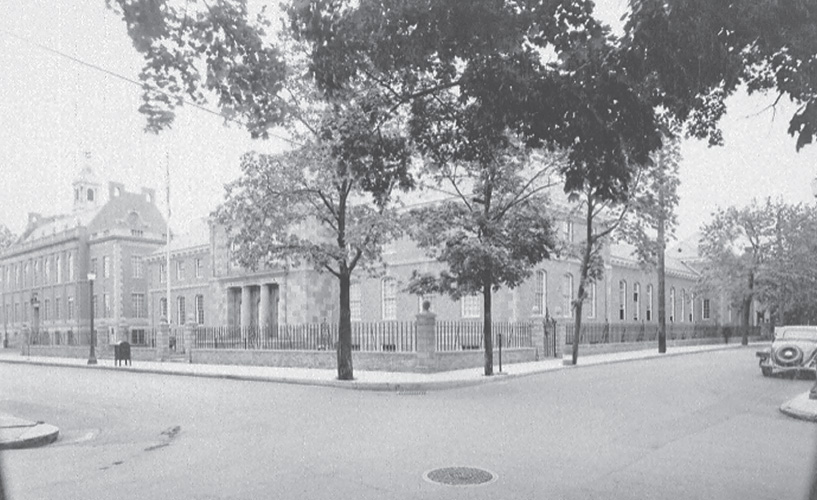
The New Brunswick U.S. Post Office on Bayard Street, shown in June 1939. - PROVIDED BY USPS
The New Brunswick U.S. Post Office on Bayard Street, shown in June 1939. - PROVIDED BY USPS
USPS highlights 6 historic New Jersey post offices
Kimberly Redmond//July 1, 2026//


The basics:
- USPS highlights historic sites ahead of America’s 250th
- 6 NJ post offices date to Revolutionary War era
- New Jersey helped shape nation’s early postal network
- USPS now operates 31,000+ post offices nationwide
As America prepares to celebrate its 250th anniversary, the United States Postal Service is encouraging the public to explore the many post offices that trace their roots back to the Revolutionary War era.
Of those 62 locations in operation since at least July 4, 1776, six are in New Jersey, according to the USPS:
- Elizabeth 310 N. Broad St.
- Newark 2 Federal Square
- Trenton 680 Route 130
- New Brunswick 86 Baynard St.
- Princeton 213 Carnegie Center
- Woodbridge 60 Main St.
The U.S. Postal Service was officially created in 1775. At that time, the Second Continental Congress appointed Benjamin Franklin as the nation’s first postmaster general. As part of that role, he was charged with establishing a reliable communications network for the American colonies during the Revolutionary War.
Before that, the British Crown oversaw mail service in the colonies through a patchwork of post offices.
From Hamilton to sorting centers
In fact, New Jersey played a role in laying the groundwork for the USPS. Then-New Jersey governor, Andrew Hamilton was selected as deputy postmaster in 1692 and helped oversee one of America’s earliest organized postal networks.
“In the late 1700s, postmasters received, sorted, and distributed mail from taverns, coffeehouses, print shops, and even old churches,” a USPS spokesperson said. “Standalone post office buildings were uncommon … Post offices were an integral part of multi-use buildings.”
“As the 19th century progressed, post offices became notable, single-use buildings that were often the architectural centerpieces of villages, towns, and cities. Many post offices were built in a classical style that reflects their link with the federal government, but other post offices took on the look of their local community,” the spokesperson said.

One of the network’s biggest transformations came in the early 1900s, when rural free delivery, parcel post and the rise of mail-order retailers dramatically expanded the USPS’ reach.
“During the 20th century, as the volume of mail exploded, the mail could not be sorted in a single place. The postal service created small sub-station post offices, with regional mail being sorted in larger, centralized sorting centers,” a USPS spokesperson said.
As the 19th century progressed, post offices became notable, single-use buildings that were often the architectural centerpieces of villages, towns, and cities.
– U.S. Postal Service spokesperson
As one of the world’s largest delivery networks, the USPS now has more than 31,000 post offices, nearly 649,000 employees and almost 170 million delivery addresses.
USPS became an independent establishment under the Postal Reorganization Act of 1970. Since then, the agency has largely funded its operations through postage and shipping revenue rather than tax dollars. It is now pursuing a 10-year modernization strategy focused on improving service, expanding package processing and achieving long-term financial sustainability
Going postal
The USPS is also honoring America’s 250th with community art displays and local stamp dedications.
From mail to money
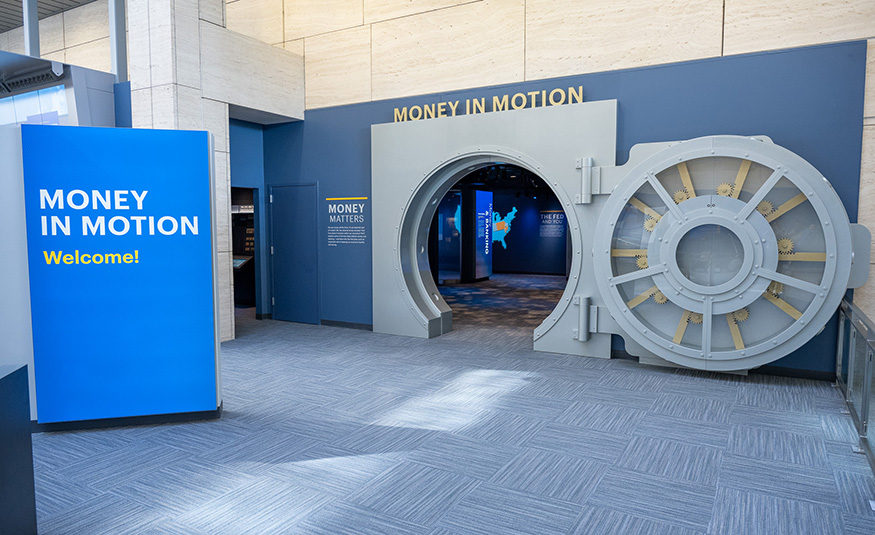
Looking for a patriotic road trip for the family? The Philadelphia Fed’s free “Money in Motion” exhibit takes visitors on an interactive journey through U.S. monetary history. See more here.
Themed merchandise and stamp-inspired memorabilia can be found online, as well as at participating post offices nationwide. Additionally, the USPS is promoting a lineup of stamps related to the anniversary.
The effort comes a year after the USPS marked its own semiquincentennial. As part of that celebration, Carlstadt-based color standards company Pantone created a specialized seven-color palette for a marketing collaboration with the federal agency.
The shades:
- Parchment white: a creamy, white hue that recalls the parchment of the 18th century
- Pony Express: a saddle-toned brown that captures the spirit of the Pony Express mail route of the mid-1800s
- Airmail Red: a daring red shade for the biplanes used to carry the first airmail letters in 1918
- Mr. ZIP Orange: an energetic orange recognizing the postal cartoon mascot introduced in 1963 to teach customers about five-digit ZIP code system
- Carrier Red: a nod to the unform emblem patch introduced in 1965
- Gold Seal: a yellow-gold honoring the Postal Reorganization Act of 1970
- USPS Blue: a bold blue inspired by the “sonic eagle” logo established in 1993