Sign In
 Free Newsletter

PHOTO: DEPOSIT PHOTOS
PHOTO: DEPOSIT PHOTOS
Woodmont invests in upgrades to keep apartments competitive
Jessica Perry//March 16, 2026//


The basics:
- Woodmont Properties invests nearly $3M upgrading more than 10 communities over past two years
- Improvements include package systems, WFH spaces and outdoor amenities
- Portfolio occupancy remains strong at 96%–98%
- Company pipeline includes nearly 3,400 apartments across the region
Many multifamily properties fix problems when they arise, as one might expect. Fairfield-based Woodmont Properties takes a different approach. The family-owned developer and owner routinely reinvests in stabilized communities – often ahead of market pressures – in an effort to maintain competitiveness and protect long-term value.
Louis DeVos, Woodmont’s senior vice president of property and commercial asset management, said the decision to take a proactive approach to capital expenditures was never conscious. It’s more intuitive. A philosophy guided by Woodmont Chairman Donald Witmondt and CEO Eric Widtmont.
“Because we build our communities, we want them to look as good as they did when we finished construction,” DeVos said.
Woodmont Properties’ portfolio spans New Jersey, New York and Pennsylvania. Across the collection, the company consistently posts occupancy rates between 96% and 98%.
Over the past two years, Woodmont has spent nearly $3 million across more than 10 properties. The investments in work-from-home spaces and other upgrades reflect an effort to keep communities competitive and residents content.
DeVos joined Woodmont in 2015. He said the business does things differently when it comes to putting money back into properties compared with the four other companies he’s worked with. “At Woodmont, we sort of have control over the properties and what we want to do with them, as opposed to having sometimes outside influences,” he said.
Evolving expectations
DeVos said because Woodmont develops and builds its own properties, it’s constantly looking ahead at what it should do next. When they figure it out, “[w]e apply what we learn and what we think about to our current communities.”
He cited Amazon’s ascent to a ubiquitous part of people’s everyday lives. When Woodmont started building properties, tenants did not require or expect daily deliveries. Previously, small, shelved package rooms sufficed.

“Over time, obviously packages have become a thing,” DeVos said. “So, we have retrofitted every property that we did not originally build with a whole 24/7 seven package system … It’s a must have for residents now.”
He said the market will also help alert when it’s time to invest in a property. Amid an influx of luxury rental construction and delivery, Woodmont is currently renovating apartments at four of its communities, according to DeVos.
COVID lessons
And sometimes the market and community feedback sync up. Speaking shifting work realities, DeVos said, “COVID woke us all up as to a longstanding amenity that we need to put in.”
He noticed more folks in common areas with laptops, which is fine, but it made him curious if there wasn’t a better way to serve residents’ needs. That prompted Woodmont to invest in adding work from home spaces – and even conference rooms – to its pre-2020 developments for the hybrid and remote crowd.
Hard decisions
On-site teams can offer insights into when and where to invest in multifamily developments.
“Some of our properties, we have hard water and over time we’ve heard from associates this hard water is creating some maintenance issues,” said Louis DeVos, senior vice president of property and commercial asset management at Woodmont Properties. He cited plumbing failing more quickly, issues with washers and dryers or dishwashers — essentially anything requiring water.
As a result of the feedback, Woodmont is now installing full community water softening systems. And at every property it builds moving forward, “we test the water,” DeVos said. “I don’t know anybody who’s doing that, to be honest, but we’ve done it because these systems to retrofit are very, very expensive.”
Beyond that, placement may be difficult. But the payoff is quite literal. “That to me is the level of detail or an opportunity missed,” he said.
Woodmont will retrofit two properties this year. The tab will run seven figures, according to DeVos.
“I’d go talk to them and say, ‘I don’t mean to interrupt you, but are you working from home? Is there a reason you’re here?’ And a lot of the times they would say, ‘Well, I just want to get out of my apartment. I want a different view. I want to interact with people.’”
He noted other builders have also started to incorporate these kinds of spaces into their projects. And Woodmont is working to add the amenity to a property that it just stabilized three years ago.
“And that’s really because there’s been enough new supply in the market that we are, sort of, no longer the shiniest penny — and we want to remain competitive,” he explained.
Listening to residents
Woodmont also takes direct resident feedback into consideration. “If we hear it enough, it might be time to do that,” he said.
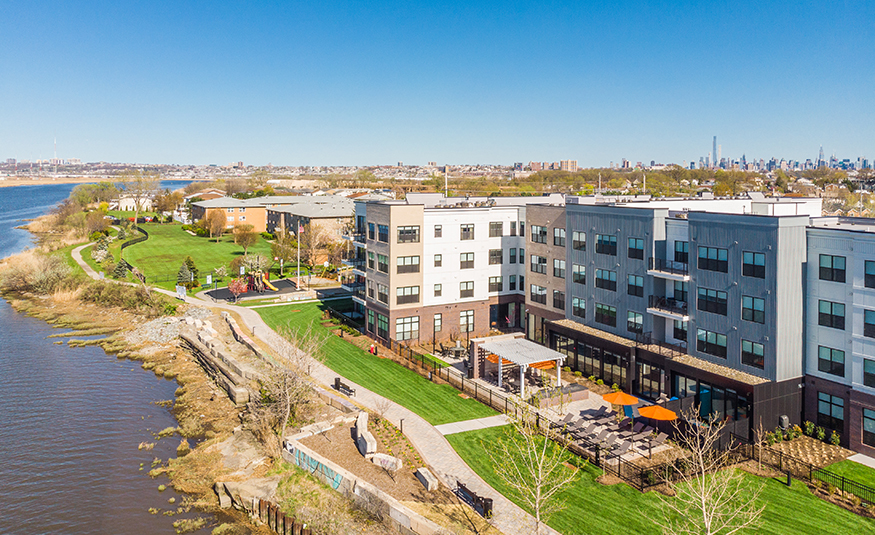
Woodmont has also invested more in outdoor amenities as residents spend more time at home. These upgrades include courtyards, landscaping as well as more seating – and shaded – areas.
Owners and operators may also consider proactive measures when it comes to technical investments. Another change spurred by the pandemic is full-building Wi-Fi. It helps support WFH and activate common areas, as well as domiciles, extending to parking lots and pools.
DeVos said “simple” upgrades like that are important to people.
“The way I look at amenities overall, but this really comes out of COVID, is just things are more stressful. And what I’m finding is you can provide just so many amenities and at some point you can overdo it, but to me, giving people time back or maybe making sure that their time when they’re living there as enjoyable as possible is to me the new definition of luxury.”
Preventive measures
Beyond value-add enhancements, investments also serve to prevent larger problems – and bills – later on. DeVos noted sometimes investments are necessary to avoid a bigger expense down the road. He highlighted asphalt as an example. Parking lots are sealed and coated every five years. Beyond improving aesthetics, “if you don’t do that, the asphalt starts to crack and crumble, and then you have to mill it and take all the asphalt up and put it down. It’s much more expensive.”
He considers these kinds of proactive investments hygienic and “just good management sense.”
“We may do it a little earlier than others because we know it looks nice when it’s newly striped, it’s nice and clean. We do that probably a little bit more often than others do, I think, but there’s good reason behind it from a structural standpoint.”
[G]iving people time back or maybe making sure that their time when they’re living there as enjoyable as possible is to me the new definition of luxury.
– Louis DeVos, Woodmont Properties’ SVP of property and commercial asset management
Reinvestment can also mean reconsidering amenities that no longer resonate with residents. Woodmont plans to establish a WFH area at one of its communities by repurposing such a space.
To make room, the company will remove the property’s screening room/theater. In theory, these spaces make sense. But “In practicality after we’ve put them in, they’re used, but they’re not used … to an extent that justifies the real estate. Whenever people use it, it’s one or two people where if you’ve got 20 seats, it’s not the highest and best use.”
Keeping an eye on what and how amenities are used is essential. “Whenever we put money back into the property, we know there’s a reason for it and we know the reason is justified. … How well we do it is the question.”
And especially if they’re removing something – the theater, for instance – Woodmont encourages team members to engage on the topic locally to inform the decision making.
Getting feedback
When it comes to longevity and infrastructure investments, those have to be done when they have to be done, “notwithstanding the cost.” But the first question is hardly ever, “What does it cost,” DeVos said. “That’s the second question. The first question is, why should we do this now? What’s the benefit? And then what’s the cost? And then we go from there.”
He highlighted several areas that feed that thought process. “A lot of it is looking at our existing portfolio and hearing from our teams and our customers, what do they want? And it’s hearing from other people within the industry,” he explained.
It’s also about striking the right balance. “Doing things that are going to withstand the test of time, like a gym,” he said. “We’ll always put a gym in our communities because there are always going to be a need for a gym, but is there always need for a shuffleboard or a pool table in the game room, or do we want to do things like arcade?”
It’s important to stay on top of trends, DeVos said, because they have to decide now for the future. Looking ahead, Woodmont’s pipeline includes nearly 3,400 apartments, DeVos said.
“Retrofitting is hard,” he added. But not impossible. “We’ve put EV charging stations in every one of our communities; retrofitted because more customers have electric cars and the work from home spaces.”
Happier associate, happier resident
Beyond anecdotal feedback, DeVos said he has also done professionally run resident focus groups before.
To collect concrete data points, Woodmont also surveys its residents directly. DeVos said customers receive five opportunities for feedback within any given year: as a prospect; upon move in; for work orders; at the half-way point of a lease; and when they move out. “We’ll ask questions specifically about what didn’t we have that you wanted; or what do we have, what drew you to the community, all those things.”
Woodmont also collects feedback from its employees.
“All that gets filtered up through their managers and their manager’s managers. And we have conversations about what is going to benefit the resident, what’s going to benefit the associate working on site, what can we do to make the work experience better?
“That’s important for us as well. We talk a lot about that during the design process and we’ll ask them because a happier associate’s going to make a happier resident.”
DeVos stressed the importance of making the workspace and operations as effective as possible, drawing on his experience growing up in the industry and onsite.
Rent in action
Renters prioritize maintenance, security, and community appearance/cleanliness far above other factors, according to a 2024 Resident Experience Management Report from Zego.
DeVos said a big reason he and Woodmont are such proponents of spending more money than other people may be, is because, “As a return, it’s kind of hard to put into dollars. But residents want to see something back for their rent.
“They don’t want it to be perceived as it’s going into the landlord’s pocket all the time. So, putting money back into the property, doing those things like putting a package room where there wasn’t there before, creating these spaces for residents, they see that.
“That makes them feel a little bit better when we ask them for a higher rent upon their renewal, maybe.”
According to Zego, rent being too expensive topped the renter responses for why tenants wouldn’t renew a lease. Also among the top 10: poor maintenance service, poor property upkeep, and poor management communicant & responsiveness.
The report highlighted all as reasons that are within a property manager’s control.
At the end of the day, the market is the determining factor. “The resident, our customer, will tell us what is important … by speaking with their wallet. They’ll either rent with us or they won’t.”