Sign In
Upcoming Event
 Free Newsletter

Beer pros talk with lawmakers about shutdown’s effect on craft beer
Gabrielle Saulsbery//January 29, 2019//
Beer pros talk with lawmakers about shutdown’s effect on craft beer
Gabrielle Saulsbery//January 29, 2019//


 Listen to this article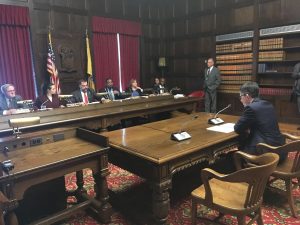
Unable to obtain the label approval required from the federal government to sell its newest batch of beer, 20,000 cans and bottles from Belmar’s Beach Haus Brewery sat idle during the federal shutdown instead of on shelves and in taps they were intended for.
With the shutdown suspended after five weeks, breweries like Beach Haus are racing to get Certification of Label Approval, or COLA, by the federal Alcohol and Tobacco Tax and Trade Bureau before the shutdown might take effect again on Feb 15.
According to Brewer’s Guild of New Jersey Executive Director Eric Orlando, the TTB is currently looking at COLA applications received Dec. 13, and the bureau estimates it will take 41 days to review all wine, liquor, and beer applications received since then.
“We are weeks off of applications that were made more than a month ago and now we’re faced potentially with another shutdown in three weeks,” Orlando said.
Orlando and other representatives of the craft beer industry spoke before the Assembly Oversight, Reform and Federal Relations Committee Monday to inform lawmakers about issues the industry has faced during the recently suspended shutdown, and to suggest legislative assistance from the state in preparation for the next one.
The ways the shutdown has affected the industry, according to Orlando, are a result of three factors: the shutdown of the TTB, which is required to approve all new beers and their labels; the delay in processing of federal Small Business Administration loans, which breweries use toward equipment purchasing and facility expansion; and the impact on the customer base.
“[The TTB] delays impact brewery revenue, job retention and new hiring, future production schedules, future ingredient purchases, marketing campaigns and development. This list can go on and on,” he said.
Beach Haus owner John Merklin called the delay a “financial bottleneck.”
“When beer is sitting in the tank, it’s not just about the actual liquid that’s in that particular tank, it’s that you only have so many tanks to work with in a production facility,” Merklin said. “We’re unable to brew beers that are already approved because the tank’s being used and there’s beer sitting in it. It’s a problem that just doubles up on itself quickly.”
Executive Director of the New Jersey Brewer’s Association Alexis Deegan and lobbyist Bill Caruso implored the committee to work with them to develop legislation that would prevent similar industry backlogs in the future.
“Any type of legislation that could be aimed to combat another shutdown or any other types of legislation that could help this growing industry in our state that has really been the lifeblood of a lot of the downtown revitalization in a lot of your communities, we stand by ready to help in any way we can,” said Caruso.