Sign In
Upcoming Event
 Free Newsletter


PHOTO: DEPOSIT PHOTOS
PHOTO: DEPOSIT PHOTOS
Diversity push aims to address CPA shortage in accounting
Martin Daks//April 6, 2026//


The basics:
- CPA demand remains strong while accounting degree completions decline
- Minority, women accountants remain underrepresented in the profession
- Firms say diversity strengthens innovation, business performance
- Flexible workplaces, outreach aim to expand the accounting talent pipeline
The accounting profession is facing a numbers crunch. Demand remains strong for CPAs, but bachelor’s degree completions in accounting have declined annually by up to double digits in recent years, according to data from the AICPA. One solution could involve an untapped resource: minority and women accountants, who are currently underrepresented in the ranks of the profession.
As a young Black man, Abraham Alston Jr. didn’t have a CPA in the family as a role model. What he did have was a father who owned a restaurant — and a front-row seat to the man who helped keep that business’ books in order.
“My dad’s CPA, who was also Black, would come around, and I saw he had a nice lifestyle,” said Alston, president and founder of Alston & Co. CPAs. “That motivated me.” Alston’s parents were not college graduates, but entrepreneurship was in the family’s DNA, and that visiting accountant planted a seed that would shape Alston’s entire career.
Beyond celebrity
The path, however, wasn’t direct. After graduating from Hofstra University with an accounting degree, Alston interviewed with some CPA firms but didn’t get hired. He pivoted to banking, then government, before eventually landing at Mitchell Titus, a prominent minority-owned accounting firm. “Being exposed to other professionals gave me drive,” he explained. “Seeing helped me to believe. But we need to see more than just professional sports figures like LeBron James or a Kevin Durant.”
A belief that representation requires breadth, not just celebrity, sits at the heart of Alston’s mission today. And the numbers make clear how much work remains. According to the CPA Journal, Black CPAs constitute just 2% of the profession, while Hispanic and Latino CPAs account for only 5%.
Alston said the gap stems from a combination of limited exposure and entrenched misperceptions. “The minority community doesn’t have these opportunities around it,” he noted. “People think accounting is sitting behind a desk — boring. We need to get the word out about what’s really available: taxes, auditing, advisory work.” The solution, he added, starts with visibility. “People need to see themselves excelling in this field.”
To that end, Alston has made outreach a cornerstone of his practice. He detailed how his firm focuses heavily on religious organizations and nonprofits, using that platform to connect with community members who might never otherwise encounter a CPA. He speaks at schools on career day, participates in Black History Month events, contributes articles to accounting society publications, and distributes his own newsletters. “I do workshops, and people are always surprised,” he said. “They didn’t know these opportunities existed — in corporate America, in government, in private practice.”
The case for diversity
From a business standpoint, Alston said the case for diversity goes well beyond social responsibility. “More minorities isn’t just a nice idea — it means bringing more ideas to the table,” he explained. “A well-balanced workforce helps a business see things from different perspectives. What do younger professionals think? What do women think? Especially when it comes to AI and the next generation of services, we have to understand where the world is going.”
He added that diverse mindsets, while sometimes challenging to manage, are ultimately good for the bottom line. “I need to hear what’s going on from all sides — males and females, older and younger.”
More minorities isn’t just a nice idea — it means bringing more ideas to the table. A well-balanced workforce helps a business see things from different perspectives.
– Abraham Alston Jr., president and founder, Alston & Co. CPAs
His broader message is one of generational responsibility. “Accounting offers great opportunities,” Alston said, “and the more minorities who come in, the more they open doors for the people coming up behind them.” He pointed to organizations like the National Association of Black Accountants as proof that momentum is building — but stressed that firms must actively make room at the table.
“Give people the opportunity,” he said, “and let the chips fall where they may.”
Battling assumptions
Formal obstacles to recruiting more minorities may be falling, but embedded assumptions can still present a barrier. When Sarah Krom, managing partner of SKC & Co. CPAs LLC, meets someone new in a professional setting, she occasionally gets a question that still catches her off guard — even after more than a decade of leading the Boonton Township-based firm.
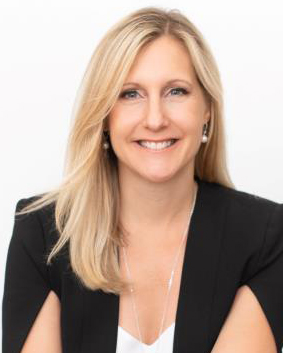
“More than once, I have been asked if my father started the firm,” Krom said, pausing to let that land. Her father, she noted, is a mechanical engineer. “I don’t know many of my male colleagues who are in managing partner positions who have ever been asked that.”
Krom said she’s never entirely sure whether the question reflects assumptions about gender, age, or both. But her experience speaks to a broader challenge facing the accounting profession: despite women making up roughly half of all new hires at CPA firms nationally, they represent only about 40% of partners — a gap that has proven stubbornly persistent.
Krom, who is in her 22nd tax season, said the disparity stems from several overlapping factors. “As an industry, we’re a little slow to evolve sometimes,” she explained. “There’s some lack of evolution of what were considered workplace norms that may not be as supportive toward women who want to raise families or balance their careers with other aspects of their lives.”
She also pointed to the challenge of visibility. “If you don’t see a lot of people who took the road ahead of you, it takes a lot more effort to send yourself down that road,” Krom noted.
Flexibility at work
At SKC & Co., the approach to closing that gap centers less on formal diversity programs and more on a fundamental rethinking of what a career in accounting can look like. Current job postings at the 30-person firm are listed as full-time or part-time, depending on what works best for the candidate.
“We’ve got a certain amount of work that needs to get done, and if it works to get two amazing candidates at part time to cover the work of a full-time person, why wouldn’t we do that?” Krom said. “We try to cast a wider net even in the job posting.”
That flexibility extends into daily operations. Krom detailed how some team members – including working mothers – structure their availability around family obligations, logging off when children come home from school and returning once kids are in bed. The key, she explained, is communication — both internally and with clients.
Stalled progress?

A panel of executives discusses current challenges and progress for women in business. Here’s what they had to say.
“If you have that dialogue with your clients, who also have lives and understand how that works, it creates more stickiness in the relationship,” Krom said. “When you engage with the team and understand what their needs are and do what you can to reasonably accommodate those needs, they go above and beyond to deliver — because they appreciate that ability to have the life balance they needed.”
Krom said the business case for diversity goes beyond goodwill. “It’s important that we mirror our clients,” she explained, noting the growing ranks of female, Black and Hispanic business owners seeking accounting services. “And there’s endless research about the importance of having a diverse team — people who have lived different experiences bring diversified perspectives that are incredibly valuable to innovate within your organization.”
For Krom, the profession itself remains the most powerful recruiting tool available — if firms are willing to present it honestly and accessibly. “This is an amazing profession,” she said. “It’s challenging, it’s rewarding, it’s prosperous, and it gives you a chance to give back. I’m just a big advocate of introducing anybody to it who’s interested.”
Other professionals, like HBK Chief Marketing Officer Sarah Cirelli, are also cautiously optimistic about opportunities for underrepresented groups to make inroads in the accounting profession.
A fork in the road
“Women enter accounting at nearly equal rates to men, so this is not a pipeline problem,” she said. “It is a structural one. The traditional path to partnership was designed around a very specific life, and for a long time, firms did not question it. When the unwritten rules of advancement favor a narrow profile, talented people get filtered out, not because they are less capable, but because the system was not built with them in mind. That is a loss for the firm, not just the individual.”

At HBK, “we are not focused on creating special tracks for women,” Cirelli added. “We are focused on building an environment where the most qualified people win, full stop. That means being honest about what the path to partnership looks like, creating real sponsorship so the right names get in the right rooms, and making sure we are evaluating people on their actual contributions. When you do those things well, the outcomes tend to reflect your talent pool more accurately. And your talent pool, when you are recruiting well, is roughly half women.”
At the same time, she acknowledges that some challenges to recruiting from minority communities are deeply embedded. “This one starts long before someone walks through our door,” explained Cirelli. “The path to becoming a CPA runs through high school counseling, college access, and a multipart exam that costs real money and real time. When you look at which communities have historically had less access to all of those things, the underrepresentation becomes more predictable, even if it is no less unacceptable. Firms like ours cannot fix systemic inequity alone, but we can make sure our own house creates genuine opportunity for everyone who walks in.”
Our clients are diverse. The businesses we serve are diverse. If our leadership does not reflect the world we operate in, we are leaving insight on the table.
– Sarah Cirelli, chief marketing officer, HBK
Asked if there is a business case for diversity, Cirelli said the question approaches the issue from an outdated angle. “I would push back on the framing a little,” she responded. “Asking why firms should care still treats diversity as optional, and the data settled that debate years ago.
“Diverse teams make better decisions. In an advisory business, where we are helping clients navigate real complexity every day, that is not a nice-to-have. It is table stakes. Our clients are diverse. The businesses we serve are diverse. If our leadership does not reflect the world we operate in, we are leaving insight on the table,” Cirelli said. “And frankly, the talent market has spoken: the next generation of professionals is choosing firms based on culture and values. A firm that cannot demonstrate genuine inclusion will lose that talent to one that can. The goal was never to manufacture outcomes. It is to remove the friction that was never supposed to be there in the first place. When you do that, merit gets to actually do its job.”