Sign In
Upcoming Event
 Free Newsletter

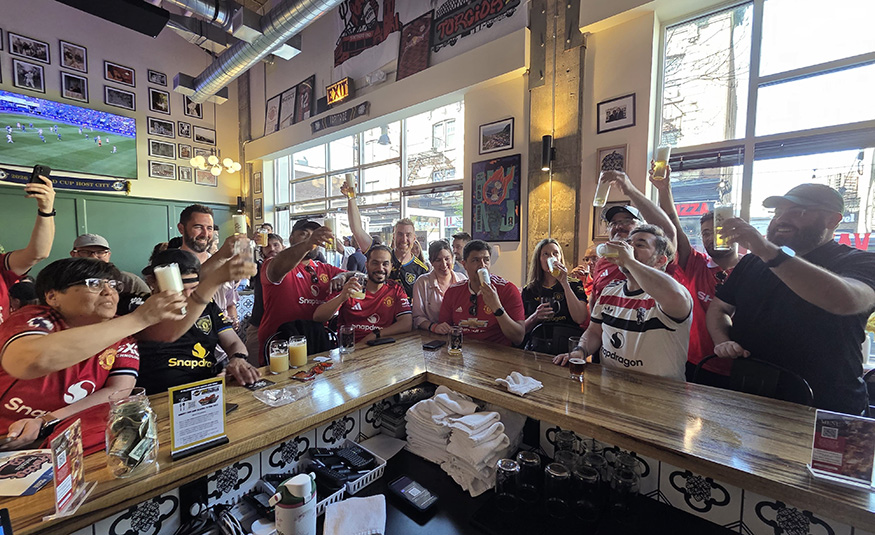
Varitage Brew Works in Bloomfield - PROVIDED BY VARITAGE
Varitage Brew Works in Bloomfield - PROVIDED BY VARITAGE
NJ restaurants, bars gear up for 2026 FIFA World Cup crowds
Kimberly Redmond//May 11, 2026//


The basics:
- Restaurants, bars statewide are planning 2026 FIFA World Cup watch parties, themed events
- NJ will host eight matches at MetLife Stadium
- Tournament is expected to generate billions in regional economic impact
- NJRHA launches resources to help hospitality businesses prepare for visitors
Restaurants and bars in New Jersey are setting the table for soccer fans from around the globe who will soon arrive to enjoy the 2026 FIFA World Cup. With less than a month to go before matches kick off at MetLife Stadium in East Rutherford, the industry is preparing to capitalize on the massive attention and visitor turnout tied to hosting a tournament widely regarded as the biggest sporting event in the world.
Because New Jersey is hosting eight matches – including the July 19 final – the state is positioned as a central hub for global visitors and economic activity. According to the New York New Jersey Host Committee, the tournament is expected to generate more than $3.3 billion in direct economic impact across the region, largely from lodging, dining and retail spending.
In addition to drawing over 1 million visitors to the metropolitan area, the World Cup is projected to support 26,000-plus jobs and pull in $432 million in tax revenue. And the event is expected to draw a record 6.5 million attendees to the 16 host cities across the U.S., Canada and Mexico this summer.
Overall, the 104-match tournament is expected to produce an $80.1 billion direct economic lift to North America and create or support over 40,000 temporary jobs in hospitality or event management.
Where the action is
Much of the visitor spending is expected to be concentrated in a few U.S. host cities. Of the top five destinations for total projected spending, the area around MetLife Stadium in East Rutherford leads with an estimated $67 million, according to a pre-event economic impact analysis by Almawave Group.
The study notes that the Bergen County borough’s No. 1 spot may reflect a combination of factors, including a large-capacity stadium, higher concentration of scheduled matches and proximity to New York City.
This year also marks the first time the World Cup will be held in the U.S. since 1994. Giants Stadium in East Rutherford – which was replaced by MetLife Stadium in 2010 – was among the venues to host the 52-match tournament 32 years ago.
The Meadowlands isn’t the only part of New Jersey that’ll see some action this time around. FIFA selected four local facilities (Stockton University in Galloway, Rutgers University in Piscataway, The Pingry School in Basking Ridge and RWJBarnabas Health Red Bulls Performance Center in Morris Township) to serve as team base camp sites, giving players a place to stay, train and prepare.
Game on
Of the estimated $1.7 billion in direct visitor spending across the region during the World Cup, analysts said food and beverage will make up about half of total in-market spend. That makes it the largest single expenditure category.
Here’s a just small taste of what’s planned to highlight the state’s dining scene and capitalize on a major revenue opportunity.
Because Edison wants to establish itself as a culinary spot between host cities East Rutherford and Philadelphia, the township is launching a restaurant passport program that encourages World Cup visitors to explore its over 400 diverse eateries. Diners can collect stamps from local restaurants to be eligible for prizes.
Both Highland Park and Bernardsville are planning Restaurant Week events in July to tie into each community’s broader World Cup-themed programming.
Meanwhile, Berkeley Township’s celebrations will include a series of watch parties at local restaurants, such as Patria Station Café (Argentina vs. Algeria), Delicious Heights (USA vs. Paraguay) and Ami Japanese Restaurant (Netherlands vs. Japan). The many festivities scheduled also include a build-your-own burrito contest at a Bubbakoo’s Burrito shop as part of pre-kickoff activities for the Mexico vs. South Africa match.
Raising the bar
Anticipation for the quadrennial tournament is especially high at top sports bars in New Jersey. At Varitage Brew Works in Bloomfield, planning has been underway for some time, according to founder, CEO and head brewer Mark Costa.
“We’re incredibly excited for the World Cup and have been building toward this moment since opening our doors just over two years ago here,” he explained. “We truly see it as our responsibility to give World Cup visitors a real taste of New Jersey—our culture, our community, and our deep-rooted passion for the beautiful game. At Varitage, it’s all about bringing people together through soccer and creating an atmosphere that reflects what the tournament is all about.”

Costa said they’re working to position themselves as “New Jersey’s soccer-centric brewery” by working closely with local pro clubs, hosting supporters groups from across Europe and opening early on Saturday mornings to show Premier League matches. Varitage also serves its beer at Sports Illustrated Stadium in Harrison.

“We’ve also had the opportunity to collaborate on beers with legends of the game, which has been a huge part of building our identity,” said Costa. “Looking ahead, we have some exciting World Cup releases in the works, including a collaboration with Rich Tu – the artist behind the official NY/NJ World Cup Poster, as well as a beer inspired by the iconic Kearny, N.J., documentary “Soccertown USA'” honoring local legends Tony Meola, Tab Ramos, and John Harkes.
“We’re kicking off our ‘Summer of Soccer’ with Full90 Fest on May 30th – a full-day celebration of the Champions League Final – before rolling into a packed World Cup calendar. We have major outdoor activations planned along Washington Street, including a special event around the Club Eleven bus, a rolling soccer museum that will be parked outside the brewery for the semifinals. We have a lot across the street from the brewery that we are hoping becomes a major hub for the tournament,” he said.
Plenty of practice
At Mulligan’s Pub in Hoboken, owner Paul Dawson said his establishment “will open live for every minute of every game” and his staff “will be ready to welcome all supporters of every country throughout the world.”

After opening its doors in 2000, the Irish tavern quickly became a go-to spot to watch football – both European and the National Football League – on its many large screen televisions. Ahead of the World Cup, Dawson said, “There really is not a lot to plan. This is something we are very used to doing by showing live football for the last 26 years every week.”
“Since it’s in our own backyard this year, every bar/restaurant/pizza parlor/mom & pop store will be involved some way or another with the city and Hoboken Business Alliance hosting viewing parties throughout town,” Dawson said. “As for what it will bring apart from a great boost to the New Jersey-New York economy, it will be a festival of football nonstop for six weeks, bringing together the whole universe in our backyard for the final game.”
As Mercer County’s biggest soccer bar, Ewing Township-based Firkin Tavern is expecting huge crowds, owner Bryan Liegl said. “We are also an official American Outlaws bar, which is the supporters group for the USA National team. All of this brings on huge logistical challenges to make sure everyone is happy and safe. We will be showing every game, so organization and planning is key,” he explained.
According to Liegl, Firkin will have several specials, including for beer, hard seltzer and food. There will also be mini games, giveaways and a chance to win tickets to a match.
At the ready
Since beginning World Cup planning in January, Liegl said the English/Irish/American gastropub considered “a lot of details,” including times of the games and which streaming services they’ll be on. “With the field expanding to 48 teams, there are more games than ever. The challenges are to make sure we are fully staffed for every game with procedures in place for when it gets crazy busy. There are also other sports on at the same time, so we need to be very organized and try to make sure every customer is happy,” he said.
For Costa, one of the biggest hurdles right now “is figuring out how to market our World Cup plans in a smart way without crossing any FIFA licensing or copyright lines.”

“We want to lean into the moment, but we have to be careful about how we position it,” he explained. “The other major challenge is cost. Putting together watch parties at this scale isn’t simple—especially with local municipality requirements around safety, which we fully understand. Between AV rentals, police and security fees, furniture and logistics, the numbers add up quickly and shift constantly,” he explained. “Over the past couple of months, plans have been evolving almost daily as we try to balance creating something special while keeping it financially viable.”
According to Costa, the cost “really depends on the municipality, the size of the space and type of AV equipment you are renting.”
“It could range anywhere from $5,000 to $50,000 per day,” he said. “Also once an event hits 1,000 attendees it becomes a FIFA-sanctioned event and FIFA will require a fee for that.”
“What’s also been interesting is the disconnect locally. A lot of people – business owners, politicians and even residents outside the soccer community –don’t fully grasp how big this moment is. There’s definitely some hesitation because no one knows exactly what the turnout will look like,” Costa went on. “But whether people realize it or not they’re coming.”
Finding the net

According to New Jersey Restaurant & Hospitality Association President and CEO Daniel Klim, it’s not too late for small businesses to start preparing for the World Cup. “I would suggest starting now … we’re still kind of understanding who’s going to be coming into New Jersey at different times throughout the six-week tournament. Our job as an association is to make sure we have our finger on the pulse of those changes and communicate them but also let our members know that there are ideas out there that they can implement to drive traffic to their establishments,” he said.
“We’re doing our best to prepare our members and the industries. The goal is to give the world a first-class experience here in New Jersey with our restaurants, our hotels, our hospitality groups and our amusements,” Klim continued.
As part of a new “NJ: Home of Hospitality” initiative, the statewide trade association launched a digital hub connecting residents and visitors with restaurants, hotels and entertainment destinations across the state.
In addition to an interactive directory with dynamic map, the website features a resource page designed to help hospitality owners and operators market their businesses and prepare for the anticipated influx of visitors this summer.
Because the campaign seeks to reflect the full scope and diversity of New Jersey’s industry, non-NJRHA members, vendors and partners are also encouraged to submit their businesses for inclusion in the directory and contribute content, the association said.
Showcasing the state
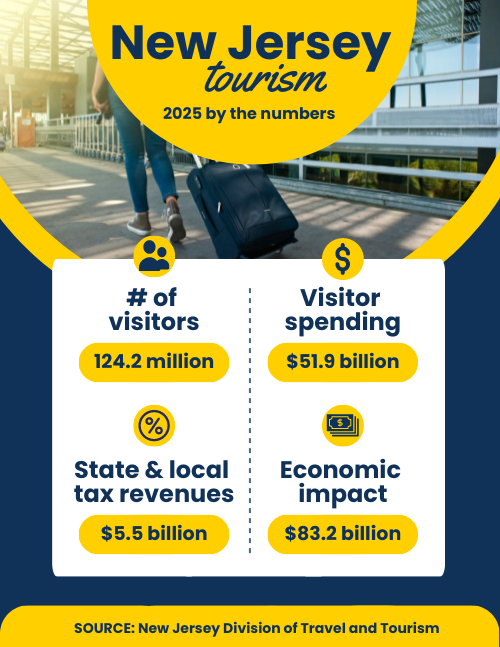
According to Klim, the association has been working for over a year and a half to develop and disseminate resources that members and partners “can utilize to prepare them for the influx of people.”
“We want to showcase New Jersey as a fantastic destination because there truly is so much to do in such a small state,” he said, adding, “I think what our members are looking forward to are increased customer traffic and sales and new marketing and promotional opportunities.”
“I think our restaurants, our small businesses, are really working day-to-day on development,” Klim said. “So, for them to plan a campaign, that’s where we come in to try and give them ideas or ways of thinking. And we’re working with our partners, be it in tourism or the chambers, to help support those small businesses in the ideas that they come up with.”
Klim urged businesses to consider peak match days in their planning. “We’re looking at who’s playing when and encouraging our restaurants and groups to think about themed menus that are culturally significant to the teams that are playing,” he said.
Beyond the World Cup and America’s 250th birthday, there are other major events coming to the region this year, such as the U.S. Open golf championship on Long Island and the baseball All-Star Game in Philadelphia.
“We want to make sure that we can get our message out to all points in New Jersey from north to the southern tip and give them the resources that they think will work best for them. And the resources are continuously in development,” Klim said. “So, our NJ Home of Hospitality website gives information on the local host committee and what the local chambers are doing. And there’s also information from the New Jersey Division of Alcoholic Beverage Control because we want to make sure that there’s compliance.”
‘At home in New Jersey’
Additionally, the NJRHA is focused on building cultural awareness to ensure a positive guest experience. Restaurant owners are being encouraged to account for differing international habits, such as guests who may prefer paying in cash rather than by credit card, or who treat lunch as their primary meal rather than dinner.
Spotlight on the World Cup
Also in this special section:
- Excitement and tension: NJ ramps up 2026 World Cup preparations
- Bohler helps Pingry secure spot as World Cup practice base
“I’ve been working with my counterparts in other states and we’ve been communicating and sharing ideas. We have an entire repository of information that includes all the countries that are playing in the World Cup, their cultural mannerisms, how they may tip, what time they may eat, what’s their national meal, all this information,” Klim said.
“We want to make sure we give people a first-rate experience and make them feel at home in New Jersey, wherever they come from in the world. That’s why we’ve put this information together on everything from kosher to halal sensitivity to how they dine. Do they dine individually? Do they dine in groups?” he said, adding, “We’ve been working with the National Restaurant Association and the Council of State Restaurant Associations – which we are a member of – to meet once every three weeks to share information and share practices.”
Tipping tips
Since international visitors may hail from countries where tipping is uncommon, some restaurant industry groups are advising businesses to consider adding a temporary service charge of about 20% during tournament weeks.
For example, the Pennsylvania Restaurant & Lodging Association has encouraged operators to adopt such charges to address differences in global tipping norms and to help ensure tipped workers are paid consistently during the expected surge in demand, Axios reported.
Klim said, “That’s not our place to tell them how to do business. It’s our place to support what they’re doing and give the resources to do the business to the best of their ability.”
“We’ve got six weeks of the world’s most influential sports event, and then we’ve got another six months of celebrating our country’s 250th. How do we as an association not only capture that, but build that excitement for those that we support?”
They’ll be back
A Deloitte analysis commissioned by short-term rental platform Airbnb estimates that roughly 65% of World Cup tourists plan on returning to North America for another visit within the next five years, underscoring the tournament’s long-term tourism impact.
Klim said, “I think our job as an association is to prepare our members and all the industries around the state that we represent to the best of our abilities so that they have the information they need to be successful, not only just in the short term for these major events coming up, but long term.”
“And that’s really the goal … to learn from these events to build and continue to market New Jersey as a premier destination to come to for food, lodging and entertainment,” he said.
“I think is the most important thing that we can provide is a quality experience for people who may be coming here for the first time, because we want that experience to be so good that they come back another time in the future,” he said.
[T]hat’s really the goal … to learn from these events to build and continue to market New Jersey as a premier destination to come to for food, lodging and entertainment.
– Daniel Klim, president and CEO, New Jersey Restaurant & Hospitality Association
Getting the word out
Klim said he hasn’t heard concerns from members about workforce shortages or supply chain issues in the lead up to the World Cup and U.S. semiquincentennial. He has noticed growing demand for information on aspects like marketing and promotions, though.
“We’ve got over 20,000 restaurants in the state and the wide majority of them are small business owners. They don’t have big marketing budgets. They don’t have departments that can handle a lot of this type of thinking. So, if we can give them simple ideas that can be effective in implementation and garnering additional participation, be it customers or supporters, then that’s what we want to do as an organization,” he said.
In the run-up to the World Cup, there’s been reports that the hotel industry is seeing signs that international travel may be lagging. Analysts believe visa delays, high airfare costs and geopolitical uncertainty could be to blame.
Klim said he hasn’t “heard any ups or downs at this point” from NJRHA’s hospitality members.
“I do know that I think that FIFA had blocks on Philadelphia and New York that they’ve since released, but our hope is that people take advantage of the hospitality that we have here in New Jersey and make this their main headquarters,” he said.
Big support for small businesses
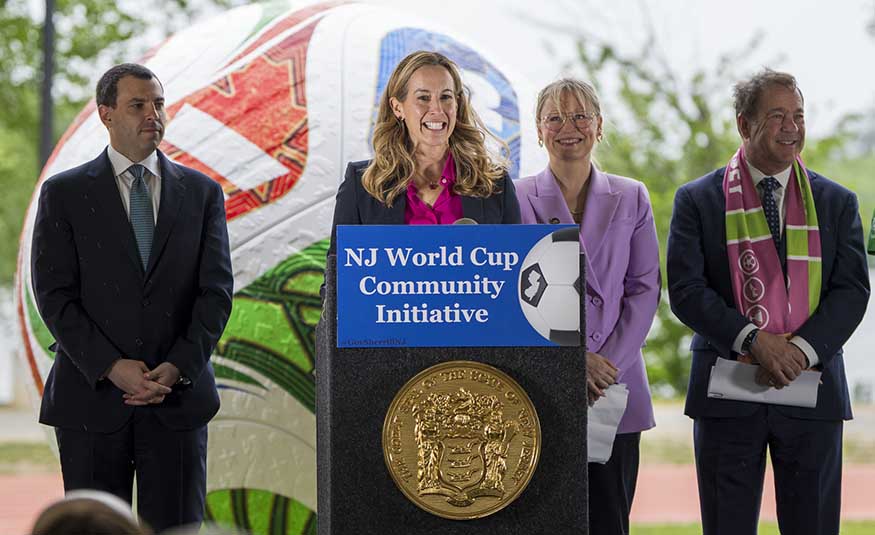
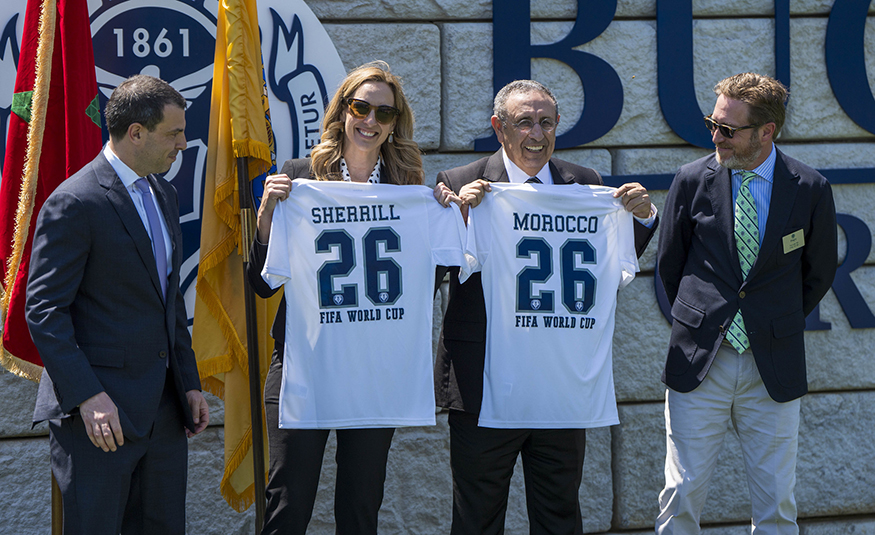
In February, Gov. Mikie Sherrill scrapped a large-scale, 39-day fan festival at Liberty State Park in Jersey City that would have established a major hub for all 104 matches. Instead, the state redirected $5 million to support decentralized local watch parties and community events spread across all 21 counties. Klim said, “We came out in support of the cancellation and spreading out into smaller watch parties because that helps more small businesses. Our hope is that the grant money that was coming out from the EDA does trickle down to some of those smaller downtowns who do want to create a vibrant community but may not have the ways and means.”
“We know what the Flag Cities are in North Jersey and those are big parts of the fan festivities, but we also want to see those main street USAs all the way down to the southern part of the state benefit as well,” he said.
Headquartered in Trenton, the NJRHA provides advocacy, education and resources to its 1,400-plus member restaurants, foodservice establishments and hospitality businesses. According to the organization, the sector generates over $40 billion in annual sales and supports more than 366,000 jobs statewide.
Besides availing themselves of resources through the NJRHA and preparing for the milestone year, Klim reminded businesses to “enjoy the moment because we’re likely not to see this again for decades.”
“It’s almost like your wedding. You get so caught up that you don’t enjoy yourself because you’re so busy with everything else. As hopefully positively chaotic as it’s going to be for our restaurants, our hospitality groups and our hotels, I hope our members take a step back and say, ‘This is amazing that we are being recognized on the world stage.’”