Sign In
 Free Newsletter

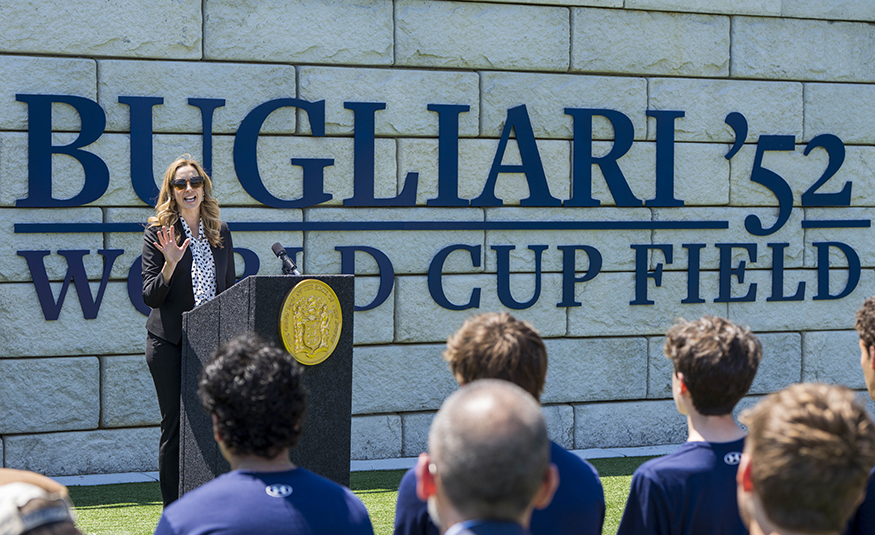
On May 5, 2026, Gov. Mikie Sherrill, Moroccan Ambassador Youssef Amrani and members of the FIFA World Cup 2026 NYNJ Host Committee visited The Pingry School in Basking Ridge: Team Morocco’s base camp site for the tournament. - PROVIDED BY NJ GOVERNOR'S OFFICE/TIM LARSEN
On May 5, 2026, Gov. Mikie Sherrill, Moroccan Ambassador Youssef Amrani and members of the FIFA World Cup 2026 NYNJ Host Committee visited The Pingry School in Basking Ridge: Team Morocco’s base camp site for the tournament. - PROVIDED BY NJ GOVERNOR'S OFFICE/TIM LARSEN
Bohler helps Pingry secure spot as World Cup practice base
Jessica Perry//May 11, 2026//


 Listen to this article
The basics:
- The Pingry School collaborated with Bohler on FIFA World Cup upgrades
- Basking Ridge campus will host Team Morocco in 2026
- Work included FIFA-compliant soccer fields and spectator amenities
- Accelerated project required complex engineering and permitting work
The Pingry School in Basking Ridge made big news last week, scoring the opportunity to host Team Morocco in New Jersey during the fast-approaching FIFA World Cup 2026. Gov. Mikie Sherrill visited the Somerset County campus May 5 alongside Moroccan Ambassador to the United States Youssef Amranin and NYNJ Host Committee CEO Alex Lasry to make the announcement.
To achieve the goal of (once again) serving as a World Cup training site, Pingry made several upgrades to its facilities last year. The coordination highlights the widespread – and wide ranging – impact the world’s largest sports tournament stands to deliver in the Garden State. To help bring to life its fields of dreams, Pingry collaborated with Bohler.
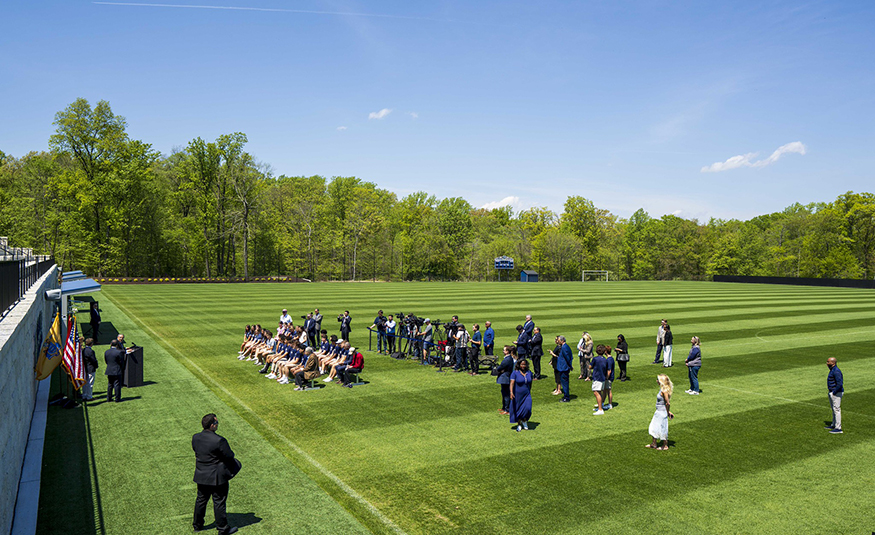
The land development consulting and technical design firm provided permitting and entitlements, planning and landscape architecture and site civil engineering for the latest projects. Key campus improvements include expanding the Miller A. Bugliari ‘52 World Cup Field, adding a second World Cup practice field, and creating enhanced spectator areas with elevated pavilions. All built to FIFA’s exacting standards.
The Pingry School dates to 1861. Today, it comprises three campuses. A lower school in Short Hills, a “K-12 experiential learning campus” in Pottersville, and the middle and upper schools in Basking Ridge. The base camp for Team Morocco sits on 192 bucolic acres along the hills off Martinsville Road. Its facilities include three professional-grade performance venues and the 5,000-square-foot Greig Family Strength & Conditioning Center. The school offers more than 70 sports, including 33 at varsity level.

Not easy being green
The latest work required an accelerated turnaround. “They needed to have the fields ready a year prior,” Bohler Director of Planning and Landscape Architecture Adam Alexander explained to NJBIZ. “And essentially prepare the field and elevate it to a certain level to attract teams that may want to come to the United States and train.”
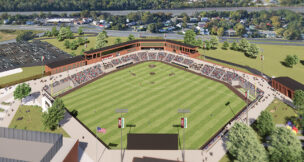
The work involved complex engineering, abetted by integrated services, careful planning and pivots, and active collaboration. The project relocated and redesigned the varsity baseball field to accommodate the new soccer green. For play of America’s past time, it introduced a new diamond featuring an all-synthetic turf infield and natural grass outfield, as well as updated dugouts, player seating and storage areas.
For the soccer fields, Bohler Senior Project Manager Bryan Ehnes said the FIFA regulations go much deeper than just “no turf.” For example, “They do have specific requirements and regulations that get very detailed in terms of even this type of rainstorm, how quickly the field has to drain so that you can have practice within two hours. … How long after a drop of rain hits the field, does it have to go into the ground and then the under-drain system to be able to practice without puddles on the field?”
He said, “it was interesting to learn quite a bit, because it is kind of two or three more layers than maybe a typical design when we do a typical stormwater or a field or a basin or something like that.”
Alexander said the specifications help ensure safety and speed of play. “So yes, the grass is green, but what’s actually happening in there is a series of pipes and networks below so that the field drains,” he said. “The type of soil that’s then above that drainage layer, the type of grass and seed that’s used so it plays at the pace that it needs to play.”
Change of plans
There are also the actual dimensions of the field, which must be the largest size for a soccer field to play at that level, 225 feet by 360 feet, Alexander said. “Then also there’s boundaries outside of that, too, for when players throw the ball in or they have corner kicks.” Those standards are key to attracting attention from an organization like Team Morocco.
At the local level, the existing working relationships between and among Bohler, Pingry and Basking Ridge helped facilitate the process.
Ehnes highlighted the impact. “They did everything they could in terms of meeting with us and us keeping them in the loop and them keeping us in the loop — understanding the push for the timeframe, especially with the World Cup and getting it done a year before,” he said.

As a result of the alignment, Bohler said it secured early approvals for certain parts of the Pingry project. The forward-thinking allowed construction to advance where it could at the earliest it could.
Ehnes explained as the plan changed from simply redoing the existing soccer field on campus to the final product, it exposed the need for a longer permit timeframe because some of the work fell in an area covered by the New Jersey Department of Environmental Protection. So, the plan changed. “It evolved and obviously the construction cost did increase by redoing the grandstand, but it was mutually beneficial,” he said.
At the end of the day, Pingry ended up with a bigger project and more significant improvements in the grandstand — along with reduced permitting because the updated strategy avoided the NJDEP area. “So it was kind of an obstacle from the start that slowly evolved into a great benefit for the project as well as expediting the timeframe,” Ehnes said.
Teaming up
Communication played a key role in advancing the play, especially when working on an active school campus. “Pingry did an exceptional job of organizing not only Bohler as the design professional, but the construction team, execution of the project so that it could all be consolidated,” said Alexander.
Spotlight on the World Cup
Also in this special section:
- Excitement and tension: NJ ramps up 2026 World Cup preparations
- NJ restaurants, bars gear up for 2026 FIFA World Cup crowds
- Bohler helps Pingry secure spot as World Cup practice base
“The project moved as quickly as possible … but it was an interesting phasing in terms of school days,” Ehnes said. Spring break offered an opportunity to get a lot of work done, because students were not in class. But beyond academics, extracurriculars also needed consideration.
Finding the correct sequencing to execute on Pingry’s vision — and having the right people on board to deliver and implement the design was key.
“OK, when is baseball season going? When is soccer ending [and] fitting to make sure that they can still play games, which they did while construction and all these different phases were happening,” Ehnes explained.
Following a decent run by the Pingry soccer team in the playoffs, he said they were able to jump in and start ripping up the field.
Alexander also noted the project continued through the winter ahead of that field work. “The construction of the seating area was done when we really couldn’t be planning on growing grass,” which made them prepared to mobilize for field work in the spring.
Cost savings
Ehnes said the baseball field project wrapped about six months before the soccer field was finished. The area that now houses the grandstand required removal of rock, which dictated a longer demolition period.
The intentional plotting helped phase in the work “in a way, with multiple permits throughout, to be able to always be doing something so that the ideal time, whether it be weather related or school day related, it was the most efficient time being spent at that point.”
Alexander noted that’s where the cost savings is. “It’s all by consolidating it and executing and having a really strong team. That’s where time is money,” he said. “So we’re able to save cost by delivering in an effective, efficient manner.”
And with an integrated team. Beyond the external collaborations, the Pingry project reflects Bohler’s cross-disciplinary capabilities. The team effort included civil engineering, planning and landscape architecture teams.

It matters, “that Brian is a civil engineer and I’m a landscape architect, so he’s looking at things from an engineering perspective, making sure that the drainage works, making sure that everything is in place and aesthetically how people use the space, what it looks like, they converge together,” Alexander said.
Those nuances can make all the difference when the stakes are high. “Because if it for some reason didn’t drain and wasn’t playable and didn’t meet FIFA’s requirements, then we would not be a successful project,” he added.
“So we’re trying to create that experience for people and also check all the boxes for regulations for code, but have it be a place that’s a destination, somewhere special.”
Looking ahead
It was also important that the work serve that purpose beyond the World Cup. “We wanted to help the school bring the field to a certain level that attracts students and the type of player that may want to aspire to play in college,” Alexander explained. “So we’re preparing students and players to go on and play at a high level.”
He noted Pingry “obviously strives for excellence in their academics and their athletics.” That commitment, coupled with the property’s inherent beauty, offered a lot for the Bohler team to work with.

“What we were trying to do is use a lot of the design elements that are already within the campus so that it feels like it’s part of it long after the event. So selections of certain materials and railings and the block that we use to create the seating and even the pavilion that’s at the top, there’s a walkway that traverses to the top, the highest point essentially within the field stadium area where there’s this beautiful view and vista toward the school. You can see the entire field.”
The design also includes areas for plaques, dedications and gathering. “At the top, it’s completely accessible and that creates this incredible view for people to watch not only the World Cup, but also watch competitive soccer,” Alexander said.
“Obviously, the FIFA regulations were important,” Ehnes said. But so too was how the students can watch a varsity soccer game or even meet with the coach. Thinking and accommodating for things like, “how operationally does the team get onto the field and do we have the covering for the benches?”
A part of history
Pingry is not the only local entity seeking to build for the future in line with the World Cup. Beyond making upgrades in advance of the tournament specifically for it, Ehnes says the moment has also provided an opportunity for businesses to invest in upgrades for themselves by accelerating planned projects to capitalize on the opportunity.
“At the end of the day, it’s way more than just going to the game that day,” he said of the potential. “There’s people that are probably staying in the area, they’re traveling to the area and even teams training for in between games, things like that.”
In addition to Morocco, three other national teams will set up in New Jersey. Teams will also make camp at RWJBarnabas Health Performance Center in Morris Township, Stockton University in Galloway, and Rutgers University in Piscataway.
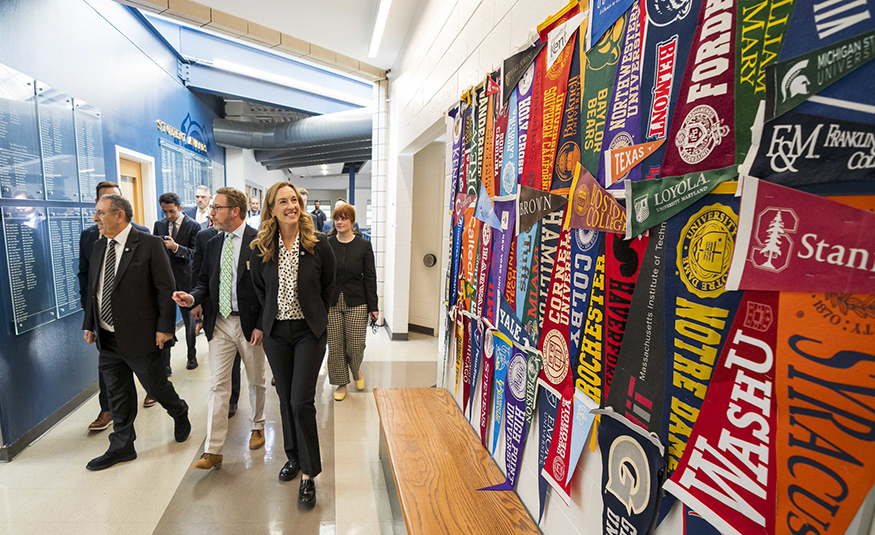
The Pingry School also served as a training site during the 1994 FIFA World Cup.
The new residency builds upon that history in a literal way.
“What an honor just to be in support of one of the world’s largest sporting event. I mean, that alone, us being part of it, has really been really neat,” Alexander said of the experience.
That’s compounded by seeing vision become reality and people actually using the field.
“And then we’re going to see some of the best professional soccer players in the world playing on it. It kind of makes you appreciate the profession and being part of the process,“ he said.
Added Ehnes, “I played soccer all my life and to just be able to say I worked on a facility that now the sixth best team in the world is utilizing during the World Cup is pretty awesome just to be able to say.”