Sign In
Upcoming Event
 Free Newsletter

Eager to build, NJBIZ panelists ID infrastructure as integral to area development
Jessica Perry//December 18, 2024//

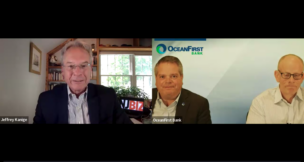
Clockwise from top left: Moderated by Editor Jeffrey Kanige, the Dec. 17, 2024, NJBIZ Construction & Development Panel Discussion featured Stephen Sigmund, chief of public outreach, Gateway Development Commission; Christopher Barchetto, member of Smolin, Lupin & Co. LLC; and Cameron MacLeod, director, Real Property, Gibbons PC, Trenton office. - NJBIZ
Clockwise from top left: Moderated by Editor Jeffrey Kanige, the Dec. 17, 2024, NJBIZ Construction & Development Panel Discussion featured Stephen Sigmund, chief of public outreach, Gateway Development Commission; Christopher Barchetto, member of Smolin, Lupin & Co. LLC; and Cameron MacLeod, director, Real Property, Gibbons PC, Trenton office. - NJBIZ
Eager to build, NJBIZ panelists ID infrastructure as integral to area development
Jessica Perry//December 18, 2024//


 Listen to this article
Heading into the new year, participants in NJBIZ’s Construction and Development virtual panel discussion said there’s an appetite for activity in the sector — but underscored the importance of funding and infrastructure to support it.
Held Dec. 17, Editor Jeffrey Kanige moderated the hour-and-a-half long session featuring:
- Christopher Barchetto; member of the firm; Smolin, Lupin & Co. LLC
- Cameron MacLeod; director, Real Property, Trenton Office; Gibbons PC
- Stephen Sigmund, chief of public outreach, Gateway Development Commission
“I think activity’s increased as the interest rates have started to tick back down,” Barchetto said. “But again, it’s still a significant money cost increase when you look at ‘21 or ‘22 to now.”
MacLeod cited “cautious optimism” as rates decrease. Meanwhile, he also acknowledged how higher costs and limited options also allowed new lenders to enter the market.
“During the pandemic, we saw different sources of capital,” he explained. “You saw a lot more stable financing that became more available in projects – that we might not have penciled that the same way five, six years ago – [and] are now relying heavily on cash credit incentives on financing, other things like that, where they might have just relied on private capital,” MacLeod said.
Fully funded
While the cost of financing and limited access to capital have plagued private sector projects, Sigmund pointed out that 70% of funding for Gateway has come in the form of federal grants. He also noted the awards don’t carry an interest rate.
GDC executed full funding agreements for major grants totaling almost $7 billion and $4 billion over the summer and at the end of September, respectively. In addition to those awards, Gateway has secured low-interest federal loans to help cover the local share of the work.
Speaking about the Railroad Rehabilitation & Improvement Financing, Sigmund said “the interest rates on those loans are very low, particularly they’re very low compared to current interest rates and they’re locked in. They’re not going anywhere. So, that’s where the money from New York and New Jersey is coming from. … They’re repaying those loans and they’re doing so at a very low interest rate.”
Support systems
The panelists pointed to the ways in which infrastructure projects, such as Gateway – billed as the most urgent mass transit project in the country – support the local development ecosystem.
“If you’re a contractor, and you’re doing a significant amount of public work, infrastructure always needs rehab,” Barchetto said. “So, I don’t want to say it almost doesn’t matter, but to a large degree, if there’s public funding, as long as we have a functional federal and state government that is funded, these projects are going to have to take place.”
MacLeod said infrastructure has also become a frontside concern for developers.
“Is there sufficient sewer? Is there sufficient water?” he posited. Especially “as we’re seeing more and more of a focus on electrification, one of the key things that we’re seeing on the front side is folks saying, ‘OK, it may be great zoning … but realistically, can the grid support it and is there sufficient upstream infrastructure?”
Replay: Construction & Development Panel Discussion
Click through to register to watch the full panel discussion!
Necessary work
Looking ahead, Barchetto highlighted road and bridge work as a standout sector to watch in the next year.
“There’s a significant need from a rehab standpoint,” he said. “Just look at the project Steve is talking about. And on the New Jersey side, how much infrastructure will have to be built around that in order to make that a functioning tunnel? So, I think that is going to continue to prosper if you are in that space as a contractor doing roads and bridges, any type of infrastructure work that’s going to be there, I think it’s going to be there for the foreseeable future.”
“You’re in this enormously built environment in New Jersey – particularly in northern New Jersey – and relying on things that were built a hundred years ago, all of which need to get rehabilitated in order for the region to continue to move and to thrive and to have places to live and to have value in the places that they live,” Sigmund said.
Heading into a new year – and new federal administration – panelists also explored possible impacts of tariffs; supply chain issues and material costs; an aging workforce; how technology like AI and drones can create efficiencies; NIMBY-ism; sector strengths; Gateway’s progress; and more.
“I think we’ve got some interesting writing on the wall that says there’s an appetite for something. That certainly we’re seeing more and more projects coming in for finance—whether it be through nontraditional lenders or banks, what have you,” MacLeod said.
“I think it’s more folks are turning back to the old normal and being in a position to actually see the industry work.”
Watch for expanded coverage of the Construction & Development panel discussion in the Jan. 6, 2025, issue of NJBIZ.