Sign In
 Free Newsletter

Behind the scenes as Gateway Tunnel boring nears (photos)
Matthew Fazelpoor//April 13, 2026//


)

The basics:
- NJBIZ gets a glance at tunnel boring machines under assembly in North Bergen
- Machines will bore 1-mile tunnels through solid rock
- Work progresses at key Tonnelle Avenue construction hub
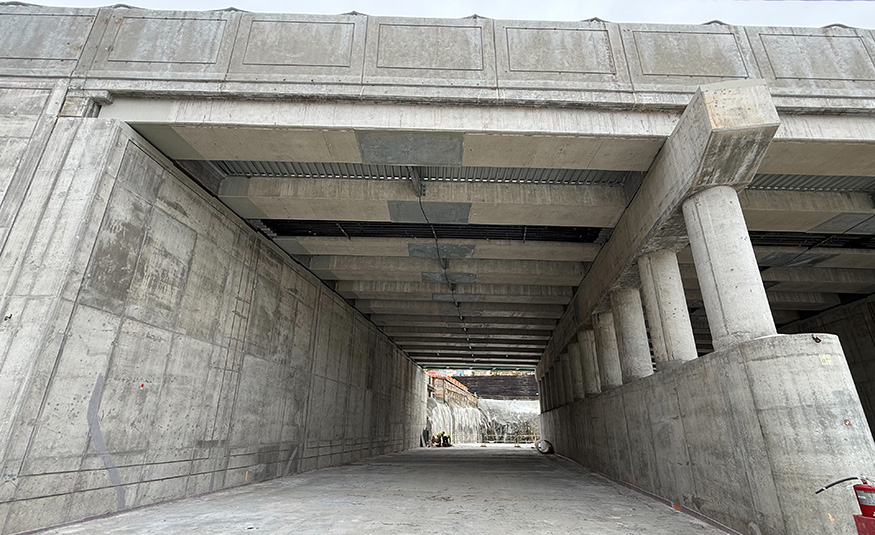
On a stretch of Tonnelle Avenue better known for traffic than tunneling, NJBIZ got a ground-level look at where a key piece of the Gateway Program is beginning to take shape.
During a special media tour of the Hudson Tunnel Project, officials outlined the Palisades Tunnel segment in North Bergen. The work marks the first leg of new rail tunnels to bore through solid rock in the Palisades. The project now pivots to preparing for tunneling as well as assembling the massive tunnel boring machines that recently arrived onsite.
That work centers around the Tonnelle Avenue shaft, a critical construction hub for the Palisades Tunnel Project. From this location, crews will assemble and launch the tunnel boring machines, remove excavated material as tunneling progresses, and support ventilation and logistics throughout construction.
At the Palisades work zone, activity spans both sides of Tonnelle Avenue. Crews excavate massive rock launch box and put together the components of two TBMs that will soon begin tunneling beneath the cliffs. The site is active and tightly coordinated, with excavation, heavy lifting and assembly work happening simultaneously following a brief pause earlier this year amid a federal funding that NJBIZ extensively reported on.
Assembly required
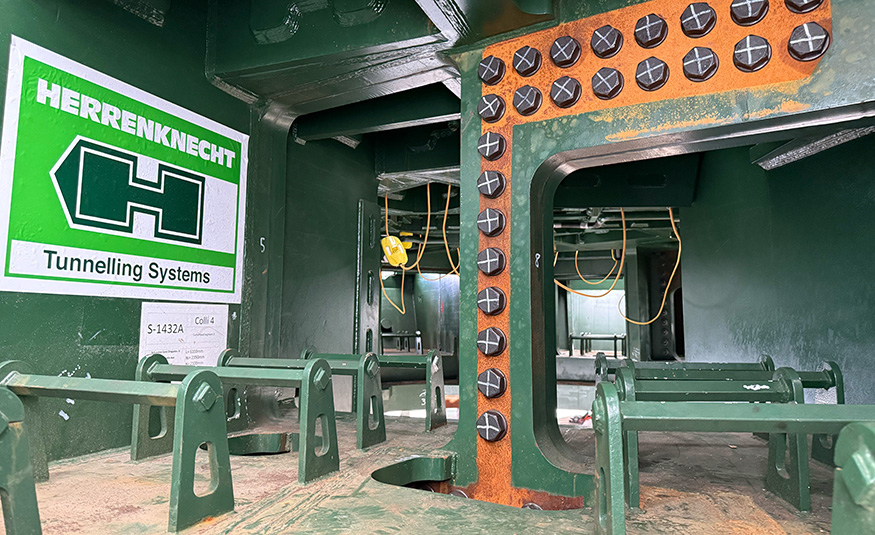
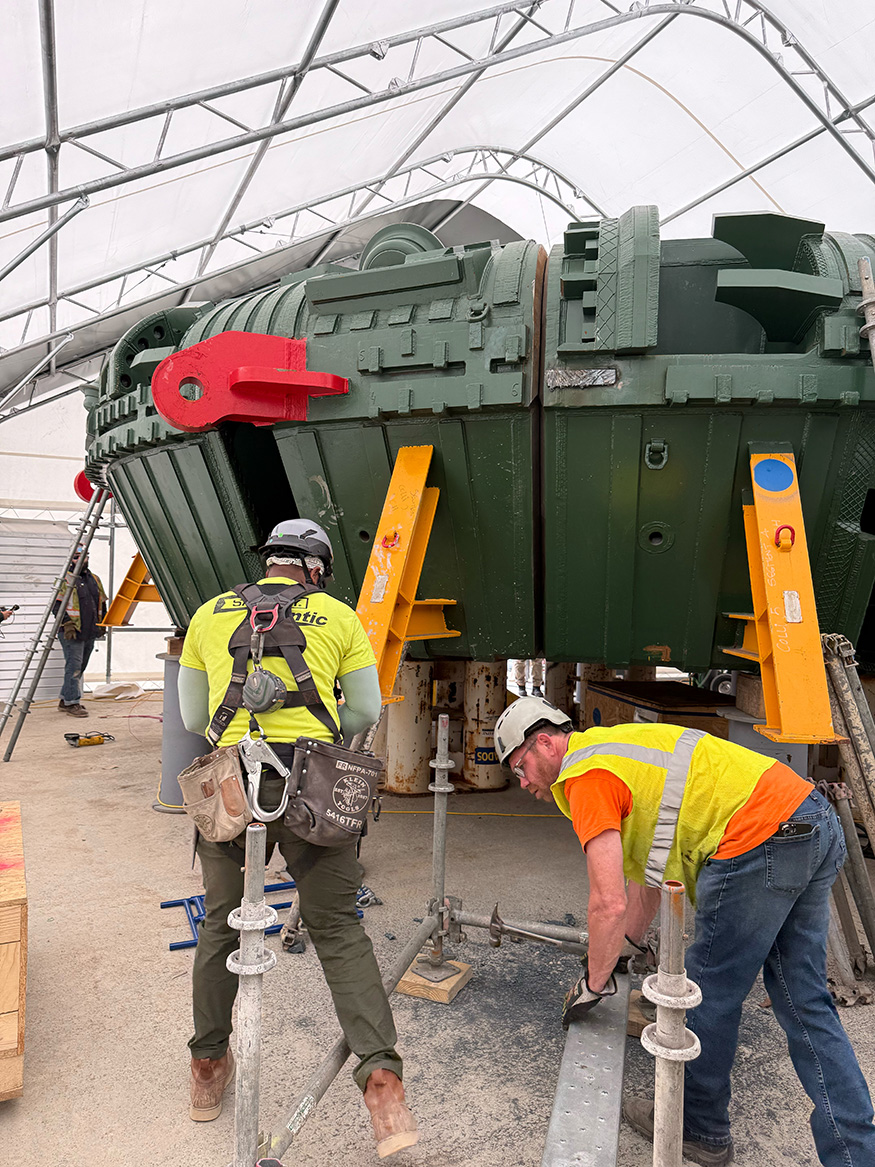
Herrenknecht AG custom built and shipped the two TBMs from Germany. They arrived in just under 100 pieces apiece. An on-site workforce of more than 50 specialists will now assemble the machines. Each weighs about 1,700 tons and is engineered specifically for the rock conditions of the Palisades.
Among the most critical components are the main drives — described by engineers as the “heart” of the TBM. Powered by 11 hydraulic motors, each main drive weighs roughly 175 tons to 180 tons and will ultimately spin the cutter head.
The cutter heads themselves are each outfitted with roughly 59 cutter wheels. They are being assembled under protective coverings, with specialized, temperature-controlled welding underway.
Once fully assembled inside the launch box, each TBM will stretch close to 500 feet in length, about one and a half football fields. They will bore tunnels measuring 28 feet, 8 inches in diameter. Operating as a moving underground factory, the cutter head will grind through rock while excavated material funnels through the machine onto a conveyor system, carried to the rear and loaded into carts for removal.
At the same time, crews install precast concrete segments within a protective shield. This forms the tunnel’s permanent lining as the TBM advances.
Tunneling timeline
“It’s an all-encompassing piece of equipment that cuts the rock, moves the rock, installs a liner and pushes itself forward,” said James Starace, chief of program delivery for the Gateway Development Commission.
On the legal side
In March, a judge dismissed most of a lawsuit tied to the Trump administration’s temporary freeze of funding for the Gateway rail tunnel project. Get that update, and the latest timeline of events, here.
That process unfolds in a steady rhythm: cut, remove, line and push forward. It advances an average of about 30 feet per day. At that pace, projections expect the work to complete the approximately 1-mile journey through the Palisades and into Weehawken to take roughly a year. Workers will then extract the machines at a shaft that connects to the next phase of the project.
“This is the beginning of the tunneling,” said Starace.
From there, a new set of TBMs — designed for softer ground — will begin the Hudson River tunneling operation. That work will run east beneath the river to a shaft just off 12th Avenue on Manhattan’s West Side.
Just like Legos
In the near term, crews expect to spend the next few months completing excavation of the launch box, and TBM assembly as well as on-site testing. Once tunneling begins, a crew of roughly 30 to 40 workers will operated each machine.
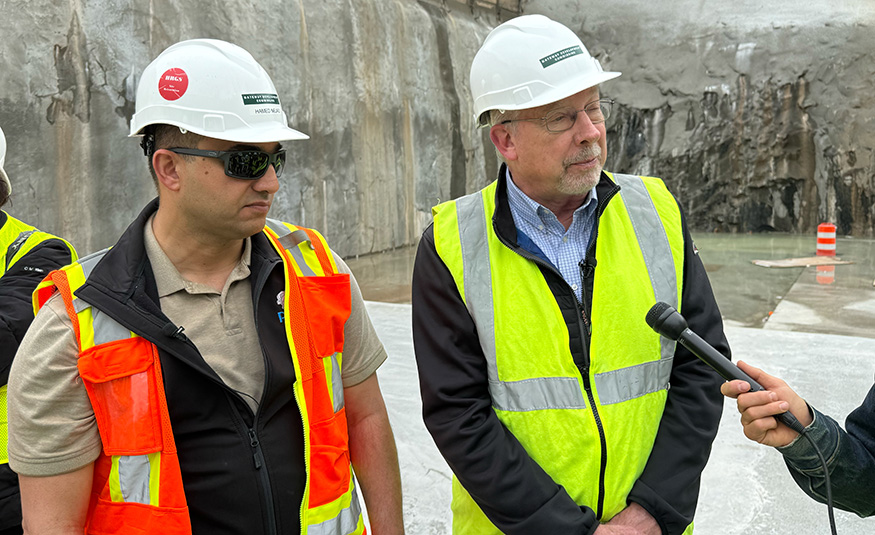
GDC Chief Engineer Hamed Nejad compared the process to assembling a large-scale system piece by piece. He used Legos as an example.
“Right now, we got to finish the box that the Lego goes into – and put these Lego parts all together,” said Nejad.
Please stay tuned for more coverage from the media tour.