Sign In
Upcoming Event
 Free Newsletter


The Atlantic City skyline - PROVIDED BY VISIT ATLANTIC CITY
The Atlantic City skyline - PROVIDED BY VISIT ATLANTIC CITY
Report: Atlantic City casinos generate $1.1B in taxes
Matthew Fazelpoor//May 6, 2026//


 Listen to this article
The basics:
- Casinos generated $1.1B in taxes and fees in 2025, up nearly 25% year over year
- Record $661.7M directed to NJ Casino Revenue Fund supporting seniors, disabled residents
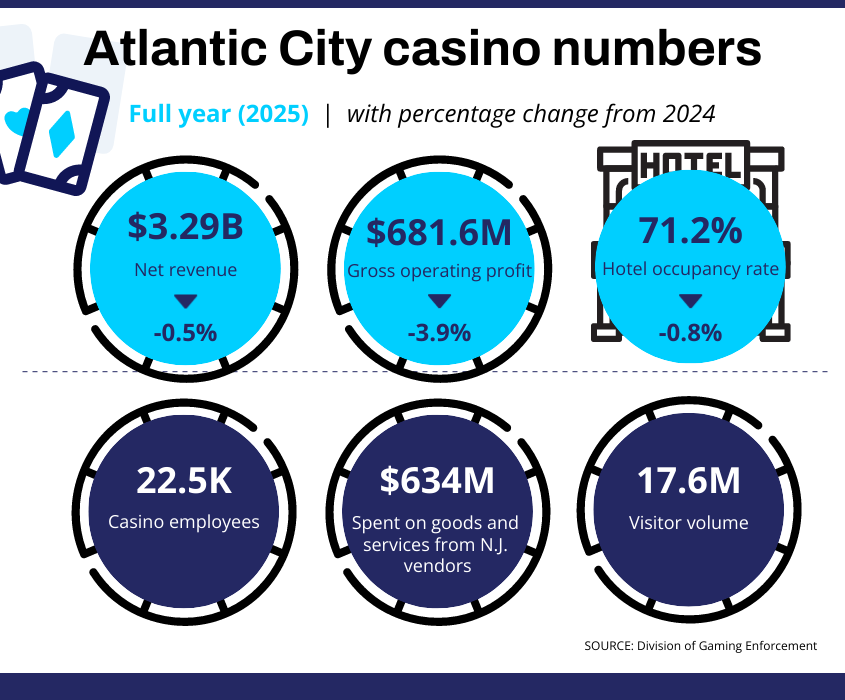
- Industry supports 22,500 jobs and spent $634M with New Jersey vendors
- Operators reinvested $196M in 2025, topping $1.2B over five years
Atlantic City‘s casino industry continues to serve as a major economic engine for New Jersey, generating record tax revenue, supporting tens of thousands of jobs and maintaining a broad community presence, according to a new statewide impact report.
The third annual report, “2025 Impact: Atlantic City Casino Industry,” produced by the Lloyd D. Levenson Institute of Gaming, Hospitality & Tourism (LIGHT) at Stockton University in collaboration with the Casino Association of New Jersey, outlines the industry’s reach across the state — from public funding and employment to local spending and charitable efforts.
In 2025, casinos generated $1.1 billion in taxes and fees, a nearly 25% increase from 2024, with a record $661.7 million going to the Casino Revenue Fund, which supports programs for seniors and people with disabilities. That growth has been driven largely by online gaming and mobile sports betting.

George Goldhoff, president of the Casino Association of New Jersey, pointed to the industry’s role in supporting social safety net programs and the broader state and local economy.
“This new report highlights the vital role Atlantic City casinos’ taxes and fees play in supporting New Jersey’s social safety net programs, as well as the state and local economy through the jobs we provide and the goods and services we purchase from vendors in Atlantic County and statewide,” said Goldhoff, who is also president at Hard Rock Atlantic City. “It also underscores our commitment to community investment through initiatives such as Casinos United Against Hunger, which helps address affordability challenges facing our residents.”
Setting up for future success
At the same time, the core financial picture was relatively flat.
Total net revenue came in at $3.29 billion, essentially unchanged from $3.31 billion in 2024 and $3.33 billion in 2023, reflecting a leveling off in overall business activity. Profitability also continued to soften, with gross operating profit declining for the third consecutive year, down nearly 4% from 2024 and more than 16% below its 2022 peak, as rising costs increased pressure on margins, even with traditional casino gaming holding steady.
The industry’s footprint extends well beyond those top-line numbers. Casinos employ about 22,500 workers, many in Atlantic County, and spent $634 million on goods and services from New Jersey vendors, with a significant share staying local. Visitor volume reached 17.6 million, roughly in line with post-pandemic trends.
Operators have also continued to reinvest in Atlantic City, spending nearly $196 million in 2025 and more than $1.2 billion over the past five years on property upgrades, amenities and new experiences aimed at keeping the market competitive.
Beyond economics, casinos contributed more than $3.1 million in charitable giving, logged over 10,000 volunteer hours, and supported initiatives ranging from food assistance to public awareness campaigns.

Jane Bokunewicz, faculty director of LIGHT at Stockton University, said Atlantic City’s gaming industry “demonstrated resilience and momentum in 2025.”
“Record-setting growth in internet gaming generated vital tax revenue for programs supporting seniors and people with disabilities, while the return of major events brought renewed energy to the city’s economy,” said Bokunewicz. “Even as traditional gaming remained stable and operators navigated rising costs, casinos continued to invest in new amenities and experiences — positioning Atlantic City for long-term growth and continued revitalization through the region.”
The full report is available here.