Sign In
Upcoming Event
 Free Newsletter

Gottheimer crunches the numbers on congestion pricing (updated)
Matthew Fazelpoor//January 5, 2024//

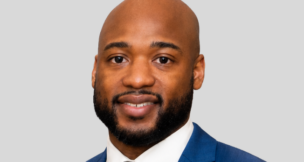
On Jan. 4, 2024, U.S. Rep. Josh Gottheimer, D-5th District, released a new congressional report on New York’s proposed congestion tax. - OFFICE OF U.S. REP. JOSH GOTTHEIMER
On Jan. 4, 2024, U.S. Rep. Josh Gottheimer, D-5th District, released a new congressional report on New York’s proposed congestion tax. - OFFICE OF U.S. REP. JOSH GOTTHEIMER
Gottheimer crunches the numbers on congestion pricing (updated)
Matthew Fazelpoor//January 5, 2024//


)

During a Jan. 4 press conference in Englewood Cliffs, longtime congestion pricing opponent U.S. Rep. Josh Gottheimer, D-5th District, released a new congressional report on the controversial tolling plan that will potentially cost passenger vehicles $15 to enter the area south of 60th Street in Manhattan as soon as this spring.
Gottheimer said “The Impact of MTA’s Congestion Tax on NJ Families” report is based on a detailed study of the preliminary tolling parameters, which are now open for public comment, along with toll and tax information available through the Port Authority of New York and New Jersey.
The major finding in Gottheimer’s analysis is that the tolling would raise $3.4 billion per year, three times the $1 billion objective required under the law passed in the New York State Legislature that set the stage for congestion pricing.
The congressman also notes that his report’s calculation using the bottom end of the proposed plan – without surge pricing and toll increases, including credits.
Some other toplines from the analysis include:
- Without charging New Jersey drivers to cross into the Central Business District, congestion pricing would raise an estimated $1.4 billion a year – $400 million above the target;
- Under the current proposal, congestion pricing will cost Jersey and New York drivers up to $24.75 a day – nearly $6,500 a year, on top of bridge-and-tunnel tolls, gas and parking;
- The Metropolitan Transportation Authority (MTA) has the discretion to charge more on Gridlock Alert Day – costing drivers up to 25% more or $30.94 a day in “surge pricing”;
- MTA can raise the congestion pricing parameters by 10% in 2024 – up to $16.50 a day for passenger vehicles;
- The plan would likely lead to a $830 million loss to the Port Authority capital projects in infrastructure investment over the next decade – directly impacting mass transit projects; and
- Would encourage toll shopping – leading to more backups and pollution here in the Garden State.
“So, now that we know what the MTA is planning to charge for the congestion tax, it begs the question, just how much revenue will New York and the MTA generate for themselves from the congestion?” said Gottheimer. “We know they aren’t planning to give a nickel to Jersey. When you run the numbers, New York’s proposed congestion tax scheme will likely raise $3.4 billion – three times the $1 billion objective as required by New York state law.”
Gottheimer stressed a part in the report about being able to hit the $1 billion goal without charging New Jersey drivers.

“In other words, there is no reason New Jersey drivers can’t be exempt from the congestion tax,” said Gottheimer. “Instead of making Jersey pay for the MTA’s woeful mismanagement, New Yorkers can pay for New York’s MTA problem.”
The congressman also requested a meeting with MTA Chairman Janno Lieber to discuss the findings.
“The numbers in our report and the people who will suffer should be more than enough reason for New York to put a stop to their congestion tax. Gov. [Kathy] Hochul, Janno, you have a few months left to change your mind and work with Jersey,” said Gottheimer. “And today, we gave you a roadmap with how to afford it, relieve Jersey drivers fully from the congestion tax, and live by the New York State Legislature law you always cite as your motivating factor. I’m looking forward to sitting down with MTA Chairman Lieber to discuss our findings. I’ve already requested a meeting.”
‘Pro-traffic math world’
In a statement to NJBIZ, the MTA did not address a potential meeting between Gottheimer and Lieber but did question the congressman’s math – pushing back against the analysis.
“Gridlock Gottheimer’s math is a joke. Despite all the detail that’s been made public, he ignores discounts and exemptions, double and triple count cars that leave and re-enter the congestion zone, and disregards taxi and for-hire vehicle pricing that caps what riders pay,” John McCarthy, MTA chief, Policy and External Relations, told NJBIZ. “In his pro-traffic math world, he’s even calculating a toll for drivers that would do the right thing and switch to mass transit, no longer congesting city streets. The bottom line is math is math and congestion pricing is projected to deliver just under $1 billion per year to investments in mass transit infrastructure. It’s scary for Americans that this congestion-loving politician – who serves on the Financial Services Committee in the United States Congress – clearly can’t count.”
In a statement to NJBIZ, Gottheimer shot back at the MTA – defending his analysis, questioning the MTA’s math, and calling for the authority to release its numbers.
“A little defensive, MTA? They should be. Our math is based on the MTA’s own numbers of vehicles entering the Congestion Tax Zone, and we actually undercounted vehicles, undercharged truck pricing, excluded surge pricing, and took credits into account,” Gottheimer told NJBIZ. “We also utilized the Port Authority’s numbers. If the MTA has a different mathematical analysis, then they should release their numbers to the public immediately. We are happy to review them.”
Editor’s note: This story was updated at 8:51 a.m. ET Jan. 5, 2024, to include U.S. Rep. Josh Gottheimer’s response to the MTA.