Sign In
Upcoming Event
 Free Newsletter

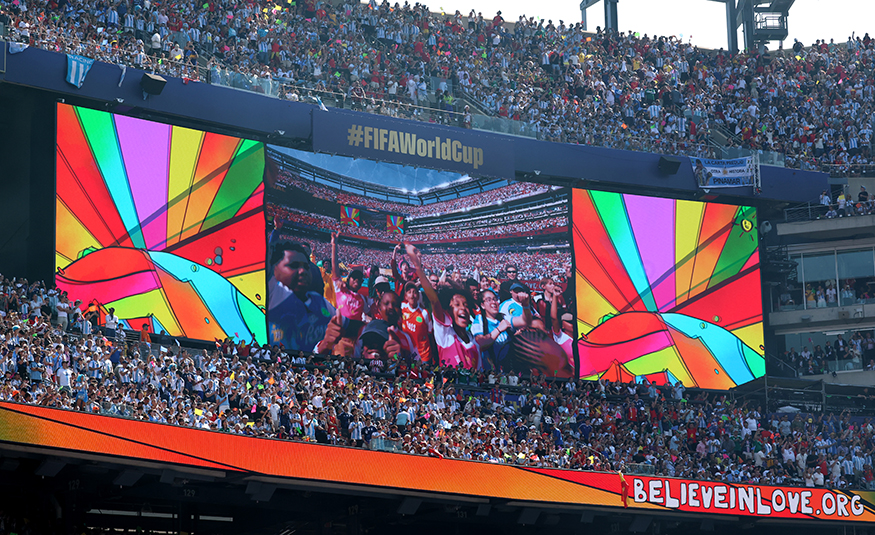
The audience watches the FIFA World Cup 2026 Topps Final Halftime Show at MetLife Stadium (New York New Jersey Stadium for the tournament) on July 19, 2026, in East Rutherford. - PHOTO BY KEVIN KANE/GETTY IMAGES FOR GLOBAL CITIZEN/PROVIDED BY GLOBAL CITIZEN
The audience watches the FIFA World Cup 2026 Topps Final Halftime Show at MetLife Stadium (New York New Jersey Stadium for the tournament) on July 19, 2026, in East Rutherford. - PHOTO BY KEVIN KANE/GETTY IMAGES FOR GLOBAL CITIZEN/PROVIDED BY GLOBAL CITIZEN
NJ World Cup operations pass test on transit, security
Matthew Fazelpoor//July 22, 2026//


The basics:
- NJ Transit transports 370,000+ fans during 8 World Cup matches
- More than 645,000 fans attend matches at New York New Jersey Stadium
- Coordinated public safety efforts help tournament concludes without major security breaches
- Anti-human trafficking operation recovers 97 suspected victims, leads to 71 arrests
After years of planning and preparation, New Jersey officials are highlighting World Cup operations, including the transportation, security and emergency response efforts required to host eight matches and move hundreds of thousands of fans through the region.
The FIFA World Cup 2026 concluded July 19 with Spain defeating Argentina 1-0 in the Final at New York New Jersey Stadium in East Rutherford. The venue hosted eight matches during the tournament, drawing more than 645,000 fans, including a sellout crowd of 80,663 for the Final.
With transportation, crowd management and public safety among the biggest operational challenges, officials said the tournament required extensive coordination among state agencies, NJ Transit, law enforcement, emergency management teams, local governments and event partners.
A major focus throughout the planning was avoiding the transportation issues that followed the 2014 Super Bowl at MetLife Stadium, when thousands of fans faced major delays leaving the region.
NJ Transit President and CEO Kris Kolluri said the agency’s performance during the tournament reflected nearly three years of planning and preparation.
Not only did we successfully deliver for one of the world’s largest sporting events, but we did it eight times over.
—Kris Kolluri, president and CEO, NJ Transit
“The Super Bowl curse is over,” Kolluri told NJBIZ. “Not only did we successfully deliver for one of the world’s largest sporting events, but we did it eight times over.”
Understanding the assignment
NJ Transit safely transported more than 370,000 people to and from the stadium throughout the tournament, according to Kolluri. The agency said average travel times were approximately 35 minutes from New York Penn Station and the stadium cleared within 60–80 minutes after each match.
“This achievement is the result of nearly three years of planning, preparation and partnership, but above all, it reflects the extraordinary dedication of the men and women of NJ Transit,” Kolluri said. “Our team understood the magnitude of the challenge, embraced it, and delivered. We proved that NJ Transit can rise to the occasion when the stakes are highest and the world’s attention is focused on New Jersey.”

“It’s really been amazing, a logistical work of art, if you will, getting everyone in and out of here,” said Gov. Mikie Sherrill before the Final. “We have had New Jersey Transit, which has been really, I think, a bright light of the whole event. It truly has been amazing getting everyone in and out so quickly and easily.
“I’ve heard a lot of great reports. I’m biased, but I’ve also heard that it’s been the best experience on a rail transit system of any of the World Cup final cities.”
Kolluri added, “We are deeply grateful to Gov. Sherrill for her unwavering leadership and support throughout this effort. And most importantly, we thank our loyal customers for their patience, flexibility, and partnership on each of the eight match days. Their cooperation helped make this historic operation an extraordinary success.”
Over the past 39 days, NJ TRANSIT helped connect fans from around the world to the FIFA World Cup!
⚽ 8 FIFA World Cup 2026™ matches
🚆 370,000+ people moved to and from NJNY Stadium
⏱️ 80 minutes — average time to clear everyone from the stadium on trains and buses post-match… pic.twitter.com/gWyq6X0phf— NJ TRANSIT (@NJTRANSIT) July 20, 2026
Seated and ready to go
The FIFA World Cup 2026 New York New Jersey Host Committee also highlighted the region’s transportation performance.
By the (early) numbers
Officials say the World Cup’s five group-stage matches in June generated an economic impact of $2.1 billion for the region, with the full report yet to come. Get the recap here.
The official NYNJ Stadium Shuttle sold 69,179 tickets during the group stage, including 11,168 for the Final. The Host Committee said more than 97% of fans entered before kickoff for every match.
Sherrill said the state’s ability to manage the tournament was built on experience handling complex events and strong coordination among agencies. Crediting workers for their efforts, she said planning for an event of the World Cup’s scale required preparation across multiple areas.
“We have the best public service – truly amazing, dedicated people,” Sherrill said.
The tournament required coordination among transportation agencies, law enforcement, municipalities, businesses and community organizations throughout the region. Beyond the matches themselves, communities hosted fan festivals, watch parties, sponsor activations, and other events designed to welcome visitors and extend the tournament’s reach across the state.

Public safety success
The World Cup also concluded without any major security breaches, as law enforcement and emergency management agencies carried out a coordinated operation involving state, local and federal partners.
Public safety officials also carried out specialized operations tied to the tournament. The Attorney General’s Office announced that anti-human trafficking efforts conducted before and during the World Cup resulted in the recovery of 97 suspected trafficking victims and 71 arrests.
The effort involved the Division of Criminal Justice; New Jersey State Police; and 44 local, county, state and federal law enforcement agencies, along with nonprofit partners that helped connect potential victims with support services.

Attorney General Jennifer Davenport said the work demonstrated the importance of maintaining a coordinated response around major international events.
“The Division of Criminal Justice and the New Jersey State Police worked seamlessly with partners at different levels of government, leading to the recovery of dozens of residents suffering through exploitation and trauma,” said Davenport. “While the World Cup highlighted the importance of the work we do each day to fight human trafficking, that mission is a priority for our office, and we will be unrelenting in providing assistance to victims and ensuring accountability for perpetrators long after the international spotlight fades.”