Sign In
Upcoming Event
 Free Newsletter

HR 1 health law could leave 350K New Jerseyans uninsured (updated)
But a safety net with hospitals at its center could help protect patients
Jessica Perry//March 23, 2026//

PHOTO: DEPOSIT PHOTOS
PHOTO: DEPOSIT PHOTOS
HR 1 health law could leave 350K New Jerseyans uninsured (updated)
But a safety net with hospitals at its center could help protect patients
Jessica Perry//March 23, 2026//


)

 Listen to this article
The basics:
- HR 1 law could leave about 350K New Jersey residents without health insurance
- 466K more may face significant premium increases
- Hospitals and safety-net providers expected to see more uncompensated care
- Workgroup urges stronger hospital partnerships to expand care access
The One Big Beautiful Bill Act is ushering in big changes for health insurance coverage in New Jersey – with significant consequences. Projections anticipate roughly 350,000 residents will lose coverage under the law, which was bill number H.R. 1 in Congress. Another 466,000 will experience significant premium increases. Changes will also hamstring states, limiting how New Jersey can use its own funds to expand health care access. But when people lose coverage, it does not eliminate the need for care – it shifts the burden onto an already strained system.
A new set of recommendations aims to position hospitals as anchors within a collaborative and more coordinated safety-net system.
“We knew that there was really a lot of confusion about what was going on and exactly what the timeline was and who would be impacted,” explained Kate Shamszad, vice president of policy, New Jersey Health Care Quality Institute.
Launched in 1997, the Quality Institute is a nonprofit working toward improving the safety, quality and affordability of health care. Its more than 120 members include health systems, insurers, providers, consumer groups and employers.
“[W]hat we do most frequently is convene organizations together to really work through these complex policy issues.” With HR 1, “We knew there were a lot of things to solve and they needed to be solved collectively.”
Preparing for changes
Together with Parker Family Health, the Quality Institute convened the HR 1 Health Care Access Workgroup in fall 2025 to help state leaders and health care providers prepare for changes due under the law and to mitigate their effects. Based in Red Bank, volunteer-based, nonprofit free clinic Parker provides comprehensive primary health care to uninsured, low-income Monmouth County residents.
The loss of enhanced Affordable Care Act premium tax credits at the end of 2025 is expected to cut $500 million in federal premium assistance in New Jersey. This cut will increase premiums significantly for approximately 450,000 current enrollees and end federal subsidies for more than 60,000 individuals.
The workgroup engaged stakeholders across state and local government, technology companies, and health plans and systems. It also spoke with organizations involved with the rollout of the Affordable Care Act, that engaged communities during COVID or supported the Medicaid Unwinding effort, as well as providers of social and legal services and free or subsidized care of uninsured and underinsured people.
The report came together over weekly sessions with a volunteer steering committee along with a one-day session featuring more than 60 organizations. Robert Wood Johnson Foundation also supported the work.
Stemming the tide
Speaking with NJBIZ recently, Shamszad said the effects are already starting to emerge.

“First and foremost, there’s really a sort of cool down, we’ve heard anecdotally, with those who are in mixed immigration status when they’re seeking care at places like the Federally Qualified Health Centers, because those are federally funded locations,” she said.
While individual marketplace signups have continued, the state predicts a “material drop off” ahead in the spring. The New Jersey Department of Banking & Insurance said more than 509,000 New Jersey residents enrolled in health insurance coverage for 2026 through the state marketplace, Get Covered New Jersey, during open enrollment (Nov. 1, 2025, to Jan. 31, 2026).
But the impact goes beyond coverage status, and NJDOBI said the effects of HR 1 are already showing. According to the state, many residents shifted their 2026 coverage in favor of plans that offer lower premiums, but higher out-of-pocket costs. Get Covered NJ offers three tiers of coverage — Bronze, Silver and Gold. Shoppers for Silver plans fell from 83% of enrollees in 2025 to 68% this year. Meanwhile, active Bronze selections increase from 16% last year to 31% in 2026. NJDOBI noted tens of thousands of enrollees have already dropped 2026 coverage due to nonpayment of the higher premiums, with more losses expected.
Meanwhile, the state’s public funding health insurance program, NJ FamilyCare, anticipates 20% of those covered will lose insurance under the Medicaid changes. It currently enrolls 1.8 million New Jerseyans. The state also expects to receive an estimated $3.6 billion less in annual federal Medicaid funding – including about $300 million for hospitals.
The Quality Institute/Parker Health report outlines three primary focus areas: Medicaid Enrollment Systems and Technology, Outreach and Enrollment Assistance Actions and expanding access to care for the uninsured.
For your consideration
Hospital costs account for the largest single component of health care spending; so many H.R.1 proposals focus on hospital pricing. According to the Sherrill-Caldwell administration health care transition report, New Jersey could consider:
Out-of-network price caps. Enacting legislation to create out-of-network hospital price caps at a fixed percentage of the Medicare rate for all state-regulated health plans.
Reference-based pricing. Using reference-based pricing for the State Health Benefits Program and commercial plans rather than negotiating prices.
Site-neutral payments. Establish site neutral payments that equalize rates for health care services across different settings for state-regulated plans, with an opt-in for self-funded ERISA plans, and potentially lower costs for patients, employers, and taxpayers.
The latter is expected to be especially critical as coverage declines.
Community health centers, or Federally Qualified Health Centers; free clinics; and emergency departments will bear the brunt of increased demand.
The HR 1 workgroup identified seven focus areas, along with responsible parties and timing, to begin to coordinate and strengthen the local safety net. Hospitals play an integral role in many.
- Identify access and capacity gaps across geographies and providers. Short term.
- Strengthen partnerships between hospitals and community organizations, including developing a case for support with case studies of existing models. Short term.
- Create scalable care models. Short/long term.
- Secure sustainable funding, including identification of timing, funding needs, and potential public and private funding sources. Short/long term.
- Address staffing needs, including engagement with licensing boards, volunteer and residency programs, and an assessment of policy options to support workforce capacity. Short/long term.
- Build policy, regulatory and funding support. Short term.
- Expand and ensure public awareness of care options and strategies to reduce emergency department utilization. Short/long term.
Short-term actions are defined as those beginning within six months — meaning some initiatives are intended to begin in 2026.
Under pressure
Shamszad described FQHCs as the backbone of primary and specialty care for vulnerable populations. But they rely heavily on Medicaid funding. And “it makes it more difficult to provide care,” she said. As more uninsured patients seek treatment, “they’re not able to meet their thin operating margins to keep doors open.”
New Jersey has 23 FQHCs that operate 138 sites throughout the state. According to the HR 1 report, Federally Qualified Health Centers serve over 620,000 patients annually here. More than half are covered by Medicaid, while 27% do not have insurance.
Free clinics do not receive federal funding and are prohibited from charging fees. Beyond primary care, most of these providers also offer specialty care and wrap-around services. “We just don’t have a lot of free care options within the state,” Shamszad said.
In fact, New Jersey has just five free clinics spread across five counties: Bergen, Monmouth, Ocean, Camden and Cape May. Shamszad added that these care sites are typically only open to residents of the county where the clinic is located.
An expensive trip to the ER
That leaves hospital emergency departments as the default – and standing to absorb the most patient volume due to cuts in coverage. “Emergency departments take all,” Shamszad explained. “They have an obligation to treat people regardless of their ability to pay, but it’s also the most expensive place that you can seek care.”
According to health insurance provider Mira, New Jersey has the second-highest average out-of-pocket cost across the U.S. for a visit to the emergency room ($3,377).

Closing doors
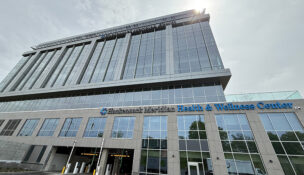
The recent closure of Heights University Hospital’s ER leaves the future of health care access in Jersey City’s Heights neighborhood uncertain. Read more here.
ERs also lack continuity of care. “So, it becomes a very expensive safety net and not a safety net that cares for people over time,” she said.
In the near term, Shamszad anticipated “Hospitals will definitely face higher levels of uncompensated care and charity care,” creating a dual financial strain. And other funding changes coming in the next couple of years will further affect how much money is flowing through Medicaid to hospitals.
Collaboration is key
In the context of the report, expanding access to care also means directing patients to the appropriate setting and reducing reliance on ED use. In addition to being unsustainable, Shamszad noted this kind of utilization does not deliver positive outcomes for patients who need ongoing care and continuity.
To address that, the workgroup says fostering hospital buy-in and cross-sector collaboration is key.
But it won’t be easy, “as organizations that previously competed for resources now need to work together.”
Hospitals can also play a central role in providing diagnostics and specialty care, including reproductive health, LGBTQ and dental care.
To address staffing challenges, the report recommends expanding both paid and volunteer clinical staffing pipelines via partnerships with hospitals, medical associations, nursing programs, medical trainees and others. It also suggests providing financial incentives for medical professionals working in hospitals to volunteer at satellite clinics.
As for funding, the report highlights a mix of sources, including in-kind or direct financial support from hospitals or provider networks/systems; state appropriations; and private, county and braided funding streams.
Sustainability will depend upon scalable operating models, shared cost frameworks and budgeting templates, improved transportation solutions for patients; and policies that promote alternatives to emergency department care.
Working relationships
“I know the hospitals are already stepping in to think about care that’s available in their community and making those partnerships, but I think we have a real obligation to partner directly with community providers and hospitals so that we, whenever possible, can move patients to the lowest acuity setting that they need, while also a lower cost setting from a safety net perspective,” Shamszad said.
She cited the relationship between Virtua Health and the Cherry Hill Free Clinic. “They do a lot to support in terms of resources and providers. So if someone shows up seeking care in the emergency department … then they can help that patient find a medical home at the free clinic.”
Virtua physician Dr. Jubril Oyeyemi founded the facility. Staffed by volunteer clinicians, the Cherry Hill Free Clinic is one of Virtua Health Philanthropy’s featured initiatives. Amid steady growth, Cherry Hill Free Clinic said it treated 2,646 uninsured patients in 2025. Breaking down its finances, the center said funding comes from grants (32.3%), donations (41.4%) and major gifts of more than $5,000 (26.2%). One hundred percent of public donations go to patient care programs.
Shamszad said the relationship between Virtua and the Camden County free clinic, “those really intentional partnerships between the hospital and community providers where there is low or free cost of care, is going to be really important for both” moving forward.
Looking at the numbers
The workgroup report also calls for improved data to identify gaps in care. “It’s definitely going to be really important for the state, within the next year, to take a really close look, ongoing, at who’s enrolled in the insurance markets and Medicaid. And to be able to find geographically whether there are significant issue areas – both from a provider standpoint, but also number of uninsured.
Beyond tracking Medicaid and individual marketplace enrollment numbers, key metrics include emergency department trends, the type of individuals seeking care, type of scenario and acuity; as well as volume at free clinics.
Gov. Mikie Sherrill recently proposed $7.2 billion in funding for NJ FamilyCare in her 2027 state budget plan. New Jersey’s Medicaid program provides benefits to more than 1.8 million residents.

The workgroup recommendations align with those in a report produced by the health care-focused Sherrill-Caldwell transition action team, signaling broader policy momentum around strengthening the state’s safety net. Quality Institute President and CEO Linda Schwimmer serves as a member of the Affordable Healthcare: Addressing Washington’s Medicaid Cuts Action Team. She said the path forward will require cross-sector coordination.
“Many of the recommendations will fall to government to implement, but not everything.” Schwimmer wrote in a blog post announcing the report from her organization and Parker Family Health. “There is a lot that organizations like those that are members of the Quality Institute can work on together. We can reduce the harm and build out systems that better support those living in the Garden State.”
Clock’s ticking
But time is of the essence.
“The state is running against a ticking clock, in terms of implementation of these things,” Shamszad said. She pointed to new developments, such as more frequent Medicaid eligibility checks and work requirements. “And essentially, there’s only nine months left to get that in place.”
Clear communication is key, she added. “[T]his stuff is really confusing. And if we as policy wonks were confused about it, then people who received their health care through these programs were likely confused as well.”
She said ensuring people understand the impacts of these changes is just as important as making sure systems are in place to mitigate them. Knowing what changes are coming and if you’re at risk offers individuals time to adequately prepare. Shamszad conceded it’s an uphill battle, but also a real opportunity.

When H.R.1 passed last year, New Jersey Hospital Association President and CEO Cathy Bennett said it represented a “devastating step backward for health care. “Nearly $1 trillion in proposed Medicaid cuts will have irreversible consequences for patients, communities and hospitals across New Jersey and the nation. Hundreds of thousands of New Jerseyans will lose their healthcare coverage,” Bennett commented. “Further consequences include health care job losses, service cuts, emergency department overcrowding and the very real risk of hospital closures – jeopardizing access to care for everyone, not just Medicaid recipients.
“N.J. hospitals remain deeply committed to caring for all members of the community, but they cannot do it alone.”
Editor’s note: This story was updated at 3:29 p.m. EST to indicate the ‘For your consideration’ recommendations come from the Mission to Deliver Sherrill-Caldwell administration transition 2026 report, not the HR 1 Health Care Access Workgroup.