Sign In
 Free Newsletter

League of Municipalities builds for the future
Matthew Fazelpoor//November 28, 2022//


Earlier this month, the 2022 League of Municipalities’ Annual Conference was held over three days at the Atlantic City Convention Center bringing together decision makers, businesses and other stakeholders from all around the Garden State. The theme of the 107th annual event was “Building for Tomorrow.”
“When you’ve been around for 107 years, you could say that you’re always building for tomorrow,” said William Pikolycky, NJLM president and mayor of Woodbine. “Building for what lies ahead is an ongoing process, but following the pandemic and all that ensued, there is a renewed focus on building and rebuilding our infrastructure, be it in transportation, water and sewer, energy, broadband, etc.”
“During this time of recovery and restoration, the NJLM Annual Conference provides forward-focused municipalities from around New Jersey an opportunity to work together,” said NJLM Executive Director Michael Cerra. “Building for Tomorrow is always a consideration for local governments, but with sweeping infrastructure developments impacting every step of municipal life, from communications to construction, we are providing a smart workspace for delegates and exhibitors to plan for the future.”
NJLM says that 92% of the Garden State’s municipalities were represented at the conference.
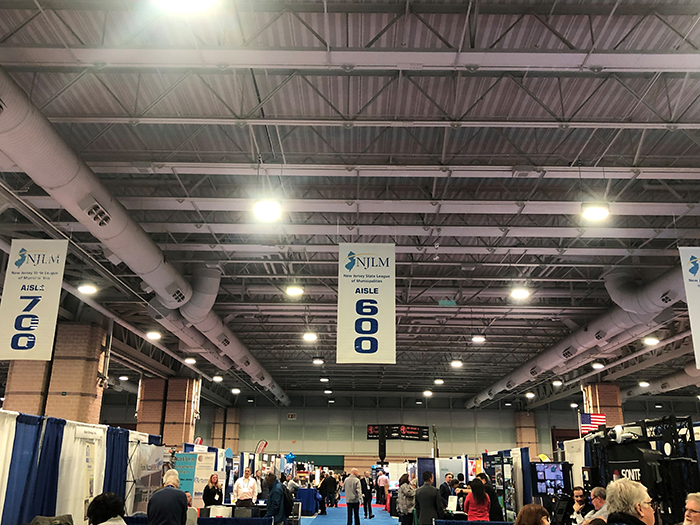
The exhibit hall featured rows of booths that hosted commercial firms, government agencies, nonprofits, associations and more, displaying some of the latest products and services to educate and assist municipal officials. Some of the industries represented include energy/sustainability, cannabis, housing/development, financial/banking, utilities, insurance, security, office products and much more.
In addition to the endless networking opportunities – and a robust party circuit – the event also featured more than 125 educational sessions, clinics, panels and workshops. The subjects included DEI (Diversity, Equity, and Inclusion) in the Municipal Government Ecosystem; Future of Municipal Work; Balancing Work, Family and Expectations; Film Readiness with the NJ Motion Picture & Film Commission; Considerations as State Health Benefits Rates Increases; Cannabis Applications & Considerations; Manufacturing Career Training for Underserved Communities and others.
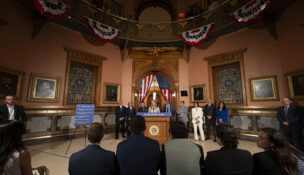
One of the most popular such panels, which took place on day two of the conference, gathered the state’s legislative leaders to discuss the municipal agenda in Trenton. The panel, featuring Assembly Speaker Craig Coughlin, D-19th District; Assembly Minority Leader John DiMaio, R-23rd District; Senate Republican Leader Steven Oroho, R-24th District; and Senate President Nick Scutari, D-22nd District, was moderated by Millstone Mayor Ray Heck, NJLM’s first vice president. It offered the opportunity for local leaders to get direct facetime with the four leaders.
“This is always one of the most popular discussions we have,” said Heck. “This is where we have an opportunity to hear from the legislators in the Assembly and the Senate, leaders of the caucuses that can explain to us more in depth where they’re going to be and how they’re moving.”
Before jumping into some of the discussion, which kicked off with property taxes, the leaders remarked on how well they all get along, despite their many political differences.
“I think you’ll see as we go through this that one of the things we don’t get enough credit for in Trenton, I think, is how well we actually get along and work together,” said Coughlin. “I think there’s a stark contrast between Trenton and Washington.” Coughlin noted that while the four have disagreements, they are often able to work together because they care deeply about many of the same issues.
“I echo everything that the speaker has said with regard to the collegiality and to this group of people working together and treating each other respectfully, being friends,” said DiMaio. “We do have disagreements on issues, the business of the day. And I think that’s healthy because the harder you go at an issue, in the end, if you push hard from both sides, you come out with a really good product.”

“We do have, as John mentioned, differences and disagreements,” said Oroho, who noted that one of the main questions they get asked is about how they get along. “We will have disagreements. But we do it, I think, in a very professional manner,” Oroho continued. “Sometimes the media tries to hype the 1% or 2% of the times that maybe there was something that was inappropriately said. But most of the time, 98% of the time we disagree but, quite frankly, we negotiate, we compromise. We try to communicate as much as possible.”
Citing last year’s call during the panel to address affordability, Coughlin said property tax relief is always at the top of that list in New Jersey.
“And so, I’m proud of the work that we have done to address those concerns,” said Coughlin, highlighting the budget passed over the summer. “The cornerstone of that being the $2 billion ANCHOR Program, the biggest tax relief program in the history of the State of New Jersey, which affects positively about 2 million New Jerseyans.”
Coughlin said that roughly 48% of the state budget goes to property tax relief in one form or another.
DiMaio said that his side is grateful for the ANCHOR Program, before describing it as “better than nothing.”
“It’s a step in the right direction,” said DiMaio. “But I would rather see some things that would be more permanent in nature.”
“We can talk about how we try to shift things around,” Oroho explained. “But if you don’t go after the cost drivers and come up with real kind of reforms then, quite frankly, you’re dealing with it year-in, year-out.”
Scutari said this budget was one of the best he’s been part of during his nearly two decades in the Legislature. “One of the things that came out of that was some of the biggest record property tax relief in the ANCHOR Program that’s ever been seen,” said Scutari. “In addition to that ANCHOR Program that’s just rolling out now, we made a full pension payment, and we also did a sales tax holiday.”
From there, the discussion snaked through a number of topics, including Open Public Records Act requests and a lot of debate over affordable housing, a topic that was on the minds of many municipal leaders.
Scutari returned to the topic of property taxes and affordability, crediting the towns that have embraced the legal cannabis market. “The towns that have seen the foresight, that have allowed for these distribution centers in their towns are now realizing extraordinary property tax direct relief,” said Scutari, noting the high popularity of legal marijuana versus the fraction of towns that have welcomed it so far. “I think that’s something that the leaders in this room should give a second look at before they miss the boat. Because there’s an opportunity here to produce real money for your communities. And if you don’t do it, you’re going to be on the sidelines when it’s going to be sold the next town over.”
The panel then took questions from municipal leaders gathered in the room on topics such as technology upgrades, further affordable housing concerns, liquor licenses, what the Legislature is doing to reign in agencies and departments that some felt are dumping on municipalities and, of course, the skyrocketing health benefits rates hitting counties and municipalities that are enrolled in the state plan.
Mendham Mayor Christine Serrano Glassner and Kathleen Wollert, vice president of the Ewing Township Council, each referenced the hot-button issue in their questions to the panel.
“I am here because I have concerns about the large increase that one of the other speakers just mentioned in this health benefits plan,” said Wollert, noting that before this spike she felt participating in the plan was worthwhile. “But it’s across the board. And it affects not only the town but our employees.”
Wollert said as public employers, they are not paying the kinds of salaries to their employees that would justify charging $1,000 a month for health care. “Is there anything the Legislature is able to do to effectuate some sort of break on the unknown and sudden health care increases for our towns,” Wollert asked.

“There are things we could do,” said Coughlin. “Let’s face it, the benefit is too high. It’s the product, however, of probably some poor planning, where we had zero or 2% increases in the past. That’s not reflective of what should have been anticipated. But, so, yes, we could step in and get involved and we’ve had some conversations around it.”
Oroho also noted that there’s no local representation on the committee which designs the plan. “It’s an insurance plan for the local municipalities because the self-insurer is the state,” Oroho explained. “So, you pay a premium so there should be representation from the local.”
DiMaio said the Legislature was not even aware until the budget was in place and does not believe it adds up, a sudden 22% jump after minimal increases in previous years. “There’s something not right about the transparency I see with this issue,” said DiMaio. “And that lies with the governor and his administration for not making the Legislature aware of this issue. It’s got to be something that we all figure out. It’s a burden on the state budget as well. It’s a problem.”
The conference continued through another day of networking and activities for its attendees, who provided a financial boost for Atlantic City.
Just being able to gather with the pandemic seemingly in the rear-view mirror made for a lively conference experience. “We are continuing our commitment to meet the needs of local government officials,” said Cerra.
“As we move through and past the pandemic, new challenges and new opportunities await us – building for tomorrow truly begins today,” said Pikolycky. “This conference promises to be unique from any other.”