Sign In
Upcoming Event
 Free Newsletter


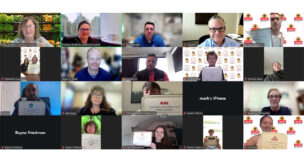
Clockwise from top left: Moderated by Editor Jeffrey Kanige, the March 25, 2025, NJBIZ Women in Business Panel Discussion featured Elene Costan, chief human resources officer, Berjé Inc.; Judy Sailer, director of learning and development, Primepoint; and Marta Mazzola, chief people officer, NRS Inc. - NJBIZ
Clockwise from top left: Moderated by Editor Jeffrey Kanige, the March 25, 2025, NJBIZ Women in Business Panel Discussion featured Elene Costan, chief human resources officer, Berjé Inc.; Judy Sailer, director of learning and development, Primepoint; and Marta Mazzola, chief people officer, NRS Inc. - NJBIZ
NJBIZ panel explores evolving landscape for women in business
Kimberly Redmond//March 26, 2025//


As part of NJBIZ’s latest virtual discussion, women executives at New Jersey-based companies spoke about where progress has been made for women in the business world — and what challenges remain.
Moderated by NJBIZ Editor Jeff Kanige, the March 25 panel featured:
- Elene Costan, chief human resources officer at Berjé Inc., a Carteret-based leader in the flavor and fragrance industries
- Marta Mazzola, chief people officer at NRS, a supply chain, logistics and distribution company in Lyndhurst
- Judy Sailer, director of learning and development for Westhampton-headquartered Primepoint, a leading provider of comprehensive HR and payroll solutions
During the 90-minute roundtable discussion, panelists delved into addressing discrimination in the workplace, if progress is being made on closing the wage gap and what can be done to increase opportunities for women. Participants also gave their takes on which industries appear to be more welcoming of women.
A more detailed recap will appear in the March 31 issue of NJBIZ.
Status check
Panelists said they believe women have made much progress in the workplace in recent decades, but all agree there’s still more work to do.
Mazzola said, “I would say that we’re better today than we were 10 years ago, even 20 years ago. I’d also say though, that the pay gap continues to be greater than we expect and we hope for. That said, the key to improving that or decreasing that pay gap is continued self-advocacy as well as having an advocate in the organization.”
She went on to credit the changing dynamics to a combination of anti-discrimination and anti-harassment laws that empowered workers to speak up, as well as more women finding their way into leadership roles.
“There’s more awareness, there’s more communication, there’s more transparency in many ways, in many aspects of the human resources or frankly the cultural environment of where you work about what is acceptable and what’s not acceptable,” she said.
In the supply chain and transportation industry, Mazzola said, “Have the laws helped us evolve? No question. Have women in seats like this helped us evolve? No question. Is there a ways to go? Yes, no question.”
Replay: Women in Business Panel Discussion
Click through to register to watch the full panel discussion!
“The issues in the industry in which I work today are right now numbers … In the industry, only 7% of women seek out that as a career, seek out a CDL license to drive tractor trailers and 18 wheelers across country. So, what do we need to do? We need to be more proactive,” she said.
Sailer said, “I do think that there have been a lot of changes clearly based on what women have chosen to do … We have seen opportunities that, in the past, a woman would’ve never even been considered and now there are considered.” But, she went on, “It is a question of often having an ally or someone in the room to promote you. That’s a big issue that we come across.”
Costan said she’s “not as optimistic” and feels “we’ve got a long way to go.” Besides addressing wage gaps, she believes there needs to be more opportunities in the c-suite for women.
Costan said, “Yes, the glass ceiling is still there. Will it break? I don’t know.”
Breaking bad (behavior)
When it comes to attitudes about women in the workplace, panelists said discrimination and harassment still exist. They also stressed the importance of calling out bad behavior by alerting superiors so appropriate action can be taken.
Mazzola added, “It doesn’t have to be a woman, by the way. In the current environment that I live in – transportation and supply chain – I see men call out other men that will not accept certain kinds of behaviors, language, or even a microaggression.”
Join us
Upcoming panels include:
- April 29: Construction & Development – Register here
- May 20: Tourism – Register here
At NRS, Mazzola said, “We’ve developed training programs to help people understand that microaggressions, behaviors like that, matter and people need to call each other out. Each person has a responsibility not just for themselves, but for their coworker or for the employee who reports to them in their work environment,” she said.
“And we hold managers accountable and it cascades down the line and employees are held accountable. And sometimes it doesn’t lead to a positive effect. Often it leads to, unfortunately, a termination. But, it sends a message to the rest of the organization, to the rest of the shift, to the rest of the building or the terminal that says, ‘this behavior, this language is no longer acceptable in this company,’” she said.
Costan said, “You need to have that voice and you need to say, ‘It’s okay that I’m afraid, but I am going to speak up. I’m going to speak up … And I’m doing this on behalf of not only me and all the women who fought before me, but for my daughters, my granddaughters.’ … We must be strong enough to speak up in forums that we’re not comfortable speaking up in.”
DEI
Panelists also spoke about the increasingly controversial topic of initiatives related to diversity, equity and inclusion.
Costan said if businesses are hiring based on qualifications, there may not be a need for formal DEI programs at some organizations. “If you look at the candidate and the skills, you will have diversity. You will have that equality,” said Costan.
She noted that 38% of Berjé’s workforce is female, including forklift drivers and a shipping-and-receiving manager.
“I don’t want to leave anybody out; I want to give everybody an opportunity – male, female – to come do the job … I don’t care what you call yourself. Just come in, make the green and become a valued employee. It’s about being a good person and honest worker,” Costan said.
I want to give everybody an opportunity – male, female – to come do the job … Just come in, make the green and become a valued employee. It’s about being a good person and honest worker.
– Elene Costan, Berjé Inc.
Sailer said she believes DEI programs are still relevant.
“It’s still going to work. DEI is about having a broad spectrum of people from all walks of life, because you’re going to buy from people who look like you … You can try to get rid of it, but the reality is, there’s pushback on it. As an HR person, I’m not going to let it go. It matters,” she said.
“You can call it what you want, but DEI is really talent strategy when it comes to hiring. … You can teach somebody anything, but, they have to want to do it. They have to want to be engaged, they have to want to go further than they are today. And if they have that, our talent acquisition programs will be full of all the right people because we will be clearly communicating to those outside what we’re looking for in terms of the staff. And they will come,” Sailer said.
Call to action
The participants also urged women in the workplace to seek out advocates, mentors and networking opportunities.
Costan said, “We need that hero and we need that mentor. And, don’t be afraid to have somebody different than you help you in how you communicate. Sometimes those mentors can be other females and sometimes those mentors are men. You need to realize who you are and where you want to be.”
Mazzola agreed. “I’ve had both men and female mentors, and I still call on them today just to check in,” she said. “And men are sometimes more effective than women mentors because they see the other side and the other side.”
Sailer added, “A lot of what we’ve gone over today is making sure you find the right place to be. It matters to have folks who are empathetic and understanding and who get it. Those are the best places to work.”