Sign In
Upcoming Event
 Free Newsletter

Platkin submits letter in support of federal marijuana rescheduling
New Jersey attorney general calls move 'a welcome step'
Kimberly Redmond//July 26, 2024//

PHOTO: DEPOSIT PHOTOS
PHOTO: DEPOSIT PHOTOS
Platkin submits letter in support of federal marijuana rescheduling
New Jersey attorney general calls move 'a welcome step'
Kimberly Redmond//July 26, 2024//


New Jersey Attorney General Matthew Platkin is weighing in on the U.S Drug Enforcement Administration’s proposal to reclassify marijuana as a less dangerous substance.
Under the framework published May 21 in the Federal Register, cannabis would no longer be considered a Schedule I narcotic – a category reserved for drugs that have no accepted medical use and high potential for abuse.
Instead, it would be designated as a Schedule III substance under the Controlled Substances Act. Then, it would join a category that includes certain opioid-based pain medications, testosterone and anabolic steroids. However, it would remain illegal under federal law unless Congress decides to make legislative changes.

In response to a public comment period on the proposed rule, Platkin sent a July 22 letter supporting the rescheduling, calling it “a welcome step toward a legal framework that would allow for common-sense regulation of a legal cannabis market for adults.”
He went on to describe New Jersey as a “pioneer in cannabis regulation policy” for its work to establish a marketplace following voter approval of a 2022 ballot question regarding recreational marijuana legalization.
“Focusing on responsible regulation of legal possession of cannabis for medical and adult recreational use undercuts and weakens the illicit cannabis market and many of the problems that come with it,” Platkin wrote.
Local impact
Rescheduling “will help bolster the efforts New Jersey has undertaken at the state level to ensure that individuals and communities have access to comprehensive legal protections and benefits in connection with the state-sanctioned use of cannabis,” he said.
It could also “continue the process of building an equitable framework of common-sense legal protections for all affected people and communities,” said Platkin.
He went on to highlight New Jersey’s efforts to create a safe and equitable market for cannabis. Since the April 2022 launch of adult-use sales, more than 130 dispensaries have opened and the industry is predicted to surpass the $1 billion mark this year.
“I cannot emphasize enough the importance of CREAMMA [New Jersey’s Cannabis Regulatory, Enforcement Assistance, and Marketplace Modernization Act] and the NJ-CRC’s [Cannabis Regulatory Commission] regulations, which have had immediate real-life impacts on the lives of New Jersey residents and brought equity and economic opportunity to our communities,” he wrote.
“CREAMMA and NJ-CRC’s regulations have brought a previously illicit, unregulated market into the light with transparency and proper oversight and established a regulated market for adult-use recreational cannabis. This new transparency helps protect consumers by maintaining quality controls for cannabis products and requiring licensing and standards for cannabis retailers,” Platkin said.
43,000 comments
New Jersey’s industry may be young, but Platkin is confident the state’s licensing and regulatory scheme “has cultivated the growth of a strong, transparent and responsible business sector that enjoys various legal protections generally afforded to businesses and workers in New Jersey.”
Platkin was also among 11 other attorneys general who sent a letter to the DEA earlier this year supporting cannabis rescheduling. All 12 of the states included in the letter have state-regulated cannabis marketplaces.
2024 NJBIZ Law Power 50:
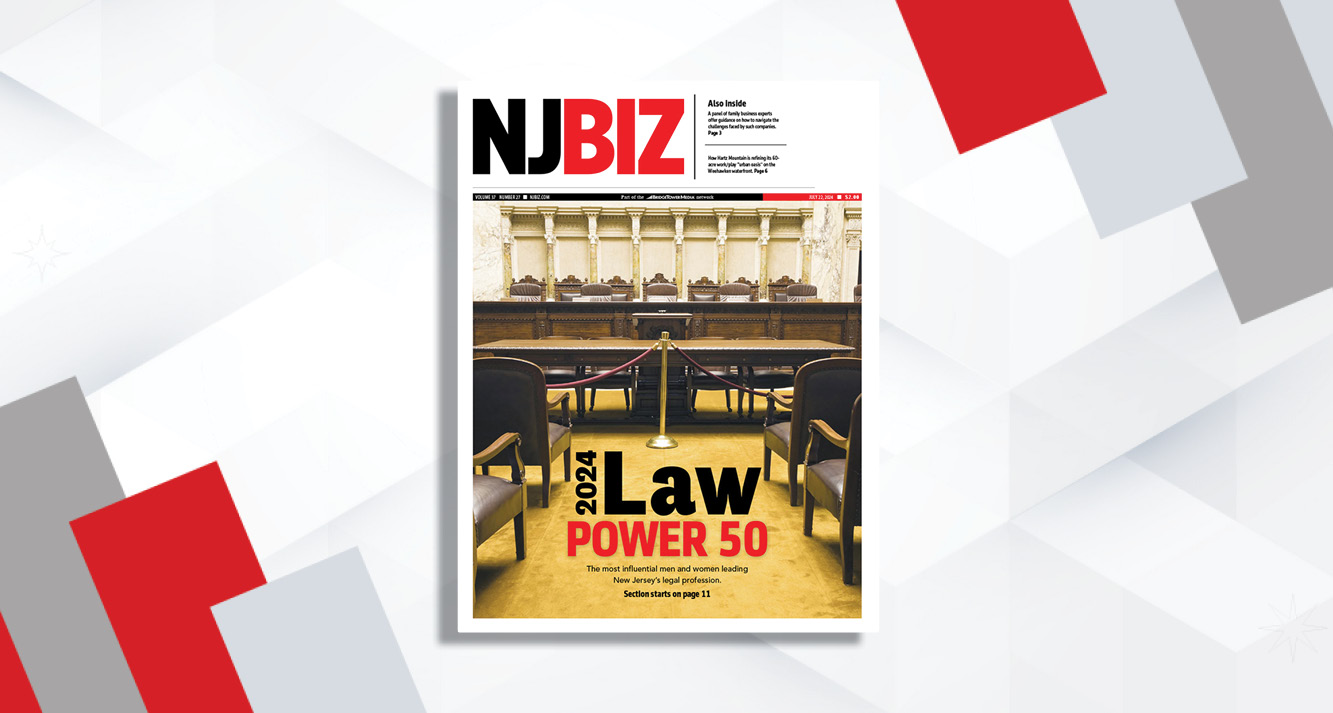
Attorney General Matthew Platkin topped our recently unveiled Law Power 50. Click here to see who else made the list.
In its notice of proposed rulemaking, the DEA said the Department of Health and Human Services recommended the change because marijuana has a lower potential for abuse than Schedule I and II substances and has accepted medical use.
The recommendation from HSS stemmed from President Joe Biden’s October 2022 directive asking HHS Secretary Xavier Becerra and Attorney General Merrick Garland to review the classification as part of a wider marijuana reform effort.
Altogether, the DEA received nearly 43,000 comments during the 60-day public comment period ending July 22.
While the proposed rule is to reschedule cannabis, 69% of comments supported de-scheduling cannabis entirely by removing it from the CSA, according to The Cannabis Business Times.
What’s next
After the DEA reviews the comments and concludes any requested hearings, it will issue a final order to reschedule marijuana. The entire process could reportedly take anywhere from a few months to up to a year.
Despite most states legalizing cannabis in some form, it remains illegal on the federal level, hindering the industry’s growth.
Rescheduling cannabis would make researching the drug easier — something that public health officials and scientists have sought for years. Studying cannabis to identify concrete medical benefits could open the door for pharmaceutical companies’ involvement with the sale and distribution of medical marijuana in states where it is legal.
For the $34 billion cannabis industry, the change would free business owners from Section 280E of the federal tax code. The rule prohibits legal cannabis companies from deducting most basic business expenses.
However, New Jersey policymakers have tried to give the state’s legalized cannabis industry some much-needed relief by decoupling corporate business tax provisions from 280E. Several other states have made similar moves, including New York, California, Hawaii, Michigan, Colorado and Oregon.