Sign In
Upcoming Event
 Free Newsletter


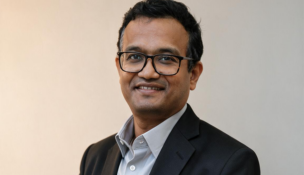
Ray Bisson is CEO of Morristown-based Schindler Elevator Corp., the U.S. arm of Schindler Group. - PROVIDED BY SCHINDLER
Ray Bisson is CEO of Morristown-based Schindler Elevator Corp., the U.S. arm of Schindler Group. - PROVIDED BY SCHINDLER
Schindler Elevator CEO highlights innovation and NJ growth
Matthew Fazelpoor//December 8, 2025//


The basics:
- CEO Ray Bisson outlines Schindler’s focus on efficiency, safety and innovation
- The company maintains major U.S. HQ and R&D operations in New Jersey
- Schindler is expanding AI-driven predictive maintenance and technology solutions
- Bisson emphasizes in-office teamwork, strong customer engagement and modernization growth
Schindler Elevator Corp., the U.S. arm of a global giant, has a rich legacy and deep roots here in the Garden State. The parent company, Schindler Group, was founded in 1874 and is headquartered in Switzerland. While the company is publicly traded, it is majority-controlled by the Schindler family, which founded and continues to operate it.
Schindler established a U.S. arm in 1979 – with its headquarters eventually established in Morristown in 1989, where it remains today.
NJBIZ recently sat down with CEO Ray Bisson, who joined the company in late 2022 from competitor Otis Elevator Co.
Bisson emphasized the company’s renewed focus on efficiency, innovation and customer engagement. He described the past three years as a period of internal improvement, streamlining processes and strengthening the team after pandemic-related challenges.
The conversation opened with Bisson sharing his backstory, highlighting his time in the U.S. Navy, which he says shaped his leadership, principles, fundamentals, dedication to process and discipline – that he brings to the role leading Schindler. All of which he has called upon over the last three years.
“As an organization, I think we struggled a little bit coming out of COVID, like a lot of other companies – supply chain, some other issues,” Bisson told NJBIZ. “The nice thing about coming here was there was a lot of runway to make improvements. So, we’ve been able to do that. We’ve had a team that’s been very able and willing to go with the flow and work through some of these efficiency improvements; some of the programs we’re working through.
“So, it’s been a great journey – and it’s a great company to work for.”
How Schindler builds a team
He added that the company has about 300 staff members here. “[The] number kind of fluctuates a little bit. Here, we do all of the management for the U.S. operations. We do R&D. We do some training, HR, finance – your typical headquarter functions. We’ve got a test tower in Randolph – about 20 minutes down the road, where we test new products. R&D, I mentioned they’re here – and they do all of the design and development for everything we do in North America.
“Also in New Jersey, we’ve got our branch office for northern New Jersey on the first floor. And then in Moorestown, we handle the greater Philadelphia area and South Jersey. So, we’re a pretty big employer here in New Jersey.”
And those employees are generally in the office, out of necessity. “I’ll say this – we’re a Monday through Friday in-office company,” said Bisson. “And I think that’s important for us to be that – because some of our biggest clients are commercial office buildings. And what does that say to our clients if we go to a work-from-home model, right? That doesn’t really work.”

He noted that his team has flexibility to take care of obligations, such as child care, etc. – but the company is firm on its Monday through Friday in-office format.
There has been some pushback, though. “I think, at the end of the day, people get it,” Bisson said. “You don’t build a team on Teams or Zoom calls. You build a team by working together.”
Bisson said that if he has an idea, he can just pop into one of his top executive’s offices and have a quick discussion for five minutes – versus at-home where it could turn into a lengthy call or Zoom with multiple people on it.
“There’s something about building a team, collaboration – that I think you do when you’re together, not when you’re apart,” Bisson explained.
Global – but still family-owned
Bisson mentioned several accolades the company has received. Schindler has been recognized on the NJBIZ 2025 Power Business List [see that list here]. “The one thing that’s unique about Schindler is we’re still a family-owned company. We’re global, but we have a local feel to it. Oftentimes, we take a very forward-thinking approach – versus, we have to hit a quarterly number.
“We still have to hit a quarterly number – but we’re able to take a more forward-thinking approach, which has been nice.”
He reflected on his time in the Navy and the many lessons learned – especially as an 18-year-old on the flight deck of an aircraft carrier with missiles, live ordinance and more.
“Some of these 18-year-old, educated kids are able to maneuver that flight deck with precision,” Bisson explained. “The way they do that is training, training, training, process, discipline. I know it annoys my team sometimes. But in terms of process, if you take the things that you do every day and you build a process – and you do it well every time, it gives you time to think about innovation.
“It gives you time to be in front of your customers.”
NJ ‘is our home’
The conversation shifted to the company’s ties and relationship with New Jersey.
“This is actually a great location for our headquarters,” said Bisson. “Part of it is proximity to New York City and some of the business we have there. Some of it is the transportation. People complain about Newark [airport]. I love Newark. I think it’s great. I can get anywhere in the country this fast [snaps his fingers]. So, it helps with my travel.
“If you look at the Tri-State Area, we’re number one in share here. This is our home,” said Bisson. “We want to protect our backlog. So, we do business with commercial, residential, hospitals, industrial – we do everything. A lot of times when you think about elevators, you think about Two World Trade Center – three and four of the giant towers.
“We really do well with all of the small office buildings, the medical and dental offices. We see customers as all the same. Some pay us a lot more because they’ve got much bigger buildings. Some a lot less. And, we’ve got huge share here in Jersey.”

Get to know Schindler
So, what should customers and potential customers know about the company?
“A couple of things really stand out. One is safety. If you use the analogy of an airplane – people are nervous about crashing on an airplane. And everyone says, well, driving your car is more dangerous. Well, flying an airplane is more dangerous than riding an elevator,” said Bisson. “So, it’s a very, very safe form of transportation – but it is a form of transportation.
“So, the safety piece is super important. We really focus everything around that. We, in fact, have a division called FQE – Field Quality Excellence,” he continued. “They’re an independent audit arm of our company. When we do maintenance, we do an installation; we do a modernization — they are the ones that inspect after the fact.
“And, generally, you would find that our standards are much more rigorous than the local code enforcement authorities. That’s really number one for us.”

Bisson then moved to technology.
“One of the things that stands out – and I just had customers over in Switzerland at our headquarters to see kind of the latest and greatest. Our digital offerings are second-to-none,” said Bisson. “The way we look at predictive maintenance. The way we look at algorithms to move traffic in big office buildings. It’s really fantastic stuff. The customers love it.
“Innovation and safety are the two big things. And then, there’s the customer touch. As I mentioned, I took over after the pandemic – and we had some operational issues that we’ve cleaned up. We really were inward facing, a little bit, to try to get things right. Now, the focus is more to be outward and tell the story – and show people what we’re doing. Show our customers the value they get doing business with us.”
Embracing AI
The conversation then shifted to AI and how the company is deploying it.
“We’ve embraced it,” Bisson said of artificial intelligence. “A lot of the stuff I can’t quite talk about. But the two things I will talk about is – one, for us, the predictive maintenance is a game-changer,” he said. “One, because it helps me control my costs a little bit better. And this isn’t an opportunity to reduce headcount or anything like that. It’s more of – there’s a bubble of modernization coming.
“If you look at the number of buildings built before 1980. If all of them wanted to modernize tomorrow, we do not have the horsepower to do it. We don’t have the people. So, everywhere we can squeeze out efficiency and fill those other buckets, is critical for us. But, it also will help with our customers.
[P]redictive maintenance is a game-changer. One, because it helps me control my costs a little bit better. And this isn’t an opportunity to reduce headcount or anything like that. It’s more of – there’s a bubble of modernization coming.
– Ray Bisson, CEO, Schindler Elevator Corp.
“The last thing you want is an elevator out of service. Buildings are generally designed with a certain number of elevators to move a certain population. So, if one of them is out, you’re not moving that population – and people are upset. So, the AI for predictive is more around the – we want to replace a part before it fails.”
The other place Bisson said AI is used is pricing models.
“We’re always kind of guessing – the construction business for us, it’s very low margin. And it’s very competitive,” Bisson explained. “We try to gauge where our competitors are going to be. We use past information to help us make pricing decisions. So, those are the two big things that I can talk about. And there’s a lot more coming.”
Finding top talent
Bisson also spoke about the difficulty employers face in recruiting and retaining talent.
“That’s a challenge,” said Bisson. “The world has changed so much since I was graduating school. People tend to jump around more than they did in the past.
“It’s not a bad thing. It’s just a new challenge for us. And it really aligns with coming out of the pandemic. I think one of the things when a pandemic happens – people panic a little bit. I think we fell off a little bit on our recruiting. I think we fell off a little bit on training, learning and development,” Bisson continued.
“We’re reinvigorating all of that. Because now, I think we need to be much faster [in] how we get people up to speed and we get them to be capable of doing their jobs. Because we’re probably going to have them three or four years – versus eight to 10 years. So, really robust training – it’s the field as well, not just the office staff,” he said, pointing to training centers around the country in areas such as Ohio, Miami (under construction), Dallas and more.
“We’re really expanding our technical training. We’re expanding our onboarding. We do a lot of military recruiting. People that are getting out of the military – just generally – they have that process and discipline.”

Tackling tariffs, supply chain issues
Like many companies, Schindler has also had to deal with tariffs and supply chain issues. Bisson said the company is well-positioned to handle those challenges, but difficulties remain.
“The one thing that helps is we do manufacture in the U.S.,” said Bisson. “We manufacture elevators in Hanover, Pa.; escalators in Clinton, N.C. So, some of the issues facing people that import everything we don’t have.
“We do have a global network of suppliers. You spend a lot of time with finance and legal, looking at the changes and you have to be adaptable to it. There’s no point fighting it or arguing it – it’s happening. It’s more my job is, how do we react to it? And how do we least impact our customers as a result of it? And again, having manufacturing in the U.S. really helps us a lot – because some of our competitors don’t,” said Bisson.
He came back to the mantra of being a global company with a local feel.
“In all of our markets, we’ve got a branch. We’ve got a Mr. or Mrs. Schindler sitting there,” said Bisson. “So that they have that local feel. And really, our job is to support them and make sure they’re successful.”
Going up?
He also described markets where he sees growth and strength.
“Jersey has been pretty steady and pretty good for us. You’ve got your hotspots – your South Florida, your Texas – that are really blowing up right now. In terms of area of the business, commercial has been a little bit slow,” said Bisson, noting that commercial trend follows the aftermath of the pandemic. “Medical has really taken off. There’s a lot of activity there. There’s a lot of activity in higher-end residential. The low-end residential – there’s a huge demand.
“And I think maybe a pent-up bubble because, right now, with where steel, aluminum and concrete pricing is – the pricing models don’t work for developers. So, the second that comes down, I think we’ll have another burst there – more affordable residential.”
Bisson also mentioned data centers as an area of growing potential as they ramp up around the country.

What’s on the horizon?
“Next five to 10 years – what are some things you’re thinking about as you get the story out about Schindler – and enter this chapter of being more forward-facing?” NJBIZ asked.

“The maintenance business is our annuity,” said Bisson. “It’s our bread-and-butter. It’s really how we continue to drive efficiency improvements. A lot of it, we talked about the AI – how we’re better at predictive maintenance. How we’re better at scheduling our maintenance to have more reliable elevators and control the amount of work we do.
“That will free up labor to handle this modernization bubble. But that is our huge opportunity. There are lots of statistics about what urbanization is going to look like by the year 2050. I think the pandemic probably put a dent in it. But as we get further and further away, people will forget. And I think we’ll get back to that. People aren’t building out anymore – they’re building up.”
He described modernization as the biggest bet the company has coming up.
“We’re really pushing our chips in the middle of the table there,” said Bisson, also noting that the company has products for low-, mid- and high-rises.
Committed to customer needs
As for what the future holds, Bisson said much of what will come depends on customer needs.
“Personally, it’s not spending so much time looking at KPIs and talking about how we squeeze another couple dollars or a couple hours out of an installation,” said Bisson. “And it’s going and talking to customers – and figuring out, OK, this is what we’re thinking. This is what we think the future looks like – what do you think?
“And I’ve been doing some of that, but there’s going to a lot more.”
All of which goes back to the company’s shift toward looking outside its walls.
“I have told my team – I do not want to sit on operational calls next year. That’s on you,” said Bisson. “I’m going to peak and make sure the numbers are right – and make sure things are going well. But I need to be more outward-facing.”
And that was the point of getting processes in order.
“That freedom,” said Bisson. “If everyone’s doing the process right, that gives you the freedom to spend time with your customers. Then you find out what you’re doing right and wrong from their perspective.
“And I think we’ve missed that the past couple of years.”