Sign In
Upcoming Event
 Free Newsletter

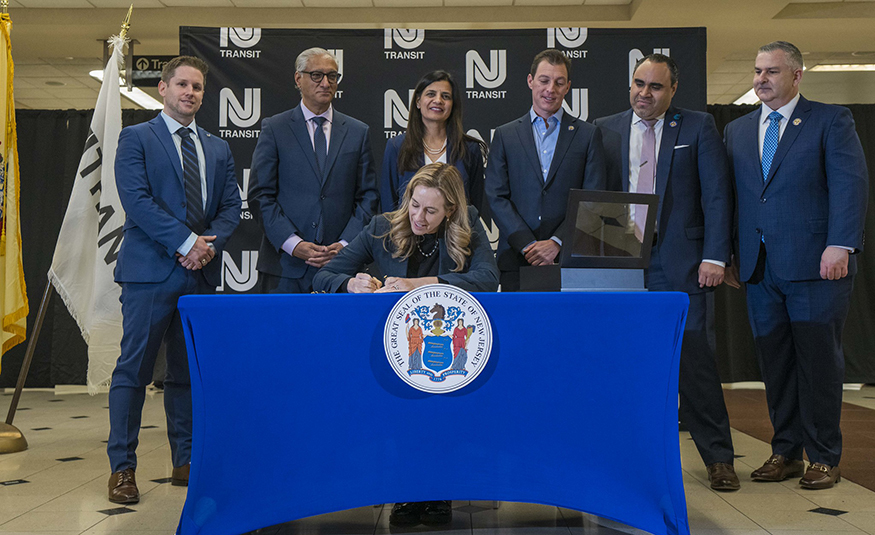
Gov. Mikie Sherrill was joined by fellow elected officials and transportation leaders March 24, 2026, at the Secaucus Junction Train Station as she signed Executive Order No. 16 to help commuters have a better experience on NJ Transit. - PROVIDED BY NJ GOVERNOR'S OFFICE/TIM LARSEN
Gov. Mikie Sherrill was joined by fellow elected officials and transportation leaders March 24, 2026, at the Secaucus Junction Train Station as she signed Executive Order No. 16 to help commuters have a better experience on NJ Transit. - PROVIDED BY NJ GOVERNOR'S OFFICE/TIM LARSEN
Sherrill signs executive order to improve NJ Transit service
Matthew Fazelpoor//March 25, 2026//


The basics:
- Gov. Sherrill signs Executive Order No. 16 to improve NJ Transit service
- NJ Transit must deliver comprehensive 45-day plan for cleaner, safer, more reliable service
- Public input will guide improvements through listening sessions, statewide rider survey
- Key priorities include station cleanliness, accessibility, public safety, digital experience enhancements
Gov. Mikie Sherrill signed Executive Order No. 16 in Secaucus March 24, launching a targeted effort to improve the day-to-day experience for NJ Transit riders.
The EO focuses on near-term fixes and longer-term system upgrades.
The order requires transit officials to deliver a comprehensive plan within 45 days aimed at making service cleaner, safer, more accessible and more reliable. The administration expects early improvements to roll out by late June.
Building a better system
Sherrill anchored the announcement amid her broader message about accountability. She also noted the central role transit plays in the state’s economy and daily life.
“One of the main reasons I ran for governor was to make government more accountable so it delivers for the people and businesses that we are meant to serve. That includes New Jersey Transit, which for so many people, is the backbone of how they get around our state. It serves over half a million passengers a day. That’s 230 million trips a year, and $13 billion in economic benefit annually to our economy.
“But right now, New Jersey transit riders aren’t being served as well as they should be. We all know about the century old tunnels and wire systems, the frequent delays, the inaccurate schedules and times on the app, and I know from personal experience just how frustrating all of that can be,” said Sherrill. She referenced her husband, who has commuted for the past decade.
“Today, I’m signing an executive order, the first of many steps that I’ll be taking to a build a better New Jersey Transit, a better system with better service and a better rider experience. We’re starting with the things we can fix right away,” said Sherrill.
Everyday improvements
The executive order directs NJ Transit leadership – through Transportation Commissioner and Board Chair Priya Jain – to develop a binding, systemwide improvement plan within 45 days. Following that, a second 45-day period will begin to fast-tracking implementation of the highest-priority changes.
Public input will play a key role, said Sherrill. The NJ Transit Customer Advocate is tasked with holding three public listening sessions as well as launching a statewide rider survey to inform the plan.
This executive order is about delivering cleaner stations, clearer communication, and more dependable service across NJ Transit.
– Gov. Mikie Sherrill
Sherrill said the initiative focuses on tangible, everyday improvements that riders will notice.
“Every New Jerseyan deserves a transit system that is safe, clean, accessible, and reliable,” she emphasized. “This executive order is about delivering cleaner stations, clearer communication, and more dependable service across NJ Transit. We are listening to riders, holding ourselves accountable, and making the improvements necessary to ensure that rail and bus transit work better for everyone who uses it.”
Key priorities in Executive Order No. 16 include:
- Cleanliness: Stations, stops, trains and buses
- Accessibility: Elevators, escalators, signage and boarding areas
- Public safety: Lighting, cameras and law enforcement presence
- Digital experience: More reliable real-time updates on the NJ Transit app and website
Watch the announcement here:
“New Jersey residents deserve a world-class transit system and Gov. Sherrill’s Executive Order is a clear demonstration of our shared commitment to improving the customer experience for all New Jersey Transit riders,” said Jain. The goals of the executive order and the focus on public engagement will help in moving our transportation system forward, and I look forward to working with NJ Transit CEO and President Kris Kolluri in executing the governor’s vision.”
All aboard
PHOTOS: Gov. Mikie Sherrill, alongside leaders from NJ Transit and Amtrak, recently led the ceremonial first ride across the new Portal North Bridge in Kearny. See it here.
“What I particularly love about this executive order is it is thoughtful, it’s pragmatic, and it is actionable,” said Kolluri. “Those are the kind of the things that we try to do at New Jersey Transit. But the fact that you are codifying, essentially, and giving us specific direction is not only a useful roadmap for us. But for the riders, as you correctly said. At the end of 45 days, they get to see what an implementable plan looks like.”
The order comes as NJ Transit continues to grapple with aging infrastructure, service reliability issues and funding pressures. Even still, it remains one of the largest transit systems in the country and a critical driver of economic activity in New Jersey and the broader region.
It will also play a critical role in the upcoming 2026 FIFA World Cup.
“This order is just the first step to delivering more efficient, reliable transit service in our state today – and a world-class transit system tomorrow,” said Sherrill.