Sign In
Upcoming Event
 Free Newsletter

Dove keeps it real with pledge to never use AI-generated models in ads
Kimberly Redmond//April 11, 2024//

In 2017, Dove recommitted to its Dove Real Beauty Pledge by featuring women with no professional modeling experience in its ad campaigns. This year, the company is furthering that commitment by vowing not to use artificial intelligence to represent women in its advertising. - PROVIDED BY DOVE
In 2017, Dove recommitted to its Dove Real Beauty Pledge by featuring women with no professional modeling experience in its ad campaigns. This year, the company is furthering that commitment by vowing not to use artificial intelligence to represent women in its advertising. - PROVIDED BY DOVE
Dove keeps it real with pledge to never use AI-generated models in ads
Kimberly Redmond//April 11, 2024//


 Listen to this article
As more companies experiment with the use of artificial intelligence in commercials, Englewood Cliffs-based Unilever USA’s Dove beauty brand has pledged to never put AI-generated models in its advertising.
To mark the 20th anniversary of its Real Beauty initiative, Dove said it wanted to “continue taking action to dismantle toxic beauty standards” by vowing to never use any AI-generated imagery to represent women in any advertising and communications tied to the long-running marketing campaign. Instead, the company will continue to use real photos of women.
Additionally, Dove is enlisting the help of celebrity ambassadors including Drew Barrymore, Reba McEntire and Beanie Feldstein “to raise awareness and celebrate real beauty.”
Dove – which makes soap, shampoo and deodorant – is one of the first major brands to suggest that AI-generated media could be harmful and should be improved, NBC News reported. It’s also one of the first companies to take a critical approach to AI, as well as the first beauty company to do so, the outlet noted.
“At Dove, we seek a future in which women get to decide and declare what real beauty looks like – not algorithms,” said Alessandro Manfredi, Dove’s chief marketing officer. “As we navigate the opportunities and challenges that come with new and emerging technology, we remain committed to protect, celebrate, and champion Real Beauty. Pledging to never use AI in our communications is just one step. We will not stop until beauty is a source of happiness, not anxiety, for every woman and girl.”
The company also created Real Beauty Prompt Guidelines, which share how to create images that are more representative of “real beauty” for those who use popular generative AI programs.

Work to be done
When Dove launched its Real Beauty campaign in 2004, it found that only 2% of women globally considered themselves beautiful. In response, the brand took steps to widen representation, be transparent about digital distortion and face up to the harmful impact unrealistic beauty standards have on women and girls.
 While Dove said there has been some positive change, two decades later the state of beauty isn’t pretty.
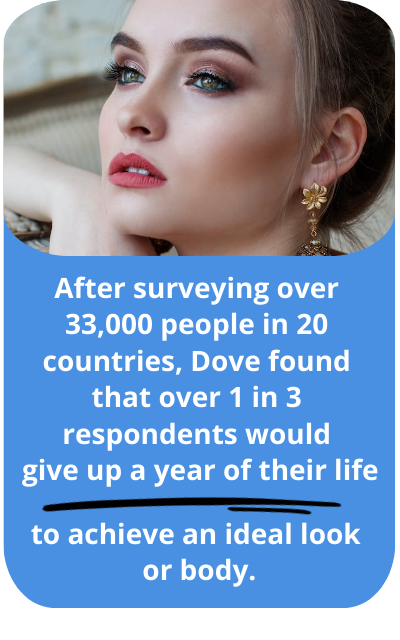
After surveying over 33,000 people in 20 countries, Dove found that more than 1 in 3 respondents would give up a year of their life to achieve an ideal look or body.
The study shows that while beauty ideals have evolved over the years to be more inclusive across race, orientation, gender and size, the checklist of appearance ideals is growing and impossible to meet – from looking healthy (81%) to also being slim (72%) and having a small waist (69%) while also being curvy (59%).
Other findings in Dove’s 2024 The Real State of Beauty report:
- 2 in 3 women believe that women today are expected to be more physically attractive than their mother’s generation was;
- Almost 9 in 10 women and girls say they have been exposed to harmful beauty content online, with AI being one of the biggest threats to the representation of “real beauty”;
- The rise of AI is a threat to women’s wellbeing, with 1 in 3 women feeling pressure to alter their appearance because of what they see online, even when they know it’s fake or AI generated. (Dove cites one global expert on the technology who predicted that 90% of the content online will be AI-generated by 2025.)
- 1 in 4 women and almost 2 in 5 girls agree that being able to create different versions of yourself using AI is empowering, but there is a need for greater representation and transparency in content generated by AI.
Is AI OK?
A new Stockton University poll finds New Jerseyans expressing concern over the increased use of artificial intelligence. Click here to see what respondents say are acceptable uses for the technology – and what is not.