Sign In
Upcoming Event
 Free Newsletter


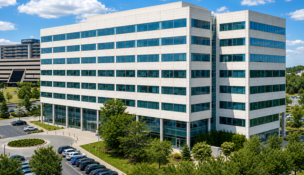
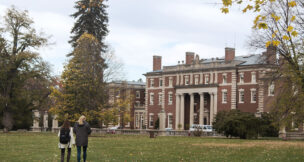
Onyx Equities LLC and Machine Investment Group’s acquisition of the former Merck headquarters last year is one of the largest New Jersey office and life sciences transactions in state history. - PROVIDED BY OUTSHINE PROPERTIES
Onyx Equities LLC and Machine Investment Group’s acquisition of the former Merck headquarters last year is one of the largest New Jersey office and life sciences transactions in state history. - PROVIDED BY OUTSHINE PROPERTIES
Former Merck HQ provides unique opportunity for life sciences
Jessica Perry//March 18, 2024//


The basics:
- Onyx Equities LLC and Machine Investment Group’s acquisition of the former Merck base in Kenilworth was one of the largest office and life sciences transactions in the state’s history.
- Approximately 700,000 square feet is now available at the Northeast Science and Technology Center (NEST).
- NEST offers unique features particularly of interest to life sciences firms, including state-of-the-art laboratories, biomanufacturing facilities and advanced data storage capabilities.
The life sciences industry is primed for growth in 2024 as new life, if you will, is breathed into the industry. In New Jersey, one of the top markets nationwide for the sector, that story is playing out across a variety of avenues, including conversions, expansions, new construction and a particularly unique opportunity in Kenilworth.
Onyx Equities LLC and Machine Investment Group’s acquisition of the 1.7 million-square-foot former Merck headquarters last year is one of the largest New Jersey office and life sciences transactions in state history. In its February 2024 Life Sciences Update, Cushman & Wakefield put the purchase price for what is now the 108-acre Northeast Science and Technology Center at $187 million.
And during that month, the partners behind the project announced New York-based Outshine Properties would join the operations team to provide leasing and asset management advisory services at NEST.
After Merck moved most of its operations to its new, consolidated base in Rahway at the start of 2024, Outshine Properties Managing Principal and founder Jonathan Scheinberg told NJBIZ that’s made approximately 700,000 square feet of space available at NEST.
And all that space hitting the market is good, as life sciences operators search for high-end locations with very specific needs across office, R&D, lab and manufacturing layouts in New Jersey. The state’s life sciences market covers 19.2 million square feet across 148 properties, according to Cushman & Wakefield.
In its Life Sciences Insight report for the fourth quarter of 2023, JLL projected that a flight-to-quality would drive space requirements in the sector, “as tenants shed outdated workspaces and relocate their operations into new developments and recently renovated buildings offering premium amenities.”
At NEST, the opportunity for tenants and the new owners is a novel one, according to Scheinberg.

Merck’s massive custom space “literally spared no expense in costs for them to build this campus,” he explained. That “makes it completely uneconomical to replicate anywhere. So, we can offer a product at such a high spec — really a price that is unmatched. You can’t find it because you can’t find this to begin with — big pharmas across the country are not just going around and subleasing their space.”
While more than 1.5 million square feet of lab product is currently under construction or renovation in North and Central Jersey, according to Cushman & Wakefield, the projects are not of the same scale or capacity as NEST. “To build this today would be uneconomical for anybody anywhere. The equity capital markets, the debt capital markets, the financing markets right now are not very conducive to building brand new space because it costs so much money to build to a spec that is conducive to running these types of businesses,” Scheinberg said, adding that to take that route “wouldn’t be competing.”
At NEST, he expects to welcome an exciting mix of tenants that are innovating across the life sciences spectrum, from biomanufacturing cell and gene therapy to immunotherapy and more.
“And it’ll drive economic activity here in a synergistic way,” he said.
With more than 30 acres of redevelopment opportunities, NEST already includes 1.4 million square feet of state-of-the-art laboratories and biomanufacturing facilities and 500,000 square feet of Class A office space. Additionally, the campus supports advanced data storage and processing capabilities due to a robust utility infrastructure.
Goes to 11
The first project at NEST is Building 11, a 280,000-square-foot biomanufacturing facility that Scheinberg characterized as unparalleled in New Jersey and, arguably, the U.S. He said that while the building will receive an aesthetic and amenities refresh, as far as infrastructure is concerned, it’s already top of the pack.

Also in this week’s
Real Estate Report:
Amid a challenging and changing office environment, Alfred Sanzari Enterprises’ work-play-stay corporate campus in Teaneck is leaning into its strengths to attract tenants. Click here to read more.
“The lab space, the manufacturing capability, the floor loads, the ceiling clear height of 20 feet, the MEP existing infrastructure is so robust and it’s attracting quite a few well-known, well-heeled tenants to take that space. … [I]t’s been people that you know the names of and they’re very excited about the prospect of taking a portion or all of that building and some of the other structures that are on campus that Merck extricated themselves from.”
Because Merck operates in the space, the campus includes features that are specifically of interest to the sector.
“One very interesting thing about NEST is that Merck spared no expense in capital build,” Scheinberg said, “but they also created a completely self-contained ecosystem.”
What does that mean? The property includes a vivarium, which he described as a huge amenity in the life sciences sector. Another crucial feature is the campus’s collaborative and conference spaces. And that’s on top of the more expected or emerging perks that they’re renovating.
“The vivarium is a phenomenal amenity for these tenants who need to test their thesis and have trials done … Plus, we also have more traditional amenities here that we’re upgrading, such as cafeteria, collaboration space, auditorium. We have basketball courts, we built pickleball courts. We have exercise rooms, we have multiple areas for tenant recreation.
“So, this is a very comprehensive campus that fosters growth on both sides – human growth and interpersonal growth as well as the science and these companies’ forward trajectory in that ecosystem,” Scheinberg said.
The perfect storm
Crafting that environment is – in a way – an amenity in and of itself. “[S]ynergistically, you combine this infrastructure, this building, this campus, this amazing co-tenancy with Merck and one of the deepest talent pools [and it] is really attracting the who’s who of this vertical, whether they be localized to New Jersey or New York City or on the East Coast, stretching to international users because they know they can’t find this really anywhere else.
“That combination of what Merck built with us taking it into a positive direction – revamping it, upgrading the facilities, taking the amenities to the next level and the ability to hire from a very deep talent [pool] will create an environment that is really tough to beat.”
One of the biggest draws for these companies in terms of location, sector employment continued its upward trend in 2023 while the number of life sciences establishments was over 5,000, JLL reported.
And it’s not just what Merck built, but how it maintained and reinvested in the campus. “Merck currently occupies this and spares no expense to maintain the infrastructure and the quality and the finishes of this campus,” Scheinberg said. “And they actually have a capital program that every five years they rebuilt a meaningful portion of the campus from scratch.”
That presents growing companies with an opportunity to get into top-of-the-line space that otherwise may not be available or at a cost-effective price point.

Cushman & Wakefield anticipates that with new inventory coming on line, rents will rise as high-quality space drives steady demand. In the firm’s February 2024 report, New Jersey was one of nine markets (out of 16 tracked) that saw persistent double-digit rent growth in the Life Sciences sector (+20%).
In Kenilworth, prospective tenants can reap the benefits of Merck’s investment.
“They could take advantage of the fact that Merck made the capital outlay at a figure that is literally five or six times what anyone else would make the outlay and they can get tenancy in that space, take advantage of that outlay, take advantage of that robust infrastructure and have occupancy expenses that are more in line with other traditional types of tenancies,” Scheinberg explained.
“It’s very efficient for second-generation space to be occupied by growing companies, mid-size companies, even biotech companies that are midstream. So, it’s a winning proposition for everybody and that’s why I think it’s so interesting — because you create synergies here. You put on the market space that no one’s building, no one has the wherewithal to build this space because it’s so technical, the know-how it’s complicated, it’s very capital intensive and the markets don’t really allow for work today. So, this is the perfect storm in a good way, I would say.”
Creating synergies
Building those synergies also helps to boost the sector writ large in New Jersey. “It’s turning into an ecosystem at every slice of the demand level,” Scheinberg said. And NEST has space for participants no matter what part of the growth journey. He ran through some of those scenarios.
On the lower end of the spectrum are incubator tenants. These occupiers have an idea, a little bit of money and some science and they tend to take up very small format space. Next are graduate tenants. These companies are coming out of large medical and educational institutions and are growing and expanding their science. They tend to take 2,000 square feet to 10,000 square feet.
After that are “postgraduate type of tenants,” those that have secured funding and need between 10,000 square feet and 25,000 square feet of space. These companies are expanding their business, testing their theses and moving toward trials. Then, there are more stable companies – Series B, C, D – and public companies that need varying degrees of space.
Within an ecosystem that incorporates such varied players, opportunities arise.
“The cool thing about NEST is that we have space that can cater to all those tenants in that environment and create an ecosystem that they thrive with each other because those small tenants want to be among the bigger tenants and they want to share that knowledge base and they want to share the human capital equivalent part of the equation. They want to grow and they want to collaborate.”