Sign In
Upcoming Event
 Free Newsletter

250 MW community solar window coming soon in New Jersey
Limited capacity, increased demand expected to collide with latest round
Jessica Perry//April 24, 2025//

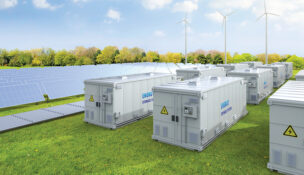
CS Energy and Luminace completed two 5-megawatt landfill community solar projects in Berkeley Township in fall 2024. - PROVIDED BY CS ENERGY
CS Energy and Luminace completed two 5-megawatt landfill community solar projects in Berkeley Township in fall 2024. - PROVIDED BY CS ENERGY
250 MW community solar window coming soon in New Jersey
Limited capacity, increased demand expected to collide with latest round
Jessica Perry//April 24, 2025//


The basics:
- NJBPU adds 250 MW capacity to the Community Solar Program
- Registration for new projects opens April 30 on a first-come basis
- Community solar offers income potential, ESG benefits and local impact
During a week of warm weather and bright sunlight, New Jersey expanded capacity for its leading Community Solar Energy Program.
The New Jersey Board of Public Utilities announced late Wednesday it will open another capacity block of 250 megawatts (about 20 million square feet).
The move presents an opportunity for property owners and others with the available space to support solar systems. New project registrations for the latest expansion will open April 30. That date is important, because the window is tight, as is available capacity (at about half of last year’s availability) and demand is high.
The CSEP accepts projects on a first-come, first-served basis. The board will treat any/all qualifying applications received during the initial 10-day period as if they were filed at the same time. Interested parties can begin the registration process here. In its first year, the program received more than 300 applications for that round’s available 300 MW.
And while approximately 40 million square feet of rooftop space was leased under the program last year, available capacity is about half that for 2025.
Projects in the CSEP cannot exceed 5 megawatt direct current (or 5,000 kilowatts) in size. Eligible Community Solar sites include:
- Rooftops
- Floating solar (bodies of water that have little to no established floral and faunal resources)
- Carports/canopies over impervious surfaces
- Contaminated sites, landfills and mining sites
The board will accept new registrations until the block is fully subscribed or June 1, whichever comes first.
With no restrictions on who may apply, applicants could include project developers, owners or operators; municipalities; contractors; installers or site owners, etc. Existing solar projects are ineligible; the latest round is open only to facilities that have not yet commenced commercial operations. However, projects previously submitted and not selected may re-apply.
Case in point
Community solar projects include three primary players: the subscriber, as well as the site host and solar developer.

The host has the space – and can partner with a developer or lease the site for a project. The developer, meanwhile, is responsible for application, building and maintenance of the array. Throughout the course of the long-term leases, the landlord benefits from the passive income on the now-activated space. With the clock ticking, engaging an expert now could be crucial.
Last year, an event highlighting $156 million in statewide solar grant funding chose for its setting such a community solar project. The under-development installation from Asbury Park-based Solar Landscape (a developer) sits atop a Prologis (host) warehouse in Edison. At nearly 370,000 square feet, the site will serve more than 400 households.
At the time, Prologis Senior Vice President and Market Officer Mike Sacro said approximately 89 MW of community solar would be built on the company’s Garden State rooftops leading up to spring 2026. The goal underscores the opportunity community solar offers.
Bevvy of benefits
Speaking during NAIOP New Jersey’s 2024 Policy Forum event, Solar Landscape President & Chief Legal Officer Mark Schottinger highlighted the range of benefits community solar can create – from combating “NIMBYISM” toward new projects to helping boost grid capacity and generating passive income.
“If you’re trying to permit a warehouse and construction of a new warehouse, you can bring in a community solar company like us on the front end to talk about all of the benefits we’re going to bring to the community. And then once you get your warehouse up and running, you’re getting money from your roof that otherwise wouldn’t be generating money if you sell your building.
It’s a long-term tenant that’s very risk free. And then on top of that you’re getting ESG benefits …
– Mark Schottinger, Solar Landscape
“We’ve had a number of case studies where that does add value to the sale,” Schottinger continued. “It’s a long-term tenant that’s very risk free. And then on top of that you’re getting ESG benefits, where depending on what your under-roof tenant aims are, you can be more marketable for certain [interior] tenants based on having solar on your roof. And then there’s beyond that even just sort of the local community benefits of selling electricity from your roof to people in the surrounding community,” which, he added, can also help build ties with locales.
Progress report
Since the state’s Community Solar program launched in 2023, New Jersey has registered more than 500 MW in the program. In 2024, the governor signed legislation to make it permanent. This past January, the Murphy administration celebrated achieving 5 gigawatts of installed solar capacity.
Community solar comprised 3.3% of that total.

According to NJBPU, the Community Solar program currently serves more than 28,000 New Jersey subscribers. With residents having received more than $37 million in bill credits, the agency says net savings for these subscribers totals more than $7 million since the start of the pilot program.
In addition to opening another capacity block, the Board also updated the registration requirements and permitted Electric Distribution Companies (EDCs) to review inactive applications, while lowering the incentive levels for new projects.
Registration, as well as participation, is free. No minimum size for projects, but they must serve at least 10 subscribers, unless sited on a multifamily building. Engage your experts today.