Sign In
Upcoming Event
 Free Newsletter

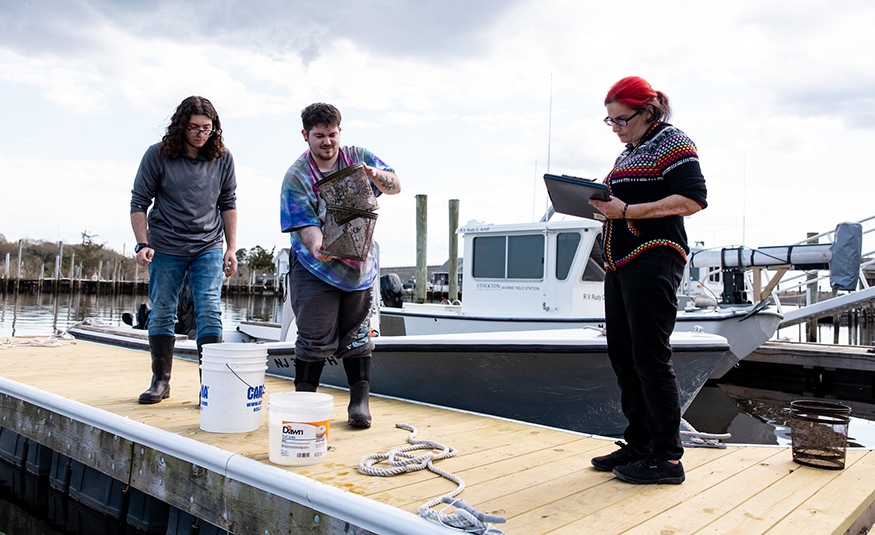
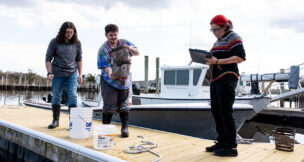
From left: Stockton Marine Science majors Alexander Wroblewski, a senior from Drexel Hill, Pa.; River Hammell, a senior from Wenonah; and Jess Taylor, a senior from Whiting, record fish monitoring data at the dock at Stockton’s Marine Field Station in Port Republic. - PROVIDED BY SUSAN ALLEN/STOCKTON UNIVERSITY
From left: Stockton Marine Science majors Alexander Wroblewski, a senior from Drexel Hill, Pa.; River Hammell, a senior from Wenonah; and Jess Taylor, a senior from Whiting, record fish monitoring data at the dock at Stockton’s Marine Field Station in Port Republic. - PROVIDED BY SUSAN ALLEN/STOCKTON UNIVERSITY
Stockton secures $2.44M grant to expand Marine Field Station
Jessica Perry//August 14, 2026//


The basics:
- $2.44M grant will fund Marine Field Station upgrades at Stockton U.
- Improvements will create more opportunities for student research
- Upgrades will expand access to Dockside Science Program
- Project will boost coastal resiliency, emergency response
The Marine Field Station and Coastal Research Center at Stockton University will be updated to improve and expand its impact.
A $2.44 million grant from Pro-NJ Trust will fund the work, according to an Aug. 12 announcement from the South Jersey higher education institution. The changes will expand research and educational programming and improve accessibility for individuals with disabilities in a strategic coastal location.
Design and engineering leading to the necessary permitting to complete the project will occur over the next six to 18 months, according to school officials, with construction scheduled to begin thereafter. Marine Field Station Director Steve Evert said the project will support coastal science in Atlantic and Ocean counties for Stockton along with its state, federal and educational partners.
The Marine Field Station serves as a hub to connect and support Stockton University’s Marine Science, Environmental Science, Geology, Biology, Chemistry and Coastal Zone Management programs.
The new construction projects will focus on the marina along Nacote Creek. According to Evert, current issues include a habitat-degraded lagoon, shoreline erosion issues and a non-functional boat ramp. The work will reclaim that lagoon with dredged material to reduce bulkhead coverage along the creek by more than 60%. The drop from about 300 feet to about 100 feet would also install 100 feet of living shoreline. The project will also add a new boat ramp and additional dockage.
Stockton says the improvements will decrease nuisance flooding and likelihood of storm damage.
Bigger and better
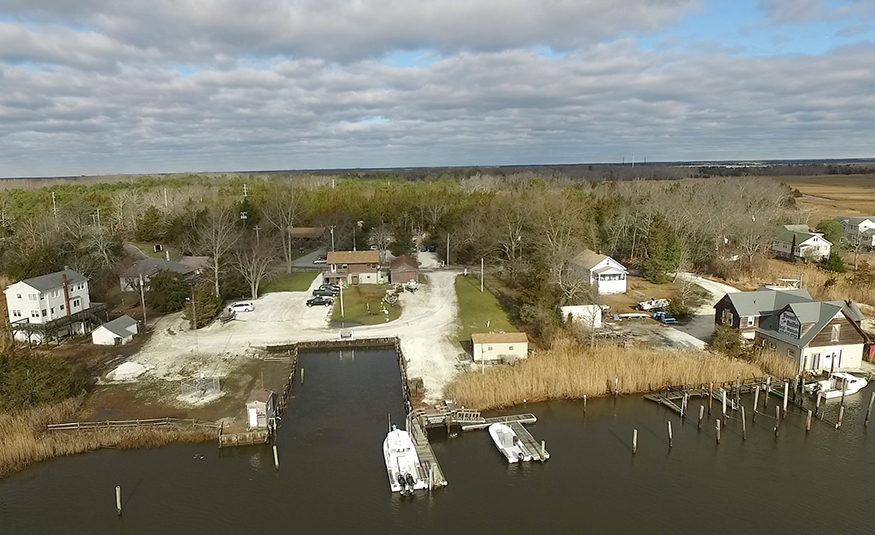
Evert also noted the developments will expand access to the Dockside Science Program. The initiative introduces high school and college students to coastal science without ever having to leave the land. The science pier will have long-term monitoring stations installed to collect data on water quality, tide levels and other future data needs.
Evert estimates the Marine Field Station serves more than 200 undergraduate and graduate Stockton students each year. It also welcomes K-12 students from Atlantic, Cape May and Ocean counties.
And he hopes the improvements will allow for more school group visits.
The site also hosts a meteorological station for the Jacques Cousteau National Estuarine Research Reserve.
“Stockton has been increasing its emphasis on teaching the broader aspects of coastal science that include marine operations, resiliency, mapping and monitoring of the coastal zone,” Evert explained. “These program advancements are benefiting students by providing a broader base from which to carve out their career paths and contribute to the blue economy.”
These program advancements are benefiting students by providing a broader base from which to carve out their career paths and contribute to the blue economy.
—Steve Evert, director, Marine Field Station
According to National Oceanic and Atmospheric Administration, the New Jersey marine economy comprises more than 9,700 businesses, supporting over 173,000 employees and $8 billion in wages. The 2024 Marine Economy Report from NOAA says the state sector’s $14 billion in gross domestic product has increased by 50% over the past 10 years.
There are also public safety effects. The work will provide science and emergency response vessel access to the areas surrounding Mullica River, Evert said, and support use by other agencies or institutions. The Galloway Township Office of Emergency Management identifies the station as an emergency-response location for the surrounding waters.