Sign In
Upcoming Event
 Free Newsletter

Normalization, specialization in NJ industrial sector build optimism (updated)
Jessica Perry//January 20, 2025//

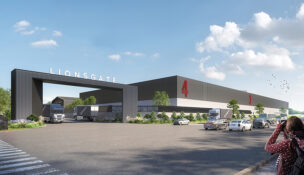
A rendering of a customizable cold storage facility rising in Mount Laurel. “We’ve seen a lot of clients that are having that need for cold storage — between grocers and anyone internally,” said Greek Design|Build Project Manager Matthew Zangara. - PROVIDED BY GREEK DESIGN|BUILD
A rendering of a customizable cold storage facility rising in Mount Laurel. “We’ve seen a lot of clients that are having that need for cold storage — between grocers and anyone internally,” said Greek Design|Build Project Manager Matthew Zangara. - PROVIDED BY GREEK DESIGN|BUILD
Normalization, specialization in NJ industrial sector build optimism (updated)
Jessica Perry//January 20, 2025//


)

Heading into 2025, a sense of cautious optimism is palpable as the industrial sector appears to find its footing. While some may be eager to see the glass half-full following an uneasy couple of years, sentiment on the ground – as well as data from the end of 2024 – helps support the rosier outlook. Reports signal the sector is stabilizing as vacancies level off, demand persists, and fewer deliveries come online.
With more favorable financing circumstances, niche sectors and growing markets still offer opportunities for new projects to get underway. But expectations are tempered due to uncertainty surrounding policies from a new, incoming federal administration as well as ongoing geopolitical tensions.
Reflecting on the last quarter of 2024, WCRE noted a solid end to the year.
“Market fundamentals were strong this quarter despite the ongoing challenge of persistently higher financing costs,” WCRE founder and Managing Principal Jason Wolf noted in the firm’s Q4 2024 quarterly report. “As in the third quarter, consumer spending drove a resilient macroeconomic environment, and the effects helped to buoy CRE markets.”
In the industrial segment, the full-service Philadelphia, South Jersey and New York commercial real estate brokerage, advisory and property management services company noted “renewed strength” over the second half of 2024, with accelerated absorption during this time. In particular, the firm highlighted a push from e-commerce expansion – particularly of non-discretionary goods – driving warehouse leasing.
Moving into 2025, builders are preparing.
“Everybody seemed to be a little on the fence about starting new jobs at the end of last year, and [since] we’ve seen a couple of owners that we’re working for on the third-party side of it, get their projects geared up ready to go at the beginning of this calendar year,” Matthew Zangara, business development manager at Greek Design | Build, told NJBIZ.

“Between a couple small jobs to a little bit bigger ones that we’re doing around the corner from our office,” as well as internal Greek Real Estate Partners projects, “we definitely see those getting ready to gear up for a bigger ‘25 than past years.”
Based in East Brunswick, Greek Design Build provides end-to-end design and construction services for a range of industrial property types, including distribution centers, cold storage, food-grade, manufacturing, pharmaceutical and process facilities. And its track record speaks for itself: the team has completed more than 1,000 projects; over 305 buildings and erected upwards of 10,000 tilt-up panels.
The segment is part of vertically integrated developer Greek Real Estate Partners. Over its 90 years, the family-owned business has completed 30 million square feet in industrial properties. Across New Jersey and Pennsylvania, its portfolio comprises more than 20 million square feet, according to the company.
Zangara joined Greek five years ago. Before that, he worked at civil construction company Crisdel, based in South Plainfield.
He said he’s noticed an uptick in activity, particularly in the closing months of 2024.
Indeed, New Jersey Alliance for Action last fall projected increased spending in local construction over the next two-year cycle. The estimated more than $57 billion in building spend marks an over 5% increase from the previous period, according to NJAA.
“These numbers represent significant growth and optimism for New Jersey’s construction industry, which means great news for the entire state,” Alliance for Action President Jerry Keenan said at the time. “The jobs and economic opportunities created by construction improve the lives of everyone in our state.”
Positive trends
Stabilization of material costs and supply chains could make starting new projects easier for now.
The Roundup
Significant developments in construction and development from around the state:
- $8.6M approved for South Jersey Aerospace Innovation Center
- Showboat AC expansion receives $4.2M grant
- Construction loan clears way for Jersey City self-storage development
- North Brunswick Train Station marks design phase milestone
In terms of the former, Zangara said things are starting to get a little bit more competitive. He referenced steel, concrete and roofing prices as examples where there’s been some relief.
“Looking at it, as those prices kind of balance themselves out and get lower, which we’ve seen especially the past few months, it’s hopefully making not only us but other developers look at those numbers and balance those costs, and get ready to pull the trigger on a certain project where they might not have last year because of higher prices,” he said.
“For the most part we’re able to get steel rather quickly. Roofing you can pretty much get off the shelf,” Zangara said. “We had an issue with that a couple of years ago between all the major roofers. It was basically whoever had it first basically want a job at that point to be able to meet the projects.”
As for what’s lagging, Zangara identified electrical components as “still not where we would like it to be. But in the grand scheme of it, everything else has pretty much come back to normal—HVAC units, dock equipment; everything like that,” he said.
Industry reports caution that policy changes from the incoming federal administration do create some uncertainty ahead.
WCRE pointed out potential highlights, as well as hurdles, on the horizon.

The First 100 Days: What to Expect
Experts across several industries — agriculture, banking and finance, energy, health care and manufacturing — explore what the incoming Trump administration might mean for them. More >>
Despite “higher inflation and slower growth in the short term … tax cuts and a more business-friendly regulatory climate could drive growth in the long term,” according to the report. “Supply-side challenges, including tariffs and tighter immigration policies, may constrain construction, but a favorable regulatory environment could stimulate demand and market growth.”
Savills noted it expects uncertainty around tariffs to drive demand for third-party logistics and short-term space. This phenomenon was seen last year amid and around port labor negotiations.
If materials are delayed, there are workarounds to accommodate.
By buying items such as transformers, switchgear or even primary switches directly, Zangara says, under some circumstances, his team can take care of certain primary services for buildings themselves.
“Being able to work with [utility companies] and get our own equipment has definitely helped us on that side of it,” he said.
Overall, “we’ve been kind of building … as soon as we’re able to purchase whatever we can, whether it’s our ownership or someone that we’re working for, we’ll … say, ‘We need to get this to be able to keep your schedule … for the size of the building,” Zangara explained. “So pre-purchasing for the electrical equipment has been our No. 1 goal.”
Following the Fed
Besides the fresh promise of a new year, confidence in the sector stems from relative normalization following years of market saturation and deliveries.
“Now, you’re kind of seeing some tenants do jumps from old leases to newer buildings,” Zanagara explained. “As those spaces start to fill up, obviously the projects that were kind of backlogged for a little bit are having the potential to come back online.”
However, different areas of the state have exhibited – and project – varying levels of activity.
Cushman & Wakefield’s Q4 report noted robust activity in the North and Central Jersey industrial space.
“Despite increasing new supply, the industrial market’s resilience is evident in the strong leasing activity,” commented Senior Research Manager John Obeid. “Key tenants are demonstrating continued confidence in New Jersey’s strategic location and infrastructure. This trend underscores the importance of New Jersey as a logistics hub, attracting significant interest from major players.”
While deliveries surged in the northern parts of the state in 2024 (adding 13.1 million square feet of mostly vacant space), new leasing activity totaled 27.1 million square feet, CushWake reported. The firm noted the figure represents the strongest showing since 2021.
Key tenants are demonstrating continued confidence in New Jersey’s strategic location and infrastructure. This trend underscores the importance of New Jersey as a logistics hub, attracting significant interest from major players.
– John Obeid, Cushman & Wakefield
In its North Jersey lookback at Q4, Savills noted an uptick in groundbreakings at the end of 2024, coinciding with the Federal Reserve’s three interest rate cuts. In the region, the real estate services company said the pipeline of under-construction projects increased by nearly 3 million square feet to 9.8 million square feet, representing both speculative as well as build-to-suit projects.
Zangara detailed work his team has underway.
In Fair Lawn, he said Greek hopes to come out of the ground around the second quarter of 2025. Following a series of fits and starts, the company resumed demolition at a former Nabisco plant in the Bergen County municipality around the spring of this year, according to reports. Approved by the township in September 2023, plans for the site call for a 644,000-square-foot warehouse, hundreds of parking spaces for cars as well as trailers, and 10,000 square feet of office space.
“And then we have another one in the pipeline, over in Pohatcong, an 840,000-square-foot warehouse that we’re hopeful, by the end of the year, same thing, we can get that one out of the ground,” Zangara said.
NJBIZ Panel Discussion

Construction and development experts say there’s an appetite for activity in the sector — but underscored the importance of funding and infrastructure to support it. More >>
Overall, Greek Design Build’s experience runs the gamut: from 1-million-plus square feet down to 30,000-square-foot renovations, according to Zangara. But like others, he notes an appetite for smaller footprints within the market.
“People are looking for more of that 150-300,000 range,” he said. “We had one of the buildings that we leased down in Logan — they took half of a 274,000-square-foot warehouse.”
Due to space constraints and saturation, new opportunities appear more likely in niche markets and heading south.
Describing it as increasingly hot, Zangara says his team has seen a lot of jobs in South Jersey and the surrounding Philadelphia area. WCRE also noted this uptick in activity. Overall, the firm said South Jersey “showcased resilience and adaptability throughout the fourth quarter.”
In addition to attracting new interest, as Central/North Jersey and New York investors enter the region, “Real estate investment trusts (REITs) and local and regional property owners continued fine-tuning their portfolios to align with emerging market dynamics, signaling confidence in long-term growth opportunities,” the firm reported.
Another indicator: The area has also seen rent growth, in Burlington as well as Gloucester counties, which WCRE expects to persist. The firm attributed the gains to a shift in property demographics, thanks to new deliveries. As of the beginning of last year, Class A and B industrial properties represent 25% of the regional footprint—up from 20% in 2020, according to WCRE.
In the region, Greek Design Build is currently finishing up a 287,000-square-foot warehouse in Philadelphia, with another project recently started in Mount Laurel.
“We’ve seen a lot of clients that are having that need for cold storage — between grocers and anyone internally,” Zangara commented. “Logistically, we did a lot of work with Lineage as they came up, and now you see guys kind of branching off that — they’re following that niche.”
In 2020, industry leader Lineage Logistics pre-leased a nearly 190,000-square-foot, build-to-suit cold storage facility at GREP’s Logan North Industrial Park in Logan Township.

Zangara identified access to local ports as a high priority for cold storage tenants.
“The market, especially with the Port of Philadelphia being so heavy for import/export of seafood … it’s kind of been a gold mine in the sense of—they want to get as close as they can to that port. Just like the Port of Newark on the north side of New Jersey has been.”
Last August, Greek Design Build also started work on a speculative project set to offer more than 215,000 square feet of space. In terms of cold storage, Zangara highlighted the Mount Laurel development from RL Cold and BentallGreenOak as a “pretty big one compared to ones we’ve historically done.”
The Mount Laurel building will have the ability to accommodate temperatures ranging from -10 degrees Fahrenheit to 55 degrees Fahrenheit with four variable temperature compartments. Additionally, the LEED-certified facility offers tenant customization for every aspect, according to the development team, covering warehouse design to office space layout.
“We are honored to be involved in an innovative project that also allows us to advance it through the cost-effective and time-saving design-build process. This facility will stand out in the market as a highly flexible state-of-the-art cold storage option,” said Steve Chick, director of pre-construction at Greek Design Build, said in a statement at the time.
Editor’s note: This story was updated at 1:44 p.m. ET Jan. 21, 2025, to update Matthew Zangara’s title to business development manager.