Sign In
Upcoming Event
 Free Newsletter


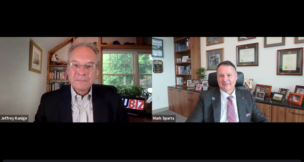
Clockwise from top left: Moderated by Editor Jeffrey Kanige, the April 29, 2025, NJBIZ Construction & Development Panel Discussion featured Frank Ciminelli II, president and CEO, Arc Building Partners; Josh Kuskin, director of design & construction, Rockefeller Group; Amir Nekoumand, business unit leader, DPR Construction; and Tammy Smith, president, The Alban Group. - NJBIZ
Clockwise from top left: Moderated by Editor Jeffrey Kanige, the April 29, 2025, NJBIZ Construction & Development Panel Discussion featured Frank Ciminelli II, president and CEO, Arc Building Partners; Josh Kuskin, director of design & construction, Rockefeller Group; Amir Nekoumand, business unit leader, DPR Construction; and Tammy Smith, president, The Alban Group. - NJBIZ
Tariffs prompt caution, collaboration in construction
Jessica Perry//April 30, 2025//


The basics:
- Construction executives urge early collaboration amid tariff impacts
- Steel, aluminum and imported finishes facing price pressure
- Market conditions require proactive communication with stakeholders
Tariffs and technology led the latest NJBIZ Construction & Development panel discussion April 29.
Moderated by Editor Jeffrey Kanige, the 90-minute conversation offered varying perspectives and experiences amid a challenging and changing market. Joining the discussion were:
- Frank Ciminelli II, president & CEO, Arc Building Partners
- Josh Kuskin, director of design & construction, Rockefeller Group
- Amir Nekoumand, business unit leader, DPR Construction
- Tammy Smith, president, The Alban Group
In addition to the impacts of AI, discussion topics included how tech can help the industry; workforce concerns regarding immigration, aging workers and a constricted talent pipeline; and what may lie ahead. Expanded coverage of the event will appear in the May 5 print edition of NJBIZ.
Different perspectives arose on the evolving situation regarding tariffs; however, a consensus emerged around proceeding cautiously, collaborating early — and hoping for the best.
Ciminelli, who leads a construction management firm with offices in Morristown as well as Buffalo, noted the difficulty in forecasting within the current climate.
“I can tell you that feedback from where we sit in the market is, if it’s already en route – it is what it is; but there’s a lot of people who are going to be riding the budget, if you will, until we get a better sense of what the total impact is going to be.” He specifically cited certain finishes coming from Asia as well as mechanical electrical equipment.
Raising prices
Smith said her business is already feeling the impact of tariffs – and it’s hit “pretty hard” over the past couple of weeks. A boutique construction firm, The Alban Group specializes in interior fit-outs well as residential and hotel common improvements, such as lobbies, hallways and amenity spaces. She described being stuck between rising concerns over costs from clients as well as suppliers jumping to increase price points.
“Some of it hasn’t happened yet, but yet it’s almost COVID all over again,” Smith said. “When COVID came and materials became scarce, and prices increased.
“And besides the materials coming [from] out of the country, I’m now having vendors who are trying to jump on that same bandwagon, where you have materials in the United States saying, ‘Hey, my prices are going up.’”
Characterizing the situation as fluid, Kuskin said he’s also talking to contractors, vendors and manufacturers. “The only thing I can tell you for certain is what seems to be impacting construction materials right now are steel and aluminum … 25% steel and aluminum,” he said, noting “a little bit of silver lining … for the price effect.”
Replay: Construction & Development Panel Discussion
Click through to register to watch the full panel discussion!
Whereas development and construction was “on fire” in the pre- and pandemic period, that’s not the case in the present. Cushman & Wakefield’s first quarter 2025 industrial report noted the more than 517,000 square feet delivered during the period marked the lowest since 2010.
“So what you’ll see, is those tariffs or the potential for the tariffs and the cost premiums are because the subcontractors out there in the market are so hungry for work, they’re not going to be necessarily passing those costs on to the consumer – the developers,” Kuskin said.
Keep calm and carry on
Notwithstanding those impacted materials – and as long as construction volumes stay steady – he added that there could be some lead time disruptions in the supply chain. “I think we’re just trying to focus on that and not try to blow everything out of proportion and lose our cool, so to speak.”
From the contractor side, Smith noted prices on metals, woods, plastics and PVC going up this month. And her clients in “active living environments,” versus a ground-up development, expect the contractors to pick up the difference.
Kuskin said that overall construction costs have gone up by close to 40% since February 2020. “So, I think what’s happening is a lot of owners and developers like myself are now second guessing,” he said. “‘Hey, should I take a step back? Should I hold off on starting a project or wait and see what happens?
“So I tend to think, again, as long as that continues to stay true, I’m optimistic that the tariff stuff will not be as impactful.”
While no one can control tariffs, ‘what you can control is how early you begin collaboration and how you begin planning.’
– Amir Nekoumand, DPR Construction
Nekoumand said his approach is similar to Kuskin’s. DPR Construction is a general contractor and construction manager with offices nationwide that specializes in technically complex work. Based out of East Brunswick, Nekoumand’s team serves the life sciences and advanced technology markets.
While no one can control tariffs, “what you can control is how early you begin collaboration and how you begin planning,” he said. “So we think the key to every project – tariff or not – is the quicker we can start planning and collaborating with all the proper stakeholders, we’re able to get ahead of material selection, lead time supply chain, to help make those sort of decisions with our customers.”
Clear communication
Across the board, panelists agreed upfront collaboration is key to weathering uncertainty.
“I think Amir hit it squarely on the head,” Ciminelli said. “It’s the inclination, typically, of an owner to try and retract and not invest in the time it takes to collaborate. And I think it’s just the opposite. Coming out of the pandemic, the projects that we saw most successful are the ones, really, where the clients were most willing to be open-minded, be proactive,” he said.
“That’s when we’re at our best and I think that’s ultimately what’s most necessary is, everybody’s going to … play an open hand and try and figure out how to best solve the problems,” Ciminelli added.
As clients get more transactional, he said it’s more likely to push risk to a place where it will be priced into the job.
“But it’s all part of the same two sides of the same point. So we have to work more together, not less,” Ciminelli said.