Sign In
Upcoming Event
 Free Newsletter


Doherty Enterprises owns and operates more than 160 restaurants across the New York City metropolitan area, including national brands such as Applebee’s Neighborhood Grill & Bar (the Clifton location shown here), Panera Bread, Wendy’s and Chevy’s Fresh Mex. - PROVIDED BY DOHERTY ENTERPRISES
Doherty Enterprises owns and operates more than 160 restaurants across the New York City metropolitan area, including national brands such as Applebee’s Neighborhood Grill & Bar (the Clifton location shown here), Panera Bread, Wendy’s and Chevy’s Fresh Mex. - PROVIDED BY DOHERTY ENTERPRISES
How Doherty Enterprises became a major restaurant franchisee
Kimberly Redmond//August 11, 2025//


The basics:
- Founded in 1985, Doherty Enterprises now operates 160+ restaurants
- Last year, acquired 21 NYC Applebee’s
- President and COO Tim Doherty says company focus is just as much on people as it is on food
- Maintains strong employee culture with low management turnover
With 160-plus restaurants across the New York City metropolitan area, which include popular national brands like Applebee’s Neighborhood Grill & Bar, Panera Bread, Wendy’s and Chevy’s Fresh Mex, chances are you have visited a Doherty Enterprises-owned-and-operated eatery.
After starting out four decades ago with about two dozen Roy Rogers restaurants in Connecticut, Ed Doherty has expanded his Allendale-based hospitality business to become one of the top franchise groups in the U.S. because of its size, scope and consistent high performance. Additionally, Doherty Enterprises has managed to set itself apart by remaining committed to community outreach and employee engagement.
Now led by Ed’s son, President and COO Tim Doherty, the family-owned company is positioning itself for lasting success in the region by widening its footprint via acquisitions and new development deals.
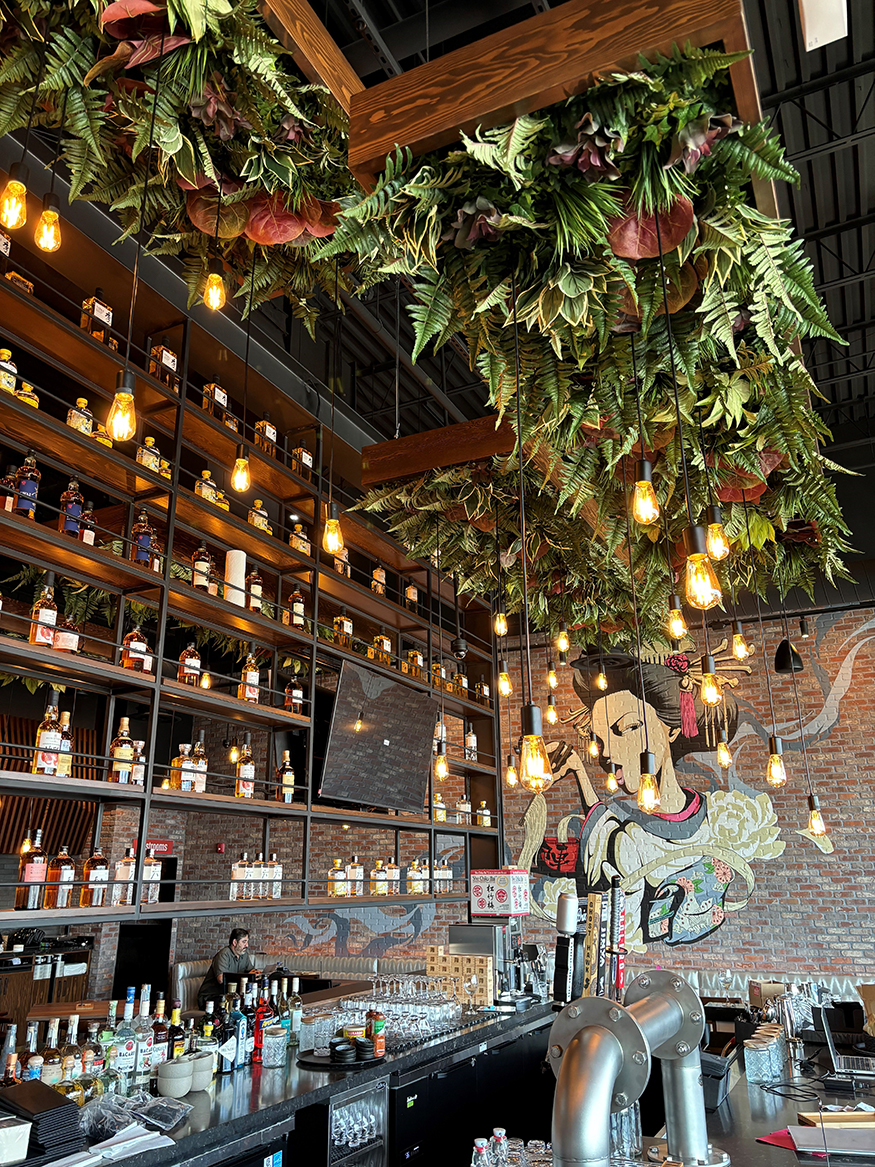
Considered one of the largest franchisees of Applebee’s in the nation, Doherty Enterprises further cemented its status following a January 2024 deal with Apple Metro Inc. The group operated 21 of the casual-dining chain’s restaurants in the five boroughs of New York City. In addition to expanding the much-loved brand, Doherty Enterprises also introduced New Jersey to Jinya Ramen Bowl. The California-based eatery is known for specialty ramen made in long-simmered broths; Japanese-inspired tacos; rice bowls; curry and other small plate items.
After teaming up with Doherty Enterprises to debut its first New Jersey outpost in Totowa last fall, the partners will add a location in Hackensack soon. “We’re excited about it and think there’s a good opportunity to grow that — hopefully over the next five-to-seven years within the New York-New Jersey area,” Tim Doherty said.
Like the rest of the hospitality industry, Doherty Enterprises has faced challenges in recent years, such as high real estate costs and shifting consumer behavior — including the rise of digital ordering as well as delivery and desire for healthier foods. Additionally, the sector has endured problems like supply chain disruptions and brand fatigue, particularly with legacy chains like TGI Friday’s and Red Lobster.
As part of its response to the challenging landscape, Doherty Enterprise has continued to be strategic about expansion and scaling. It has also continued engaging with communities on charitable campaigns to reinforce loyalty and give back, as well as strengthen employee support systems.
The ‘wow’ factor
For Doherty Enterprises, its focus is just as much on people as it is on food. To achieve its goal of being the “best food service company” in the areas it serves, Doherty is intent on wowing guests.
Tim Doherty said, “Our hope is that you’ll feel that the people who work in a particular location are friendly, attentive and really try and make it a nice experience for you,” he said. “And nobody can be perfect 100% of the time, so if we don’t do something right, we try very quickly to make it right so you can walk out of our restaurant saying, ‘Hey, this was a really great experience. I can’t wait to go back.’ That’s my hope for every single one of our guests.”
Our hope is that you’ll feel that the people who work in a particular location are friendly, attentive and really try and make it a nice experience for you.
– Tim Doherty, Doherty Enterprises president and COO
In addition to keeping the customer experience front and center so diners keep returning, the company is committed to creating a workplace culture where employees feel valued, celebrated and supported. The broader “wow” framework also calls for showing suppliers that they are valued partners through reliability, respect and consistency.
“An ‘OK’ is not a ‘wow,’” Ed Doherty said.
“As a franchisee, our job is to operate great restaurants and to connect with our communities and fortunately we’ve been able to do that very well and we’re now in three different categories – casual dining, fast casual and quick service,” he said, adding that the ability to survive and thrive in the industry “starts with people.”
“We have spectacular people. Many, many of them have worked for us for 15, 20, 25, 30, 35 years. And they bought into our culture and our vision of being the best in the neighborhood we serve,” the CEO and chairman went on to say.
He also noted low turnover among management positions. Compared to the national average of 28% for such roles, Doherty Enterprises has a rate of between 11% to 12%, according to Ed Doherty.
“Our people understand the culture and they bring it down to everyone that works in the different locations,” he added.
A growing family (business)
Before founding his company, Ed Doherty spent nearly two decades working for large corporations. He began his career in 1973 as a real estate manager for Burger King. Two years later, Marriott recruited him to serve as real estate manager in the tri-state area for its various restaurant concepts.
Over the course of his 10 years with that company, Doherty advanced up the ranks to hold managerial positions in real estate, marketing, franchising and operations management. Then in 1985, he struck out on his own. The elder Doherty acquired 19 Roy Rogers locations in Connecticut from Marriott, making him the fast-food brand’s largest franchisee at the time.

During the next five years, he grew the Roy Rogers portfolio to 28 restaurants and added six T.J. Cinnamons bakeries before repositioning away from the brand in the early 1990s. Half a dozen of those locations eventually converted into Wendy’s, while the remaining sites were sold to various competitors.
After signing a development agreement with Applebee’s in 1991, Doherty Enterprises grew the brand in North and Central Jersey. Then in 1998, the company turned its attention to expanding the chain’s presence on Long Island. It continued diversifying by becoming franchisees of casual-dining restaurant Chevys Fresh Mex in 1999 and Panera Bread in 2001.
In the 2010s and 2020s, Doherty Enterprises kept scaling. It now boasts a portfolio that includes 79 Applebee’s, 56 Panera Breads, 19 Wendy’s and two Chevys.
When it comes to how Doherty Enterprises evaluates concepts to get involved with, Ed Doherty said the first requirement is that the business is a franchise.
“Certain brands, like Cava, do not franchise. Chipotle [Mexican Grill] does not franchise. So, you have to eliminate some very good brands because of that. But other than that, I looked at the leadership at the top of the franchise organization. Are they smart leaders who like to collaborate and is it a brand that people want to work for? Applebee’s is a neighborhood restaurant – nice people, soup, salads and sandwiches. And they do a great job. Wendy’s is known for fresh burgers and quality burgers.”
In the past, Doherty Enterprises considered Burger King “but decided against it because, frankly, we didn’t like the management,” Ed Doherty said. “We also looked at Popeyes [Louisiana Kitchen], but it wasn’t the right thing. We looked very seriously at becoming a Wingstop franchisee about six, seven years ago. At the time they weren’t as hot as they are now, and their sales were about a million dollars a restaurant. It didn’t work in the New York area with the high cost.”
The family rule
As a family-owned firm, Tim Doherty believes it lends itself to being an environment that values openness and honesty.
“The goal is to get the right answer that’s right for the company … We are made up of over 7,000 team members across all of our brands. It’s my responsibility to make sure that we are pointed in the right direction so that we are successful,” Tim Doherty said. “It’s not without its challenges from time to time, but they are very, very few and very far between and we really don’t have any friction or any issues. We’re very fortunate, not only do we love each other, but we like working with one another.”
Ed Doherty noted that while his three children were in high school and college, they each worked part time at his Applebee’s restaurant at the Fashion Center in Paramus. But, after college, the family rule was that they weren’t allowed to join the company and that they “had to go out into the real world,” he said.
After graduating from Lehigh University in 1999, Tim Doherty moved to Dublin, Ireland, where he worked at Allied Irish Bank. A year later, he was transferred to the U.S. headquarters in New York City and promoted to officer of the bank.
“I was in finance and banking, but I wasn’t passionate about what I was doing. And ultimately over the course of a couple of conversations over a couple of months I decided to come on board with Ed and the two of us agreed that I could provide the most value to our company was on the real estate side of things,” Tim Doherty said.
“We had 36 restaurants at that time and Ed, because that was his background, helped train me on what makes a good real estate, how to negotiate or lease things, which was not my background, but he did a great job training me. Over the course of the next decade or so, I helped grow across all of our brands,” he continued.
Excited about the future
Tim Doherty began in 2003 as real estate manager. Over the next few years, he was promoted through the ranks to director of real estate, vice president of real estate & construction and then vice president of development.
During his tenure, Tim Doherty has been involved in areas such as site selection, lease negotiations, acquisitions and overseeing construction. In addition to new developments, he has been instrumental in leading remodels of restaurants across the company’s portfolio.
Tim Doherty was named president and chief operating officer in 2018. He’s now in charge of all operations and managing the company from a day-to-day perspective. He stepped into the role after the retirement of Ed Choe. The seasoned industry veteran was brought on in 2009 to help Doherty Enterprises manage growth, remodel new acquisitions and elevate performance across the company’s expanding multibrand lineup.
“We’re involved with great brands. We have the best team in the restaurant industry, and I’m honored to work with them every day. And I get to work with a great father who is very supportive of me and my sisters. I go to work every day excited about what the future holds,” he said.
Ed Doherty’s daughters, Shannon and Kerry, also worked outside of the hospitality industry after college and before returning to the family business. The sisters helped launch Doherty Enterprises first-ever independent, proprietary concepts: Shannon Rose Irish Pub in 2007 and Spuntino Wine Bar & Italian Tapas in 2012.

“After your franchises are successful, you get the urge to see if you can do a concept,” he said.
Modeled after an authentic pub, Shannon Rose sought to bring a little bit of Dublin to New Jersey. After opening the first location in Clifton, Doherty expanded to add another in Ramsey. Thanks to its communal dining, live entertainment and traditional fare – like shepherd’s pie and Guinness stew – the brand has become one of the most popular Irish pubs in the state.
Doherty Enterprise’s second original concept, Spuntino Wine Bar & Italian Tapas, aimed to introduce the small plate trend to the area, Ed Doherty said. “At the time, a wine bar with Italian tapas didn’t exist in New Jersey. They were only in New York,” he said.
At Spuntino, the menu includes a variety of small dishes and hand-stretched pizzas that can be mixed, matched and paired with an extensive collection of wines by the glass, wines by the bottle, Italian beers and specialty cocktails. Doherty Enterprises introduced Spuntino in Clifton before opening a second site in Westbury, N.Y.
A mis-steak
The company has always remained 100% family owned. Ed Doherty said it never had any involvement from private equity or investors because he “didn’t want to be beholden to other people.”
“If I’m going to be successful, it’s going to be because we’re successful,” he said. “The easiest way to do that … is finding good people around you, sitting down and figuring out how we’re going to grow. And we’ve grown selectively.”
Looking ahead, Ed Doherty said the company plans to focus on the New York-New Jersey area, where each of its sites are “within a two-and-a-half hour drive, max.”
Tim Doherty said, “I believe we have a real competitive advantage of operating in and around the New York metro area. It’s very challenging to do it — to operate in New Jersey- New York, and we do it very, very well.”

As Doherty Enterprises sharpens focus on the region, the company trimmed its Applebee’s portfolio last year by selling 26 locations in Florida and Georgia to major franchise operator Flynn Group. Financial terms of the deal were not disclosed.
The move came more than a decade after Doherty purchased 38 units from a Georgia hospitality group. At the time, then-president Ed Choe said the company had been “on the lookout for any potential acquisitions of our existing brands for some time.”
Reflecting on his company’s exit from the Sunshine and the Peach states, Ed Doherty said, “Sometimes you make mistakes. And the mistake was not necessarily just mine … there was a very poor Applebee’s franchisee operating in Florida and he was on the verge of bankruptcy. We were able to go in there and buy them very reasonably.”
“But I didn’t realize what physical shape the restaurants were. So, we ended up spending about $500,000 per restaurant to remodel about 40 restaurants … which we didn’t expect that; to spend that kind of money. We were able to quickly raise average unit volume from 1.9 [million] to 2.8 [million] and we were making good money,” he said.
However, after Applebee’s hand-cut steak and wood-fired grill promotion in 2016 failed to resonate with customers across the U.S., it resulted in declining traffic and sales – including at Doherty Enterprises-owned locations. At a chain seen as budget-friendly, the strategy was widely regarded as a misstep because the idea of $20 steaks did not go over well with Applebee’s typically value-oriented customers. After that, Applebee’s shifted its efforts to focus on affordability and familiarity.
Besides bringing back popular comfort food, it unveiled value-driven promotions – like $1 margaritas – as a way to win back the affections of core customers and drive traffic into restaurants.
As part of the turnaround, Applebee’s also closed underperforming locations and streamlined operations to strengthen the business. Under the leadership of then-president John Cywinski, Applebee’s reversed declining sales and achieved its strongest five-year performance in company history.
Dining culture
Thanks to the new direction, Tim Doherty said traffic began to improve at Doherty Enterprises’ Applebee’s sites. Then the pandemic hit in early 2020.
The temporary, mandated closure of restaurants for sit-down service forced the company to let go of all hourly team members. However, even during the shutdown, Tim Doherty said the company made a point of staying “connected and engaged” with former employees by writing regular notes “to stay close to them.”
“They returned in droves when everybody else in this industry was struggling in 2021 to get people to come back to work. That made me very proud,” Tim Doherty said.
He’s also “very proud” of the company’s culture, saying, “We spend a lot of time and effort celebrating people and recognizing them for what they’re doing and how they’re impacting our guests.”
[Former employees] returned in droves when everybody else in this industry was struggling in 2021 to get people to come back to work. That made me very proud.
– Tim Doherty, Doherty Enterprises president and COO
Besides applauding employees for a job well done, Doherty Enterprises also lends a helping hand to team members and their immediate families during times of financial crisis. Since 2007, the WOW A Friend Foundation has raised more than $6.7 million and given $5.7 million directly back to those in need.
According to Ed Doherty, 89% of the company’s employees – about 6,200 workers – voluntarily contribute to the fund. He and his wife also provide a $250,000 match every year for those employee contributions because it “shows them that we care about them and willing to give back and support the foundation just as they’re supporting it.”