Sign In
Upcoming Event
 Free Newsletter


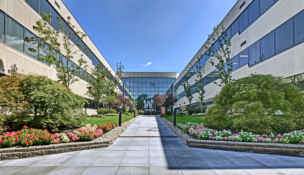
152 Ridge Road in South Brunswick is a 216,000-square-foot industrial warehouse. - PROVIDED BY JLL
152 Ridge Road in South Brunswick is a 216,000-square-foot industrial warehouse. - PROVIDED BY JLL
NJ warehouses drive $295.8B economic impact
Jessica Perry//November 25, 2025//


The basics:
- Rutgers CAIT report finds NJ warehouses support 1.35M jobs
- Sector drives $295.8B in economic activity statewide
- Warehouse and distribution centers produce $33.8B in taxes
- Nearly 956M sf of occupied warehouse space fuels logistics growth
Discussions abound regarding the number of industrial properties lining Garden State highways. However, that visibility is just part of the impact the sector generates here. These structures support over 1.35 million direct and indirect local jobs. They also produce more than $295.8 billion in business activity.
A new report from The Center for Advanced Infrastructure and Transportation at Rutgers University zeroes in on warehouse and distribution centers, specifically, to highlight the critical role of logistics in the state’s economy and future growth.
New Jersey is small but mighty. The most densely populated state in the country, nearly 33% of the U.S. population is within a day’s drive. According to Choose New Jersey, the state sits in the center of the Northeast Corridor and its 56.5 million residents. That affords proximity to other dense areas, such as New York City, Philadelphia, Boston and Washington, D.C.
Access the full report here.
Additionally, the Port of New York and New Jersey here holds distinction as the largest on the East Coast — and third-largest in the nation. Plus, residents here are accustomed to next-day and other convenient delivery methods.
As noted by the CAIT report, “Warehouse and distribution centers play a vital role in maintaining efficient and effective supply chains.” Beyond the nearly 764,000 direct jobs supported at these property types, they generate more than $112.8 billion in personal income, according to the study.
“The logistics industry is an impressive economic engine for New Jersey,” said Dan Kennedy, CEO of NAIOP, the Commercial Real Estate Development Association – New Jersey Chapter. “Often lost in the conversation are the economic contributions made by the existing warehouse and distribution centers that create an eye-opening number of jobs and contribute an irreplaceable amount of federal, state and local taxes that support critical services for all New Jersey residents.

“With all the state and local discussions going on about warehouse development and supporting infrastructure, we feel the public deserves to know the truth — warehouses and distribution centers make a substantial economic contribution to New Jersey’s economy that no industry can match.”
The paper relies on published reports, fieldwork, engineering information and an advisory committee consisting of industry professionals. It marks the first complimentary analysis in conjunction with the 2025 Economic Impact Assessment of the New York-New Jersey Port Industry. CAIT undertook the study on behalf of NAIOP and in partnership with the Shipping Association of New York and New Jersey.
$33.8 billion
Total federal, state and local tax revenues generated
- $11.3 billion local
- $22.6 billion federal
Referencing fourth quarter 2024 data, the report focuses on existing warehouses and distribution centers. It does not include Atlantic, Cape May, Cumberland and Ocean counties. Of the almost 1.02 billion square feet of space dedicated to warehouse and distribution centers across New Jersey, nearly 956 million square feet of that is occupied, per the study.
The data reflects buildings with 20,000 square feet or more across three categories: transload and storage, distribution and 24/7 operations.
First Rutgers CAIT determined the number of workers in local warehouse and distribution centers. Then, it calculated the ongoing economic value generated by these operations. The study employed the same economic impact model developed for the 2025 port industry assessment. The methodology considered measures such as: employment effects, business activity/income effects, personal income effects, state and local taxes and federal tax effects.
Behind the board
NAIOP NJ assembled the senior executive advisory committee involved, including:
CBRE, Crow Holdings, Cushman & Wakefield, Greek Real Estate Partners, JLL, Langan, NAI James E. Hanson, NAIOP NJ, NAIOP Research Foundation, Prologis, PS&S, T&M Associates, the Shipping Association of New York and New Jersey

The total reflects a consideration of occupied square footage in the state.
Anne Strauss-Wieder, senior freight and logistics researcher at Rutgers CAIT and a lecturer at the Edward J. Bloustein School of Planning and Public Policy, prepared the report. She said the paper offers a new kind of visibility into what goes on inside warehouse and distributions centers — and what is put out. “Not only does this report quantify those numbers, it also shows just how great that impact really is.”
While this isn’t the first data set to reveal the economic importance of the logistics industry in the state, sector leaders note the timeliness.

“That data, however, was years old and did not reflect the true nature of how large that impact is,” said David Greek, chair of logistics coalition Circulate NJ, and managing partner at Greek Real Estate Development Partners. “This new report provides a great picture of just how many New Jerseyans rely on the logistics industry for their livelihood.”
NAIOP NJ and SANYNJ are members of Circulate NJ.
The CAIT report does not include production or data facilities in its property types, or truck or delivery drivers in its employment counts. These tangents further expand the logistics impact in New Jersey.