Sign In
Upcoming Event
 Free Newsletter

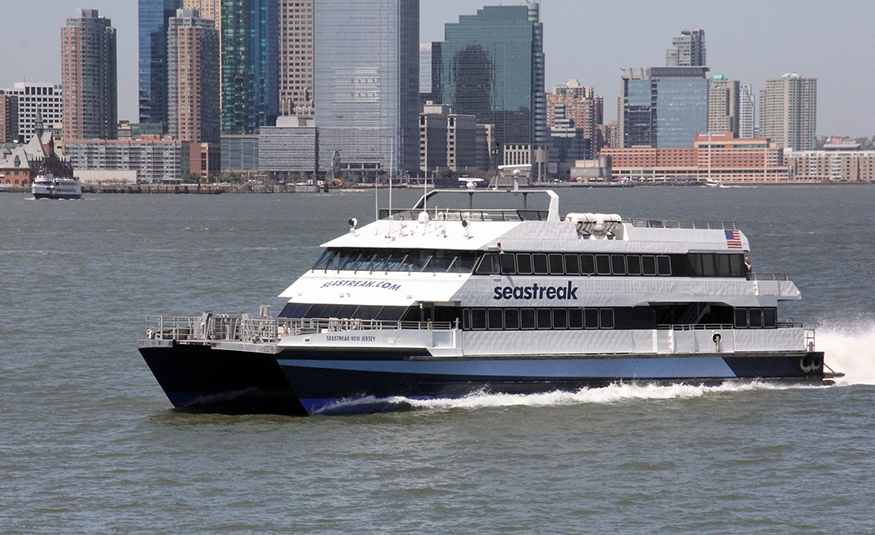
A Seastreak vessel in the New York Harbor against the background of the Jersey City waterfront. - DEPOSIT PHOTOS/2013 ARCHIVE PHOTO
A Seastreak vessel in the New York Harbor against the background of the Jersey City waterfront. - DEPOSIT PHOTOS/2013 ARCHIVE PHOTO
Point Pleasant Beach rejects Seastreak Manhattan ferry
Matthew Fazelpoor//June 22, 2026//


The basics:
- Point Pleasant Beach Borough Council rejects ferry ordinance in 3-2 vote
- Seastreak planned weekend service to Manhattan
- Residents raised concerns about traffic, parking, safety
- Ferry operator canceled 2026 pilot, redeployed vessels
The Borough Council rejected a proposal June 16 to launch direct ferry service between Manhattan and Point Pleasant Beach this summer with a 3-2 vote.
The ordinance would have established a licensing framework for ferry operations, allowing Seastreak to move forward with a limited pilot program.
The vote followed several hours of discussion and public comment. Residents voiced concerns about traffic, parking, pedestrian safety, emergency access, and whether the proposal had first gone through the borough’s traditional zoning and land-use review process before its advancement.
The seasonal route, announced in May, would have connected Lower Manhattan and Point Pleasant Beach in approximately 75 minutes on select summer weekends. Seastreak described the service as a pilot program to test demand and determine whether regular ferry service to the Ocean County borough was both operationally and financially viable before making larger, long-term investments.
Opposing the process
Some residents supported the proposal and pointed to its potential economic benefits. Meanwhile, opponents largely argued they were not against ferry service itself but against what they viewed as a rushed approval process.
Several speakers contended the proposal lacked sufficient detail regarding traffic management, passenger drop-offs and other logistical concerns. Others argued Seastreak and the property owner should first have gone through the planning and zoning review process. The debate ultimately centered less on the ferry itself than on the question of process.
Councilman John Dixon, one of three members who voted against the ordinance, argued the borough should follow its established approval procedures.
“There’s a process that you have to go through,” Dixon said during the meeting. “We’re fast-tracking this and violating all our rules. This is nuts.”
There’s a process that you have to go through. We’re fast-tracking this and violating all our rules. This is nuts.
– John Dixon, Point Pleasant Beach councilman
Mayor speaks out
Supporters of the ordinance countered that the measure would not have granted immediate approval for ferry operations. Instead, they argued it would have established rules governing ferry service while still requiring planning board oversight and additional approvals before any service could begin.
Dixon along with Council members Kitty Stillufsen and Andy Cortes voted against the measure, while Michael Ramos and Caryn Byrnes voted in favor.
Mayor Doug Vitale supported the proposal. He expressed disappointment during the meeting and following the vote. In a Facebook post, Vitale argued the ferry represented an economic opportunity for the borough.
At a time when local businesses are looking for every advantage, when we have an opportunity to attract new visitors and possible new residents … these council members chose to say no.
– Doug Vitale, Point Pleasant Beach mayor
“At a time when local businesses are looking for every advantage, when we have an opportunity to attract new visitors and possible new residents, and when other shore communities are actively pursuing economic growth, these council members chose to say no,” Vitale wrote.
He also contended the ordinance would have created a clearer regulatory framework for ferry operations while still preserving Planning Board oversight.
“Leadership is about vision,” said Vitale. “It’s about recognizing opportunities when they present themselves and having the courage to pursue them. It’s about putting residents and businesses first. Unfortunately, last night’s vote demonstrated the exact opposite.”
‘Whole purpose of the pilot’
Seastreak officials expressed similar frustration.
“The whole purpose of the pilot was to determine whether service was logistically and economically viable before making larger investments and commitments,” Seastreak President James Barker said in a statement issued after the vote. “Without the ability to test the concept on a limited basis as we proposed, it becomes very difficult to move forward.”
Barker said the company worked with borough officials in recent weeks to address concerns and develop operational plans designed to minimize local impacts. He added that early ticket sales suggested strong interest in direct ferry service between Manhattan and the Jersey Shore.
This was a no-cost, low-risk opportunity for the Borough to test something that could have led to meaningful long-term investment in infrastructure and service.
– James Barker, Seastreak president
“This was a no-cost, low-risk opportunity for the Borough to test something that could have led to meaningful long-term investment in infrastructure and service,” said Barker. “That was the entire point of the pilot – to first prove demand in order to justify larger investments and commitments.
“We explained that repeatedly throughout this process. Without the pilot, you’re now asking a private operator to take on significant engineering, planning, and capital costs without ever having had the chance to validate whether the service was economically and operationally viable, and without assurance that it would even be permitted to operate if it was determined to be viable.
“That’s very difficult to justify.”
Canceled plans
Following the council’s decision, Seastreak canceled plans for the 2026 route and said it will redeploy vessels elsewhere this summer.
Barker said the company has not yet decided whether it will revisit Point Pleasant Beach in 2027.
“At the end of the day, this was about an opportunity to evaluate a new and exciting service with very little downside to Point Pleasant Beach and real and significant upside potential,” Barker continued. “We’re disappointed and frustrated that the Borough Council did not agree, and instead voted against allowing the pilot ferry service.
“Residents should take a close look at how decisions like this are being made and what opportunities may be lost as a result.”
For now, the vote ends plans for ferry service in Point Pleasant Beach this season, though the broader debate over whether passenger ferry service belongs in the borough appears far from settled.