Sign In
Upcoming Event
 Free Newsletter

Discount grocer Lidl would like to reintroduce itself (updated)
Some New Jerseyans may be wondering what all the buzz is about
Kimberly Redmond//March 17, 2025//

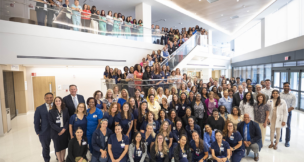
Lidl celebrated its new Paramus location in December 2024. - PROVIDED BY LIDL
Lidl celebrated its new Paramus location in December 2024. - PROVIDED BY LIDL
Discount grocer Lidl would like to reintroduce itself (updated)
Some New Jerseyans may be wondering what all the buzz is about
Kimberly Redmond//March 17, 2025//


)

The basics:
- German discount grocer Lidl is rebranding itself as the “super-est market” to improve brand recognition in the U.S.
- After pausing expansion and closing underperforming stores in 2023, Lidl is refocusing on high-population, high-traffic areas.
- New Jersey is part of the chain’s greater New York area expansion strategy.
German discount grocer Lidl is hoping to put the “super” back into supermarkets. Though the chain has had a presence in the U.S. since 2017, and operates more than 180 stores along the East Coast, its brand recognition isn’t as strong as other players in the nation’s $864 billion grocery retail market.
During a panel discussion last fall, Lidl US Chief Customer Officer Frank Kerr said company research found that only 58% of people in states where it has a footprint “knew we were a grocery store.”
So to improve name recognition, Lidl embarked on a rebrand as the “super-est market.” And in an effort to set itself apart from other banners, it also kicked off a campaign showcasing its high-quality, low-cost assortment of private label products, global imported items, baked goods, meat and fresh produce.
In announcing the marketing push, Lidl US Chief Executive Officer Joel Rampoldt said it allowed the grocer to reintroduce itself “in a big way – especially as we continue to grow our business.”
“We’re passionate about the quality and variety of our offerings, and especially how we help shoppers save money,” he said. “We’ve always known how super we are. Now, it’s time to spread the word.”
Shoppers in some parts of New Jersey may already be familiar with Lidl. After its November 2017 debut in Vineland, the chain has added 23 other locations. Its most recent launches, last month in Paramus and December 2024 in Livingston, drew hundreds of attendees.
But for areas where Lidl has not yet set up shop, New Jerseyans may be wondering what all the buzz is about.
Have a full shop. period.
Founded in 1973, Lidl operates more than 12,000 stores worldwide. The brand – which is pronounced “lee-dull” – has been praised by Food & Wine magazine as “like Trader Joe’s but better” because of its high-quality offerings at everyday low prices.
Lidl’s assortment of about 4,000 stock-keeping units of private labels and selected national brands include: hundreds of organic and gluten-free products; unique specialty items ranging from hard-to-find cheeses to authentic specialty sauces, cured meats and more; over 100 high-quality fresh fruit and vegetable options brought in daily; and fresh protein offerings, including organic and grass-fed.
The chain’s “Middle of Lidl” aisle is also a favorite destination for shoppers. The area features a selection of non-grocery surprises that rotates weekly, from comfy sweatpants to cast iron cookware to toys to power tools.

“You can go in for apples and oranges and come out with a lawnmower some days. That’s a unique experience at Lidl,” said Alan Barry, executive vice president of operations and real estate at Lidl US.
Stores are kept compact – no more than 25,000 square feet – so it’s easier for shoppers to navigate. To keep overhead at a minimum, Lidl has a “bring your own bag” policy and sells products straight from their delivery boxes to avoid the time it takes to restock shelves item by item.
You can go in for apples and oranges and come out with a lawnmower some days. That’s a unique experience at Lidl,.
– Alan Barry, Lidl US
Barry believes the company’s emphasis on small-format stores gives it an advantage over other grocers because it allows Lidl to focus on a specific number of brands and product sizes.
“The reason we have a limited assortment is that we can continue to offer the best prices to the customer. So, you won’t find thousands and thousands of products in a Lidl store. What you will find is the correct amount of products that the U.S. customer can do their weekly shop, and we’re continuing to refine that as we go,” Barry said. “What we want to get across to our customer, as well, is that you can do that full shop and that you’ll always be guaranteed to get the highest quality products for the lowest price.”
Barry said there’s no profile for the average Lidl shopper and the customer base “cuts across all ages.”
“There’s something in the store for everyone and whatever areas they’re located in, we just see that the demand for our offering continues to grow across the states that we’re active in,” he said. “We’ve found that when we bring our offering into these communities and when people come through our doors, they sample our fresh produce and our fresh bakery, and they keep continuing to come … There will be only more and more opportunities for us to continue to open across those core areas of expansion in the next couple of years.”
A private moment
As inflation continues to affect the grocery market, consumers are increasingly seeking value.
Since 2020, supermarket food prices have increased 25%, which is faster than the rate of inflation during that period. This year, the cost of filling a grocery cart is expected to rise 2.2% due to a variety of factors like inflation, natural disasters and potential tariffs, according to the U.S. Department of Agriculture. Egg prices are anticipated to climb 20% in 2025 due to bird flu outbreaks.

As a result, cost-conscious shoppers are on the hunt for private-label products, which often offer cheaper price points than branded items. In response, many grocers, like Keasbey-based Wakefern Food Corp., are expanding their own-brand/private label offerings to meet the demand for affordability.
At Lidl, the majority of products are private label, which is one of the ways the chain keeps costs low. Lidl-branded goods typically help consumers save over 40% compared to their national brand counterparts, according to the company.
Barry said, “The overall market is moving toward private label. But Lidl over the last 12 to 24 months is moving twice as fast as the market. We’re up now at over 80% of our assortment in private label, but again, we’re increasing that at a faster rate than our competitors.”
All private label items undergo rigorous taste, quality and sensory testing. As a result, several goods have won awards, including Lidl’s Icelandic-style yogurt, beer, wine and baby products.
“We stand by the quality of our products. Every one of our own brand products is as good, if not better than the branded alternative, and we offer that at a fraction of the price. And that’s why we can offer that price promise to our store,” Barry said “And in regard to the quality, we have a Lidl Love It Guarantee. We’re so confident in the quality of our products we offer our customers that if you’re not happy, we’ll give you your money back.”
Back on track
Following several years of growth, the Arlington Va.-headquartered division experienced a series of leadership changes; paused new store openings; and shuttered about a dozen existing underperforming locations, including Howell and Burlington Township.
At the time, the company described the July 2023 spate of closures as a “strategic decision” so it can focus on stores “that are closer and more convenient to more of our customers and where we are seeing significant growth.”
Now, Lidl appears to be back on track, centering on its existing markets of the metropolitan regions of New York, Atlanta and Washington, D.C.
“It’s quite simple for us. We want to be in areas with high populations and with high traffic … New Jersey is part of our greater New York area expansion strategy, and we’re going to continue to expand right across those areas in the future and continue to increase the number of store openings. And we’re going to bring that offering – quality product at the lowest price – to more and more customers,” Barry said.
While he declined to divulge specific information about where Lidl’s next outpost in New Jersey will be, Barry said “it’s part of our strategic objective to continue to open stores in this area.”
When it comes to differences between the American market and the European one, Barry believes the U.S. is more competitive. As of June 2024, the nation had more than 305,000 grocery stores, ranging from vast warehouse clubs to small specialty shops.
“But I think opportunity for Lidl within the market is huge. Where Lidl is unique compared to some of our competitors is the quality products that we can offer at the lowest prices … There’s nowhere else you will be able to get the value you get in Lidl,” Barry said.
Take Paramus, for example. When Lidl opened there, it joined a supermarket scene in the busy Bergen County borough that includes Amazon Fresh, H Mart, BJ’s Wholesale Club, Target, NetCost Market, ShopRite, Stew Leonard’s, Trader Joe’s and Whole Foods Market.

“We’re extremely proud and delighted to be opening our store in Paramus. And we’re delighted to welcome thousands of new customers into Lidl. We’re very confident they’ll be surprised and delighted with the quality of our products and the price of our products,” Barry said. “Sometimes when we come to a new area like Paramus, people who haven’t experienced Lidl before are surprised. We are an efficient business model … We keep our costs low, so we can keep the prices low for the consumer.”
Barry added, “Everyone’s got their reasoning for shopping in a grocery store, but with a lot of customers, it boils down to the quality and the price message.”
As Lidl works to position itself as a value player with American shoppers, the brand has retooled its assortment of meat, poultry, floral and produce. Those changes have included switching suppliers, replacing packaging or complete overhauls of selections.
One of Lidl’s most beloved sections – the bakery – also underwent some tweaks. At the bakery, customers can find up to 45 freshly baked, European-inspired breads, pastries and other delights that are as crave-worthy as they are low priced.
The lineup includes classic baguette for $1.99, butter croissant for 49 cents, German pretzels for 99 cents, brioche buns for 79 cents and apple fritters for 99 cents. Barry said Lidl recently added several new items, including plain and everything-style New York bagels for 79 cents, muffins for $1.19 and a range of doughnuts for 99 cents.
“We’ll continue to refine the assortment to meet the needs of the American customer. But also keeping some of our favorites, like the croissant,” said Barry.
The competition
Barry – who has been with the company since 2007 – admitted he even has relatives who get Lidl mixed up with Aldi, another German no-frills grocer.
However, as Lidl pops up in more locations in the U.S., Barry believes the brand will set itself apart with the “fresh element” of its assortment and for giving consumers a place to “do their full shop.”
Founded 63 years ago, Aldi is also known for its low prices and private label brands. Since its U.S. debut in 1976, the brand has gone on to open more than 2,400 stores in nearly 40 states.
As part of a $3.4 billion initiative to expand its footprint and modernize its existing stores, Aldi has expanded its presence across New Jersey by building new locations and revamping old ones over the past five years. It currently has 63 stores — some of which are located in communities that also have a Lidl.
In March 2024, the company announced it will invest $9 billion to add 800 new stores across the U.S. over the next four years. About 330 of those supermarkets will open in the Northeast and Midwest.
In some ways, it can be difficult to distinguish between Aldi and Lidl. Both began in Germany and later expanded to the U.S. The two chains also specialize in discount groceries, many of which are sold under their own store brands, and each have generous satisfaction guarantee policies.
The differences encompass Aldi’s range of breads and baked goods, which are prepackaged and delivered to stores, while Lidl has a fresh bakery. Aldi also chains its shopping carts together and requires shoppers to insert quarters to unlock them for use. To get their quarters back at the end of their shopping trip, customers need to return carts to the corral.

Aldi does sell gardening supplies and accessories during certain times of the year, but it doesn’t have a dedicated outdoor gardening section like some Lidl locations do.
And about 90% of the 1,400 products found in a 12,000-square-foot Aldi are private label. At Lidl, 80% of the 4,000 SKUs in a 25,000-square-foot location are store brands.
Because the two chains vary when it comes to growth strategies in the U.S., they each appear to be targeting different consumers, an April 2024 report from data analytics firm Placer.ai found.
Lidl, which is focused on opening stores in large East Coast metropolitan areas, tends to attract a wealthier suburban demographic, while Aldi’s stores in smaller cities and communities typically see blue-collar shoppers.
In 2023, the median income of $68,100 a year in Aldi’s trade area was slightly below the nationwide median of $69,500. The chain’s potential market median was even lower, $66,900.
By contrast, Lidl’s potential market median was $78,000. Within its market, Lidl’s annual median household income stood at $88,100.
Placer.ai noted that the data indicates Lidl’s stores are in more affluent areas. The grocer also sees more households with children in both its captured and potential markets, the firm said.
Editor’s note: This story was updated at 1:16 p.m. EST to correct the name of Lidl US CEO Joel Rampoldt. Additionally, the story now notes Alan Barry’s new title and that 80% of the brand’s SKUs are private-label brands.