Sign In
Upcoming Event
 Free Newsletter


Jersey City skyline - DEPOSIT PHOTOS
Jersey City skyline - DEPOSIT PHOTOS
Jersey City proposes 20% Q3 tax increase to close $255M deficit
Matthew Fazelpoor//June 22, 2026//


 Listen to this article
The basics:
- Jersey City faces projected $255M deficit
- Mayor Solomon proposes 20% tax rate increase for Q3
- FY2026 budget framework totals about $874M
- Plan includes spending cuts, new revenue, state aid
Jersey City Mayor James Solomon released an interim budget report outlining a fiscal stabilization plan that includes a proposed 20% tax rate increase for the third quarter.
The official unveiled the proposal \alongside a broader Fiscal Year 2026 budget framework aimed at addressing a projected $255 million structural deficit.
In a June 18 announcement, the administration says the plan seeks to stabilize city finances after what it describes as inherited unpaid obligations and structural imbalances. Solomon said the situation requires difficult but necessary action.
“I know this tax increase is painful, especially for people on fixed-incomes and the working families of Jersey City,” said Solomon. The mayor took office in January after serving eight years on the City Council. “The city’s deficit is without recent precedent in New Jersey.
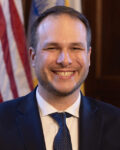
“We did not create this hole, it was created during good economic times through years of one-time gimmicks, hidden bills, and deferred costs, but it is our job to climb out of it responsibly.”
He added that the administration has already taken steps to reduce the gap since taking office. That includes reductions in government spending and pursuing non-tax revenue.
However, Solomon noted that the tax increase is part of the solution.
“What I can promise is that we have fought to make it as small as it can responsibly be, and that we will keep fighting to stabilize our budget next year and the years after,” said Solomon.
$874M budget, $1 salary
Under the FY2026 framework, the city projects an approximately $874 million budget. The plan includes both current operating costs and roughly $109 million in inherited unpaid obligations. Officials say they have already reduced the deficit by about $55 million through early cost-cutting measures, with additional savings still under review.
“This year, Jersey City residents are paying $109 million in taxes … to cover the cost of the previous administration’s unpaid bills and abysmal fiscal management,” said Solomon. “Those are [former Mayor Steve] Fulop‘s unpaid bills, and they are landing on Jersey City taxpayers because he hid them.
“This budget is our plan to pay them off, stabilize our finances, and make sure this never happens again.”
The administration’s strategy rests on three main pillars:
- Reducing spending
- Generating new non-tax revenue
- Pursuing state financial assistance
Cost-cutting measures include changes to health insurance providers, reductions in administrative spending and elimination of certain prior commitments, such as the controversial Centre Pompidou museum project. Officials estimate these steps, along with tighter controls on overtime and staffing, have already produced tens of millions in savings. Solomon is also taking just a $1 salary for 2026.

Bringing in revenue
On the revenue side, the city estimates at least $15 million in recurring annual revenue from efforts to collect outstanding obligations and increase payments from developers and corporations, before turning to higher taxes. Measures include:
- Clearing a backlog of roughly 50,000 code enforcement cases
- Updating permitting and construction fees
- Expanding camera-assisted parking enforcement
- Rebuilding the Jersey City Police Department Traffic Enforcement Unit
- Auditing PILOT (payment in lieu of taxes) agreements
- Revising water and sewer interconnection fees, which have not received updates in about 25 years
The plan also includes a request for approximately $120 million in state aid and financing support. Officials describe the funds as a stabilizing partnership rather than a bailout.
Hudson County Executive Craig Guy said the local situation has regional implications. “Jersey City’s fiscal health is Hudson County’s fiscal health — when our largest city succeeds, the entire county is stronger for it,” said Guy.
He added, “Hudson County stands with him in making the case to Trenton: Jersey City is one of New Jersey’s great economic engines, and a targeted, time-limited state investment now protects not just this city, but the county and the state’s own bottom line. I’ll be advocating alongside the Mayor and our legislative delegation to get this done.”
Families ‘feeling the strain’

State Sen. Angela McKnight, D-31st District, emphasized both concern over costs and the need for coordinated action. “The families I represent are already feeling the strain of rising costs, and any proposed tax increase is something I take very seriously,” she said.
“This is a moment that calls for partnership,” McKnight added. “I look forward to working with the Mayor, local leaders, and my colleagues in State government to identify solutions that protect residents, preserve essential services, and put the city on a path toward long-term fiscal stability.”
Business leaders weighed in on the challenges and proposed solutions.
LeFrak Vice Chairman James LeFrak said, “We’ve been building in Jersey City for decades because we believe in its future, and that future depends on a city government that is financially stable and honest about its challenges. The city must confront its endemic fiscal problems head on, and Mayor Solomon is doing just that. That kind of disciplined, transparent approach is exactly what gives the private sector the confidence to keep building here.
“We strongly support the call for state partnership, which protects the housing pipeline that benefits Jersey City and all of New Jersey, and we’re committed to being part of the city’s future success.”
‘The health of the city’

RWJBarnabas Health Executive Vice President and Chief Corporate Affairs Officer George Helmy said, “As one of Jersey City’s largest employers and the premier healthcare provider to this community for generations, we know that the health of our residents is tied to the health of the city itself.
“Mayor Solomon is confronting a serious inherited challenge and is seeking partnerships with government and industry before asking more of residents.
“What we know from numerous public health studies is that a stable, well-run city is key to healthy families and a thriving community, and RWJBarnabas Health supports that goal,” Helmy continued. “We remain committed to serving Jersey City and to being a partner in its continued strength.”
The proposed tax increase and broader budget framework will now move through City Council review. Scheduled hearings and votes will come ahead of final adoption in the weeks and months ahead. Officials say the goal is to restore long-term structural balance while minimizing the burden on taxpayers where possible.